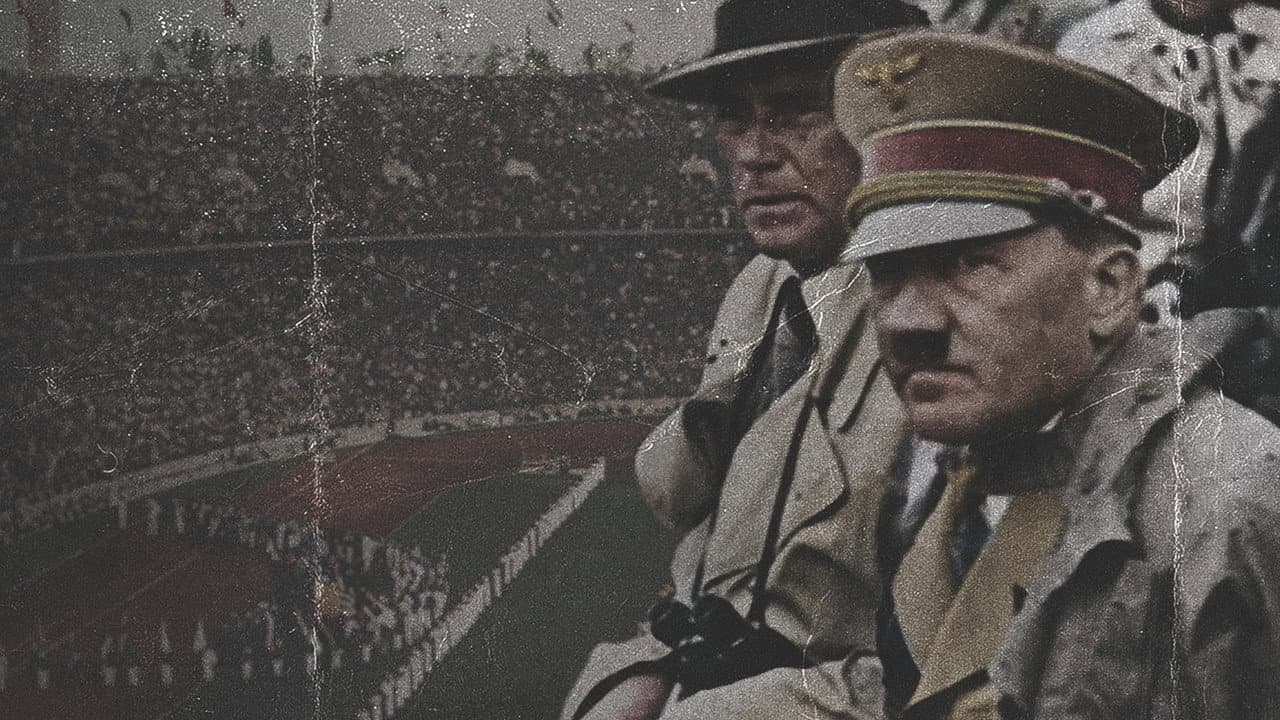
Hitler’s Games: Berlin 1936 in Colour – Why You Need to See This Stunning New Documentary
This 2026 TV Movie, Hitler's Games: Berlin 1936 in Colour, isn't just another historical documentary. It's a vivid, unsettling look at a pivotal moment when the world tried to believe in sport as a force for peace, only to witness it twisted into a powerful tool for Nazi propaganda. Clocking in at 47 minutes, this film uses cutting-edge colourisation to transform dusty black-and-white footage into a visceral, almost present-day experience.
Where to Watch Hitler's Games: Berlin 1936 in Colour
Good news: you don't need a specialist subscription to find this one. Hitler's Games: Berlin 1936 in Colour is currently available on major OTT services, making it accessible to a wide audience. Streaming rights often shift, but the real-time Where-to-Watch widget at the top of this page (on Movie OTT) gives you an up-to-the-minute breakdown of exactly which platforms are carrying the title in your region. That widget pulls live data, so you won't be chasing a dead link. Given its concise 47-minute runtime, it's genuinely a lunch-break watch – or a perfect companion to a longer Olympic or World War II documentary.
Why the 1936 Berlin Olympics Still Matters (And How This Film Shows It)
In 1931, the International Olympic Committee awarded Germany the Games, hoping sport would draw a fractured nation back into the family of nations and promote world peace. Optimistic, right? What nobody fully anticipated was that by August 1936, the host country would be under Adolf Hitler's control, and those sixteen days of competition would become the most sophisticated exercise in nationalist propaganda the world had yet seen.
Hitler's Games: Berlin 1936 in Colour drops you into that unsettling contradiction: a global celebration of athletic excellence hosted by a regime already committed to racial extermination. The film traces the arc from that hopeful IOC vote to the closing ceremony, using colourised archive footage to make the spectacle feel immediate, not safely distant. Frankly, seeing the infamous Olympiastadion, its flags, and the faces of the crowd in their true, visceral hues makes the surrounding antisemitism and racism land differently. It doesn't feel like ancient history anymore. It feels like last week.
Jesse Owens and the Propaganda Games: What the Film Gets Right
What's striking is how the film doesn't let the sporting achievement get swallowed by the political horror. That's the right call. Jesse Owens winning four gold medals – in the 100m, 200m, long jump, and 4×100m relay – is treated as the genuine, record-breaking triumph it was. Not just as a symbolic rebuke to Hitler's ideology. The documentary understands Owens didn't go to Berlin to make a political statement; he went to run, and he ran faster than anyone in the world. The Nazi ideology and the dictatorship are the backdrop, yes, but not the whole story.
The thing nobody mentions enough about this kind of archive documentary is how much the sound design matters. Restored footage without thoughtful audio work can feel like a slideshow. Woodcut Media's production reportedly paid close attention to ambient reconstruction – crowd noise, the echo of the stadium announcer – and that attention is what keeps the 47 minutes feeling cinematic rather than just educational. It's a subtle but powerful choice.
The Filmmaking: Colourisation and Why It Works
Produced by Woodcut Media, a UK-based factual production company with a strong track record in archive-driven historical documentaries, Hitler's Games: Berlin 1936 in Colour represents a technically ambitious project. It sits in a growing genre of colourisation films, but it doesn't use the technique as a gimmick. Instead, the colourisation is the argument.
The runtime is tight at 47 minutes – a deliberate choice. There's no padding, no extended talking-head segments that let the pace sag. The production team worked with cutting-edge digital restoration technology to convert original black-and-white footage from the 1936 Games into colour. This process involves frame-by-frame analysis and AI-assisted colourisation, all verified by historians for period accuracy. Think of what Peter Jackson's team did with First World War footage for They Shall Not Grow Old – this film sits in that same lineage, though at a shorter, sharper length.
The film is classified as a TV Movie under the History genre, which tells you its ambition: it's not trying to be a theatrical event. It's trying to be essential viewing for anyone who wants to understand how fascism packaged itself for international consumption. There aren't major on-screen talent credits in the traditional sense; the real cast here is the archive footage itself, and the anonymous athletes, officials, and crowds whose images have been painstakingly restored.
Quick Answers: Your Top Questions About the Film
Q: Where can I watch Hitler's Games: Berlin 1936 in Colour? The film is available on major OTT platforms. Check the Where-to-Watch widget at the top of this page on Movie OTT for the most current, region-specific streaming options, as availability can vary.
Q: Is Hitler's Games: Berlin 1936 in Colour based on a true story? Yes – entirely. The documentary draws on verified historical events surrounding the 1936 Berlin Olympics, including Jesse Owens's four gold medal victories and the Nazi regime's use of the Games as a propaganda exercise to present Germany as a peaceful, welcoming nation.
Q: Who produced Hitler's Games: Berlin 1936 in Colour? The film was produced by Woodcut Media, a UK-based factual production company specializing in archive-driven historical documentaries. The colourisation work used cutting-edge digital restoration technology applied to original black-and-white footage from the 1936 Games.
Q: How long is Hitler's Games: Berlin 1936 in Colour? The runtime is 47 minutes, making it one of the shorter entries in the colourisation-documentary genre. It's classified as a TV Movie under the History genre, released in 2026.
Q: How does the colourisation in Hitler's Games: Berlin 1936 in Colour compare to other restored documentaries? The process is comparable to the approach Peter Jackson's team used for They Shall Not Grow Old, involving frame-by-frame digital restoration with historian oversight for period accuracy. The result transforms footage that has existed in archives for nearly ninety years into something that feels genuinely present-tense.
Is This Documentary For You?
Honestly, this one's for anyone who thought they already knew the story of the 1936 Berlin Olympics – because the colourisation genuinely reframes it. Forty-seven minutes. That's all it asks. History buffs, documentary regulars, and anyone with an interest in how nationalism and fascism dress themselves up for the world stage will find this worth their time. It's not comfortable viewing, it's not supposed to be, but it's precise, well-constructed, and visually unlike anything else covering this period. Movie OTT recommends it as essential companion viewing alongside any serious engagement with the history of the Olympic Games or the rise of Nazi Germany. It's a short, sharp shock.