





What Intervista reveals about Fellini's world of cinema
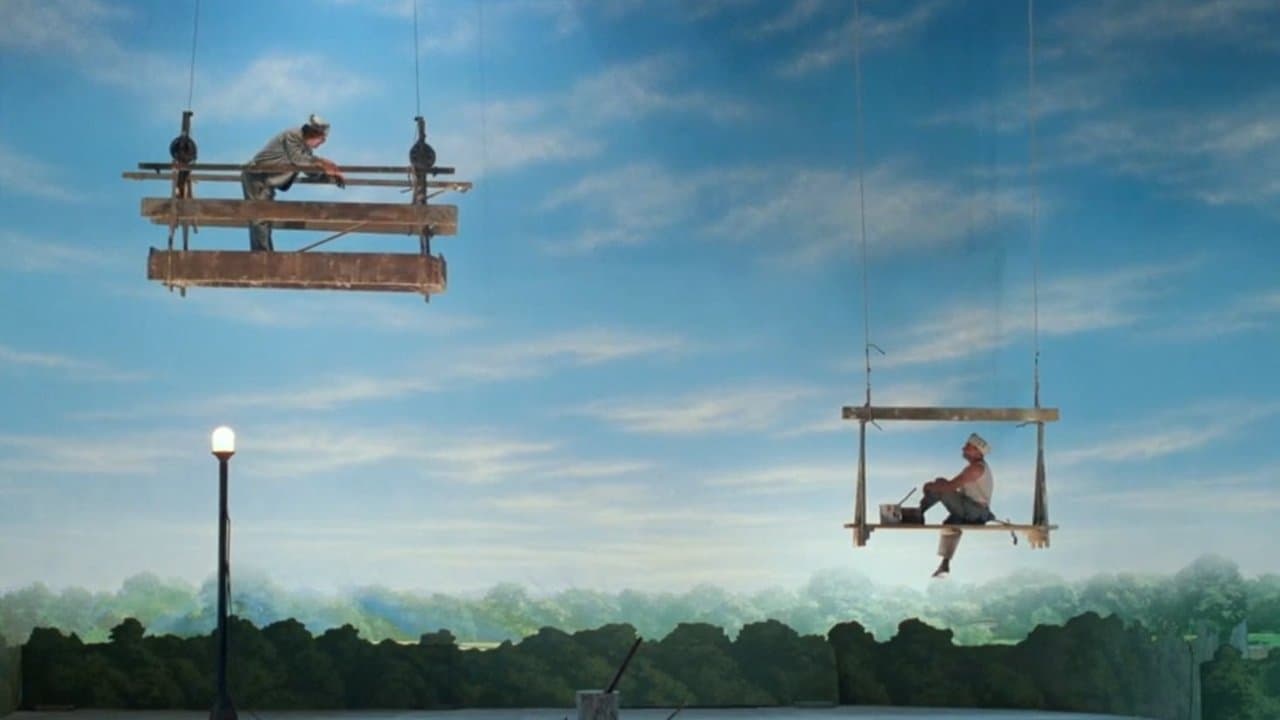
Federico Fellini's Intervista is a film that doesn't quite fit into any one box—and that's precisely the point. The 1987 mockumentary welcomes viewers into the maestro's universe by staging a deceptively simple premise: a Japanese film crew arrives to document Fellini at work, following him through his daily life and creative routines. What unfolds isn't a straightforward documentary, though. Instead, Fellini uses the conceit as a Trojan horse to explore his own relationship with cinema, memory, and the blurry boundary between what's real and what's performed. At its heart, Intervista is Fellini playing with the audience—and with himself—in ways that feel both intimate and deliberately theatrical.
The film's 108-minute runtime winds through Fellini's world with a kind of playful mischief. He's not interested in giving us a behind-the-scenes look in the conventional sense; he's interested in showing us how cinema itself is a kind of beautiful lie, a constructed reality that somehow tells deeper truths than documentary ever could. The Japanese crew becomes a framing device, but they're also somewhat beside the point. What matters is Fellini's voice, his perspective, his way of seeing the world through the lens of a lifetime spent making films. It's a film about filmmaking, yes, but it's also a film about memory, fantasy, and the director's relationship with his own legend.
Behind the making of Intervista and its production legacy
Intervista emerged from a collaboration between several production companies—Fernlyn, Cinecittà Studios, RAI, and Aljosha—bringing together Italian and international financing to realize Fellini's vision. By 1987, Fellini was already a towering figure in world cinema, his name synonymous with artistic innovation and visual spectacle. The film was shot at Rome's legendary Cinecittà Studios, the same facility where Fellini had created so many of his masterpieces over the decades. There's a kind of poetic symmetry in that choice: the director filming about filmmaking in the very place where he'd spent so much of his creative life.
The runtime of 108 minutes gives Fellini enough space to meander, to digress, to follow tangents—all hallmarks of his directorial style. Unlike more conventional documentaries, which might feel constrained by their subject matter, Intervista luxuriates in its own artificiality. Fellini doesn't apologize for the film's self-conscious theatricality; he celebrates it. The production brought together a cast and crew who understood what Fellini was attempting: not a straightforward account, but a meditation on cinema itself, filtered through the sensibility of one of the medium's greatest artists. While Intervista didn't achieve the commercial blockbuster status of some of Fellini's earlier works, it remains a fascinating artifact of his later period—a film that shows a director still willing to experiment, still uninterested in easy answers or conventional narrative structures.
The film carries an IMDb rating of 6.78/10, a score that reflects its challenging, unconventional nature. Not every viewer comes to Intervista expecting what Fellini actually gives them, and that gap between expectation and reality accounts for some of the mixed reception. For those willing to meet the film on its own terms, however, Intervista offers something rarer: a genuine glimpse into how one of cinema's greatest minds thought about his own work and legacy.
Why Intervista works as both comedy and commentary on filmmaking
What's striking about Intervista is how Fellini manages to be simultaneously funny and serious, playful and self-reflective. The comedy doesn't come from obvious gags or setup-and-punchline structures. Instead, it emerges from the inherent absurdity of the situation—a legendary director being interviewed by a film crew who are themselves part of the film we're watching. There's a recursive quality to the humor, a kind of meta-awareness that feels fresh even decades later. When Fellini discusses his own films, his own process, he's not being earnest in the way a typical documentary subject might be. He's performing, and he's aware that he's performing, and the Japanese crew is aware of it too. That layered consciousness creates comedy simply through its existence.
The performances—and yes, they are performances, even though this is supposedly a documentary—anchor the film's emotional core. Fellini himself is the central presence, and he brings a warmth and humor to his own self-portraiture. He's not trying to seem important or profound; he's trying to seem human, which somehow makes him seem more important and profound. The Japanese crew members, though they don't speak much, become a kind of Greek chorus, their presence forcing Fellini to articulate things he might otherwise leave unsaid. There's also a genuinely touching sequence involving Fellini's memories of his early life and his relationship with cinema—moments where the film's playfulness gives way to something more vulnerable.
I keep coming back to how the film uses Cinecittà itself as a kind of character. The studio lot, with its half-finished sets and abandoned soundstages, becomes a metaphor for cinema itself—all artifice, all construction, yet somehow more real than reality. Fellini walks through these spaces with the familiarity of someone who's spent a lifetime there, and the camera follows him with genuine affection. The thing nobody mentions is how Intervista is also a love letter to the medium itself, to the act of filmmaking, to the possibility of cinema as a space where dreams and reality can coexist. That's what makes it work—not as a documentary or a comedy, but as something altogether more personal and idiosyncratic.
Where to stream Intervista online
Intervista is available on major OTT services, making it accessible to anyone curious about exploring Fellini's later work. Check the "Where to Watch" widget at the top of this page to see which platforms currently have the film in your region—streaming availability shifts regularly, and Movie OTT tracks these changes across all major services. If you're a subscriber to any of the major platforms, there's a solid chance Intervista is already available to you. For those new to Fellini or to his more experimental work, accessing it through a streaming service removes the barrier of hunting through specialty video stores or waiting for theatrical revivals. That democratization of access means more people can experience Fellini's playful, self-reflexive vision without friction.
Frequently asked questions
Q: Is Intervista a true documentary or a fictional mockumentary?
Intervista is a mockumentary—it presents itself as a documentary about Fellini being filmed by a Japanese crew, but Fellini has staged and scripted much of what we see. The film deliberately blurs the line between documentary and fiction, which is part of what makes it interesting and challenging.
Q: Who directed Intervista?
Federico Fellini directed Intervista in 1987. It's one of his later films, made when he was already in his late eighties and reflecting on a lifetime spent making cinema.
Q: How long is Intervista?
The film runs 108 minutes, which gives Fellini enough time to meander through his thoughts, memories, and observations about filmmaking without feeling rushed or constrained.
Q: What's the connection between Intervista and Fellini's other films?
Intervista is self-reflexive and meta—it's about filmmaking itself, which means it comments on and references Fellini's entire body of work. If you've seen films like 8½ or La Dolce Vita, you'll recognize themes and visual styles echoing through Intervista.
Q: Is Intervista appropriate for casual viewers or only for Fellini fans?
While Fellini enthusiasts will get more from the film, casual viewers willing to embrace its unconventional structure can find genuine pleasure in it. Just don't expect a traditional narrative or a straightforward documentary—come ready for something more playful and experimental.
Final thoughts on Intervista
Intervista isn't a film for everyone, and Fellini probably wouldn't want it to be. It's a work of genuine idiosyncrasy—a director in his late period, still experimenting, still unwilling to give audiences what they expect. The film's willingness to be difficult, to meander, to prioritize mood and reflection over plot, is exactly what makes it worth seeking out. If you're tired of conventional filmmaking and want to watch a true original thinking out loud about cinema itself, Intervista rewards that curiosity. It's a strange, funny, touching film that only Fellini could have made.