






The story of Marriage Italian Style
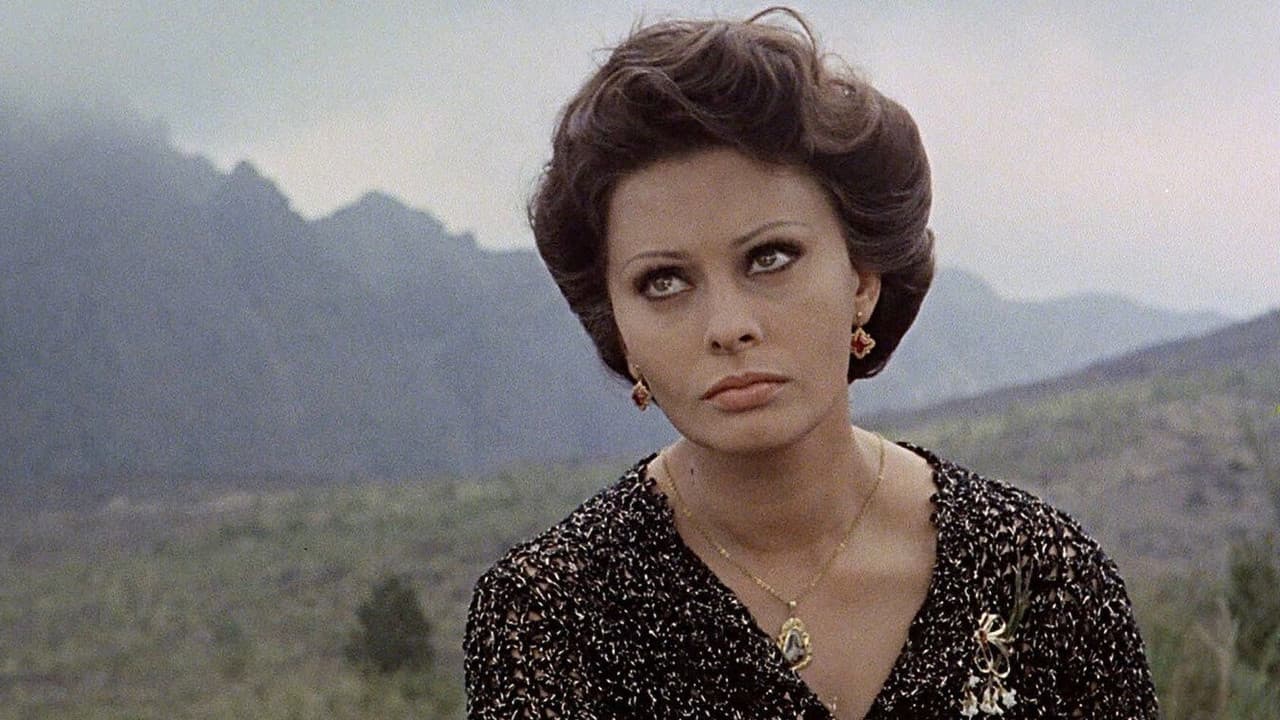
Marriage Italian Style opens in the wreckage of Naples during World War II, when a naive young woman crosses paths with a cynical, wealthy businessman amid the city's bombing raids. What begins as a chance encounter—a moment of vulnerability and rescue—becomes the foundation for an obsessive, complicated romance that'll consume the next two decades of her life. She's desperate for him to reciprocate her feelings, to transform their unlikely connection into something legitimate and lasting. He's indifferent, self-interested, moving through life with the kind of emotional distance that only money and privilege can buy. The film tracks how these two people navigate love, class, desire, and the passage of time in postwar Italy, where social conventions and economic realities collide with raw human longing.
Behind the making of Marriage Italian Style
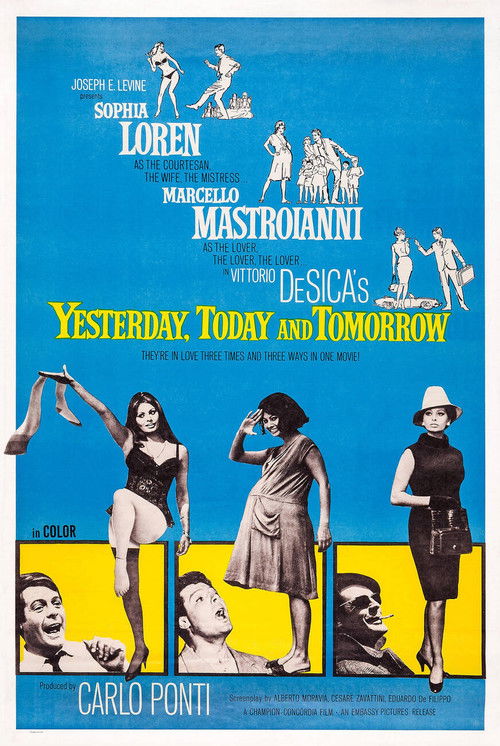
Marriage Italian Style arrived in 1964 as the third major collaboration between Embassy Pictures and the creative team behind the wildly successful Divorce Italian Style and Yesterday, Today and Tomorrow. The studio had cracked the formula for bringing Italian cinema to American audiences—smart, sexy, socially aware comedies that didn't condescend to either market. Director Vittorio De Sica, already a titan of Italian neorealism, brought his characteristic blend of humanist observation and formal elegance to the material. The casting of Sophia Loren and Marcello Mastroianni was inspired; these weren't just big names, they were the right names, actors whose chemistry and screen intelligence could carry a film that needed to balance comedy, drama, and genuine emotional stakes across a century-spanning narrative arc.
The production was mounted as a prestige picture—C. C. Champion and Les Films Concordia pooled resources to create something that felt both intimate and expansive. At 102 minutes, the film takes its time, allowing scenes to breathe in a way that contemporary Hollywood comedies often didn't. The picture earned a respectable 7.689 rating on IMDb, suggesting it found an audience that appreciated its tonal complexity. What's striking is how the film doesn't apologize for its genre ambiguity—it's a drama, a romance, a comedy, sometimes all three in the same scene, and that refusal to fit neatly into a single box is part of what makes it endure.
What makes Marriage Italian Style stand out
When Loren appears opposite De Sica's direction and Mastroianni's presence, something clicks. The reviewer CinemaSerf captured it well: sometimes Loren's Hollywood efforts can feel forced or unnatural, but put her in front of De Sica and pair her with Mastroianni, and she's in her element entirely. That chemistry isn't manufactured—it's the product of actors who trust their director and understand their characters' contradictions. Loren plays a woman who isn't asking for much, really, just acknowledgment and commitment from a man who's given her neither. Mastroianni, meanwhile, embodies a particular kind of postwar masculinity: charming enough to seduce, cynical enough to wound, wealthy enough to get away with both.
What nobody mentions is how the film actually sympathizes with both of them. It'd be easy to make him a villain and her a victim, but De Sica's too sophisticated for that. There's comedy in her desperation, yes, but there's also genuine pathos. And his coldness isn't presented as evil—it's presented as damage, as the kind of emotional calcification that comes from having too much money and too little accountability. The two-decade span allows the film to show how time doesn't heal this wound so much as it transforms it into something else: resignation, perhaps, or a kind of settled understanding that some people simply won't change. The performances anchor everything; without them, the premise might collapse into melodrama or farce. Instead, it stays suspended between both.
Where to stream Marriage Italian Style online
Marriage Italian Style is currently available on major OTT services, and you can check the Where to Watch widget at the top of this page to see which platforms are carrying it in your region right now. Streaming rights shift frequently, so Movie OTT keeps its database updated across Netflix, Prime Video, and other major platforms to help you find exactly where titles are available. If you're planning a Loren and Mastroianni night, it's worth checking availability before you settle in—but the good news is that this film has remained accessible enough to find a home on most streaming ecosystems, suggesting its appeal hasn't diminished since 1964.
Frequently asked questions
Q: Who directed Marriage Italian Style?
Vittorio De Sica directed the film. He was already celebrated for his neorealist masterpieces like Bicycle Thieves, and Marriage Italian Style showcases his ability to blend social observation with romantic comedy in a way that feels effortless.
Q: Is Marriage Italian Style based on a true story?
No, it's an original screenplay, though the postwar Naples setting and the social dynamics it explores reflect real historical conditions and class tensions in Italy during that period.
Q: How long is Marriage Italian Style?
The film runs 102 minutes, giving De Sica enough time to develop the characters and their relationship across two decades without ever feeling rushed.
Q: What's the difference between Marriage Italian Style and Divorce Italian Style?
They're separate films made by the same studio and creative team. Divorce Italian Style (1961) preceded this one and dealt with a man seeking to escape his marriage; Marriage Italian Style reverses the perspective, focusing on a woman desperate to formalize hers.
Q: Where can I watch Marriage Italian Style right now?
Check the Where to Watch widget on this page for current availability on streaming platforms in your region—it updates regularly to reflect which services are currently carrying the title.
Final thoughts on Marriage Italian Style
Marriage Italian Style isn't a film that announces itself with grand gestures. It sneaks up on you—a story about two people who can't quite connect, set in a city still bearing the scars of war, told with the kind of observational grace that only comes from a master director and actors who understand their characters' wounds. If you're looking for Italian cinema that's both entertaining and emotionally intelligent, that doesn't require you to choose between laughing and feeling something real, this is it. It's a film that rewards attention, and it's exactly the kind of title that streaming platforms make accessible to audiences who might never have found it in a video store. Don't overlook it.