


The story of A Place for Lovers
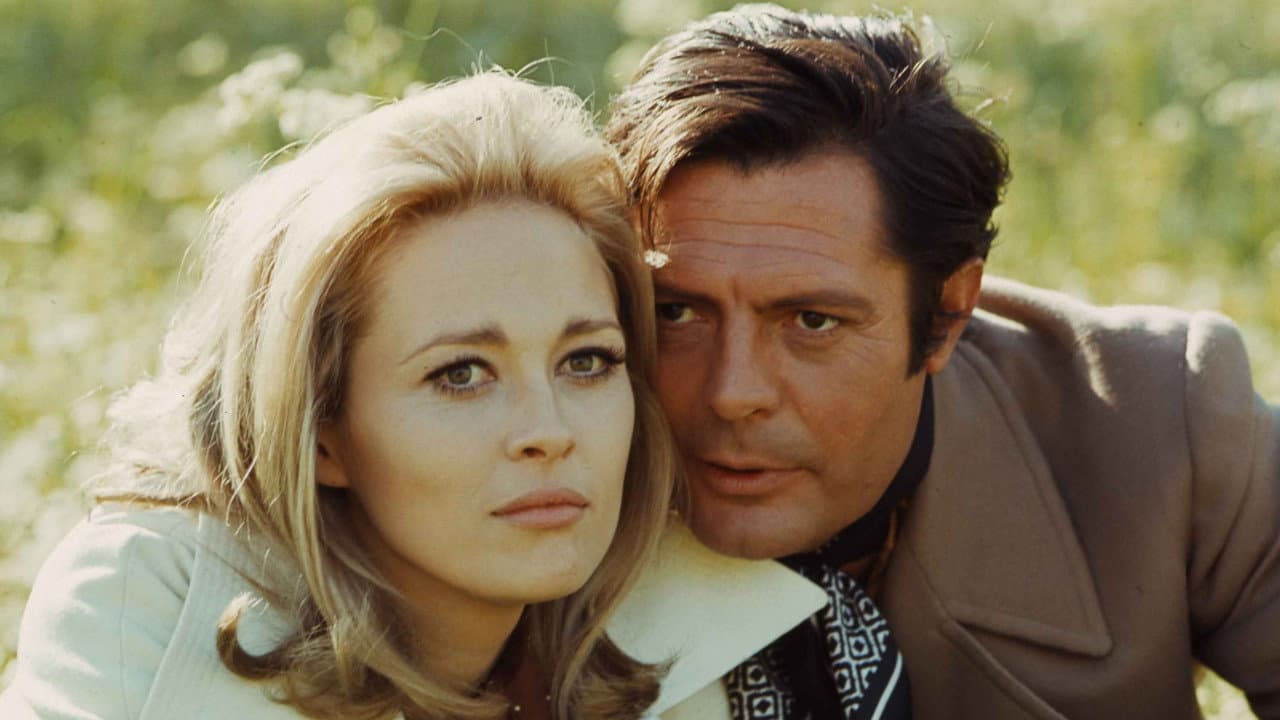
A Place for Lovers tells the story of Julia, a fashionable woman who travels the world and carries a secret that shapes everything she does. When she meets Valerio in Italy, the two embark on an intense 10-day affair—a brief window where they attempt to carve out their own private world, away from the demands and complications of their real lives. The film's tagline, "Wherever they meet they make it," hints at the couple's determination to create their own space, however temporary. It's a premise that could have yielded something genuinely moving: two people running from their pasts, finding solace in each other's company. Instead, what unfolds is a stylish but emotionally hollow romance that never quite justifies why we should care about their connection.
Behind the making of A Place for Lovers
A Place for Lovers emerged from an Italian theatrical work, Gli Amanti, written by Brunello Rondi and Renaldo Cabieri, and was brought to the screen by legendary Italian director Vittorio De Sica, the mastermind behind postwar neorealist classics like Bicycle Thieves. The screenplay drew contributions from multiple writers—Rondi, Julian Zimet, Peter Baldwin, Ennio De Concini, Tonino Guerra, and Cesare Zavattini—a sign that the project underwent significant development and revision. Metro-Goldwyn-Mayer distributed the film, giving it the resources and reach of a major Hollywood studio, even though it was an international co-production with distinctly European sensibilities. The 90-minute runtime suggests a lean, focused narrative, though critics have long debated whether the film's brevity works in its favor or simply masks deeper structural problems. What's worth noting is that De Sica was already in the twilight of his career when he made this—a director whose best work lay behind him, attempting to navigate the changing landscape of 1960s cinema. The film arrived during a period when romantic dramas were becoming increasingly introspective and psychologically complex, yet A Place for Lovers often feels like it's trying to recapture a mode of filmmaking that was already fading.
What makes A Place for Lovers stand out—and what holds it back
On paper, De Sica's direction should elevate the material. His eye for composition and his ability to find truth in quiet moments are evident throughout—there are scenes of genuine tenderness, particularly when Julia and Valerio are simply existing together, speaking little, communicating through glances and gestures. The Italian setting provides a lush, romantic backdrop, and the cinematography captures that sun-drenched quality that made so many 1960s European films feel like postcards from another world. But here's the thing: technical proficiency and visual beauty don't always translate into emotional engagement. The performances, while competent, don't dig deep enough into the psychological complexity the script seems to be reaching for. There's a flatness to the dialogue exchanges—and I keep coming back to this—that suggests the multiple writers never quite agreed on what tone the film should strike. Is it a melodrama? A psychological portrait? A romantic fantasy? The film can't decide, and that indecision becomes palpable. The IMDb rating of 5.1 out of 10 reflects a broader critical consensus: this is a film that's easier to admire than to enjoy, easier to respect than to feel moved by. What's striking is that the film's central mystery—Julia's secret—becomes almost incidental to the narrative, mentioned but never truly explored in ways that would deepen our understanding of why she's so drawn to this fleeting escape.
Where to stream A Place for Lovers online
If you're curious to see De Sica's work for yourself, A Place for Lovers is available on major OTT services, and Movie OTT tracks its current streaming availability across multiple platforms so you don't have to hunt around. The "Where to Watch" widget at the top of this page will show you exactly which services are carrying it in your region right now—availability does shift, so checking there first saves time. Whether it's worth your 90 minutes depends on your tolerance for slow-burn European cinema that doesn't quite deliver on its promise. For those who love De Sica's earlier work or who have a soft spot for 1960s romantic dramas, it's worth a try; for others, Movie OTT's streaming guides can help you find something more immediately rewarding.
Frequently asked questions
Q: Who directed A Place for Lovers?
Vittorio De Sica, the acclaimed Italian director known for neorealist masterpieces like Bicycle Thieves and Umberto D., directed A Place for Lovers in 1968. By this point in his career, De Sica was exploring more romantic and dramatic territory, moving away from the social realism that defined his earlier work.
Q: What is A Place for Lovers based on?
The film is based on the play Gli Amanti by Brunello Rondi and Renaldo Cabieri. The stage work was adapted for the screen by a team of writers including Rondi himself, along with Julian Zimet, Peter Baldwin, Ennio De Concini, Tonino Guerra, and Cesare Zavattini.
Q: How long is A Place for Lovers?
The film runs 90 minutes, making it a relatively concise romantic drama. Despite its short runtime, it attempts to tell a story about two people meeting, falling into an affair, and grappling with the secrets and complications they bring to their encounter.
Q: Is A Place for Lovers worth watching?
That depends on your taste. The film has a 5.1 rating on IMDb, suggesting mixed-to-negative reception. It's visually attractive and features a legendary director, but many viewers find it emotionally distant and narratively unfocused. If you're a fan of 1960s European cinema or Vittorio De Sica's work, it's worth trying; otherwise, there are stronger romantic dramas from the era.
Q: Where can I watch A Place for Lovers?
A Place for Lovers is available on major OTT platforms. Check the "Where to Watch" widget on this page to see which services are currently streaming it in your area.
Final thoughts on A Place for Lovers
A Place for Lovers is a film that asks interesting questions but doesn't always pursue the answers with enough rigor or emotional honesty. It's the work of a master director in decline, attempting to make sense of a romantic premise that never quite coheres. For completists and De Sica devotees, it's essential viewing; for everyone else, it's a curiosity—beautiful to look at, but ultimately forgettable. Sometimes the most interesting films are the failures, and this one certainly qualifies.