

The Story of L'Orizzonte Degli Eventi
L'Orizzonte Degli Eventi—which translates roughly to "The Event Horizon"—is a deliberately conceptual drama that doesn't arrive as a conventional narrative. Instead, it plants you inside a single, haunting geographic space: the Gran Sasso mountain range in central Italy. The film's central premise is almost architectural in its precision: beneath the mountain lies one of Europe's most advanced nuclear physics laboratories, humming with cutting-edge research and the intellectual energy of humanity's quest to understand matter itself. Above it, on the surface, shepherds tend their flocks and live out rhythms unchanged for centuries. Neither group knows the other exists. They share the same territory, breathe the same air, walk on the same ground—yet they're utterly separated by stone, by economics, by knowledge, by everything. The 115-minute runtime allows director Andrea Bassi to sit with this paradox, letting it unfold not as plot but as observation.
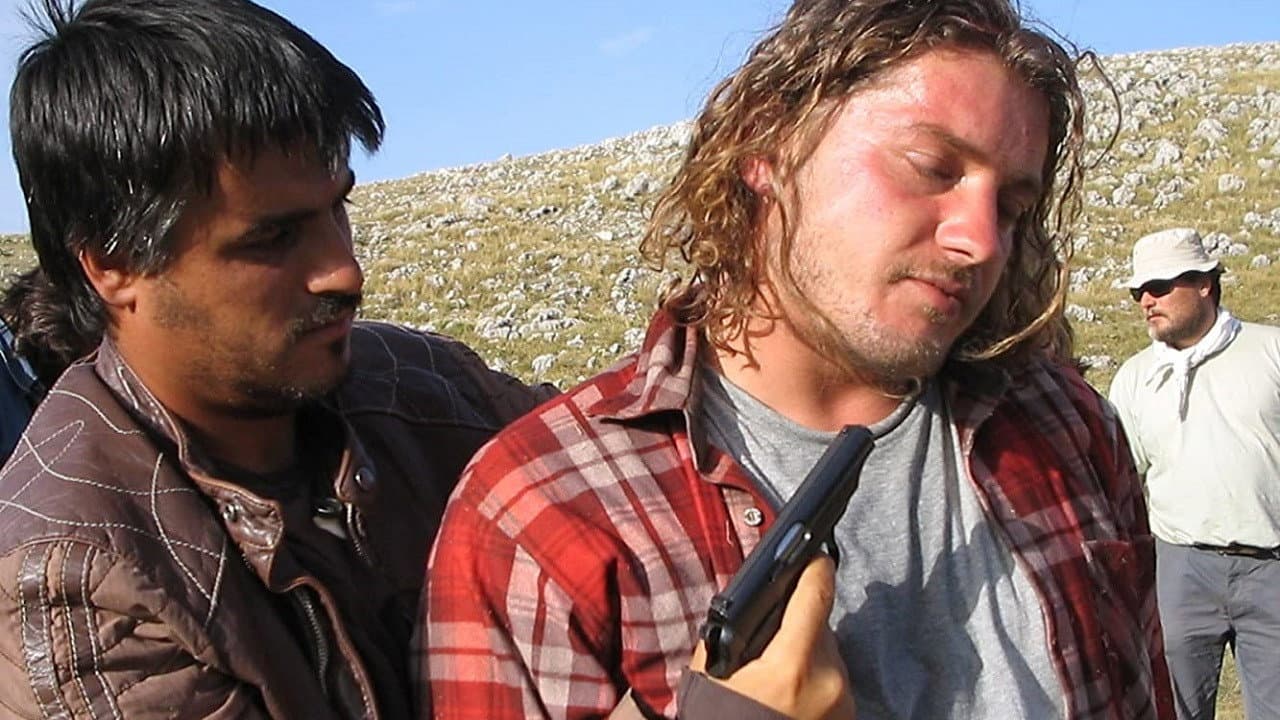
What's striking is that the film doesn't force melodrama onto this setup. There's no climactic moment where the shepherd stumbles into the lab, or the physicist emerges to find his assumptions shattered. Instead, the contact happens through two specific characters: Max, a nuclear researcher obsessed with his work in the laboratory's depths, and Bajram, the shepherd who walks across the mountain above. Their paths never literally cross, yet they're bound by the same physical space in ways neither fully grasps. The shepherd walks on the physicist's head—literally, structurally—but they're strangers. That's the whole film, compressed into one image.
Behind the Making of L'Orizzonte Degli Eventi
L'Orizzonte Degli Eventi was produced by three Italian production houses: Fandango, Medusa Film, and Sky Cinema, positioning it as a mid-budget Italian prestige project for 2005. The collaboration between these producers suggests an attempt to reach both arthouse and mainstream audiences, though the film's conceptual density ultimately limited its commercial reach. It's the kind of European cinema that festivals understand better than multiplexes do. Director Andrea Bassi was working within a specific moment in Italian cinema—post-Dogme 95 influence, but not strictly adherent to those principles—when filmmakers were experimenting with how to make philosophical statements through spatial and structural storytelling rather than dialogue-heavy exposition.
The IMDb rating of 6.1 out of 10 tells you something important: this isn't a crowd-pleaser. It's a film that divides viewers between those who find its metaphorical architecture brilliant and those who find it frustratingly opaque. That kind of split rating often indicates a work that's genuinely trying something different, rather than simply executing a familiar formula poorly. The production values appear solid for a European independent drama of that era—the Gran Sasso location itself becomes a character, shot with an eye for how landscape can express ideology. Movie OTT tracks where these kinds of challenging international dramas land on streaming platforms, making it easier to discover films that might otherwise stay buried in festival archives.
What Makes L'Orizzonte Degli Eventi Stand Out
The real achievement here is thematic rather than narrative. The film doesn't tell you that globalization creates parallel economies, parallel classes, parallel realities occupying the same space. It shows you by literally structuring the entire film around vertical separation. That's bold filmmaking. It's also risky—because if you're not willing to meet the director halfway, if you want plot and character arcs and emotional catharsis, you're going to feel frustrated.
What I keep coming back to is how the film treats both worlds with equal seriousness. There's no condescension toward the shepherd, no romanticization of "simple life," but also no worship of scientific progress. Max's work in the laboratory is presented as genuinely important—humanity pushing at the boundaries of understanding. Bajram's shepherding is presented as genuinely difficult, genuinely necessary work. The film's argument isn't that one is better than the other. It's that they're incompatible, and that incompatibility is the structure of the modern world. Neither character is evil or foolish. They're just living in different realities that happen to occupy the same mountain.
The performances matter here, though they're understated in the way European art cinema often demands. There's no big emotional scene where an actor breaks down and reveals their inner life. Instead, the acting is about presence, about how bodies move through space, about what work does to a person over time. The cinematography reinforces this—long shots that let us see the scale of the landscape, the isolation of individuals within it. Hard to say if mainstream audiences will connect with this approach, but for viewers patient enough to meet it on its own terms, it's absorbing.
Where to Stream L'Orizzonte Degli Eventi Online
L'Orizzonte Degli Eventi is currently available on major OTT services, and you can check the "Where to Watch" widget at the top of this page to see which platforms are carrying it in your region right now. Streaming availability for European arthouse films can shift seasonally, so it's worth checking that widget before settling in—availability varies by country and subscription service. The 115-minute runtime makes it a manageable single-sitting watch, though you'll probably want to be in the right headspace: this isn't a film you can half-watch while scrolling your phone. Give it your attention, or don't bother. The film doesn't make compromises for distracted viewers, and honestly, I respect that.
Frequently Asked Questions
Q: What is L'Orizzonte Degli Eventi about?
The film explores two parallel worlds existing in the same location—a nuclear physics laboratory buried inside Gran Sasso mountain, and a community of shepherds living on its surface. These worlds never directly interact, but the film uses this separation as a metaphor for globalization and economic inequality.
Q: Who directed L'Orizzonte Degli Eventi?
The film was directed by Andrea Bassi, an Italian filmmaker working in the arthouse tradition. It was produced by Fandango, Medusa Film, and Sky Cinema.
Q: How long is L'Orizzonte Degli Eventi?
The film runs 115 minutes, allowing Bassi to develop his conceptual premise without rushing the observation of his two separated worlds.
Q: Is L'Orizzonte Degli Eventi based on a true story?
No, it's a fictional work designed as a metaphorical exploration of globalization. However, the Gran Sasso laboratory (the Gran Sasso National Laboratory) is a real facility, which grounds the film's premise in actual geography.
Q: What's the IMDb rating for L'Orizzonte Degli Eventi?
The film holds a 6.1 out of 10 rating on IMDb, reflecting its divisive reception among viewers—some find its conceptual approach brilliant, others find it frustratingly abstract.
Final Thoughts on L'Orizzonte Degli Eventi
This isn't a film for everyone, and that's not a weakness—it's a statement of intent. L'Orizzonte Degli Eventi refuses to soften its central metaphor or manufacture false drama. If you're drawn to European cinema that trusts its audience to sit with ambiguity, that uses space and structure instead of exposition, that treats complex ideas as worthy of visual exploration, then this film deserves your time. It's the kind of work that rewards the specific viewer it's made for, even if that viewer is a smaller audience than a conventional drama might reach. Check Movie OTT for current availability in your area, clear your schedule, and approach it with patience.