The story of Marie Antoinette and political marriage gone wrong
When an Austrian princess is dispatched across Europe to marry a French prince she's never met, the arrangement seems straightforward enough: seal the peace between rival nations, secure the throne, live out a life of privilege. What unfolds instead is the tragedy of a woman caught between her own desires and the inexorable weight of history. Marie Antoinette arrives in France as a young bride, eager to win over her new kingdom—and at first, the glittering court seems to reward her charm. But as her husband Louis XVI ascends to the throne and her extravagant tastes flourish, the mood shifts. The very people she'd hoped to captivate begin to resent her, not just for her spending but for what she represents: foreign influence, aristocratic indulgence, and a queen who seems more interested in love and pleasure than in the suffering of her subjects.
Behind the making of Marie Antoinette: MGM's ambitious historical epic
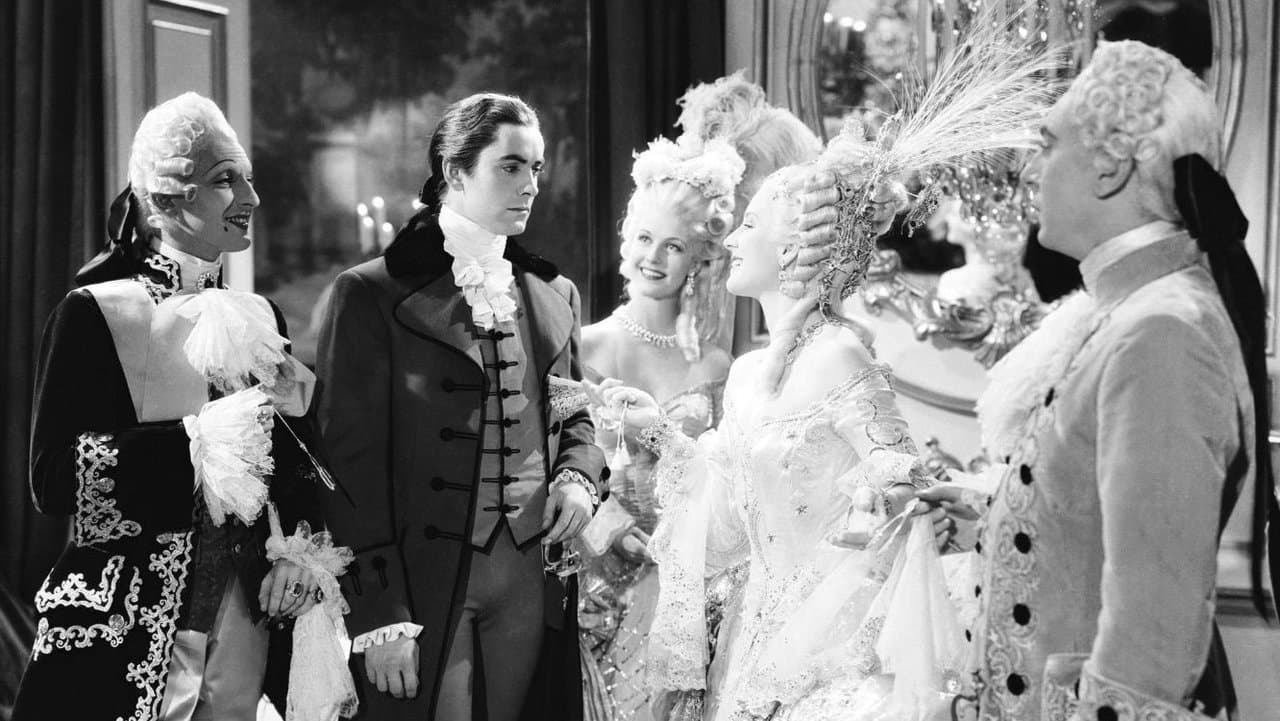
Director W. S. Van Dyke brought Marie Antoinette to the screen as one of Metro-Goldwyn-Mayer's most ambitious productions of the 1930s. The film was based on Stefan Zweig's 1932 biography, a work that sought to humanize rather than demonize its subject—a biographical approach that clearly shaped the film's sympathetic lens. Norma Shearer, already an MGM powerhouse and the wife of studio executive Irving Thalberg, anchored the production with a performance that demanded both glamour and vulnerability. The 149-minute runtime allowed Van Dyke to build the world slowly, to let audiences experience the opulence and isolation of Versailles, the intoxicating freedom of court life, and the creeping dread as political winds shift. The film premiered at the legendary Carthay Circle Theatre in Los Angeles in 1938, where the studio pulled out all the stops—the theatre's landscaping was specially decorated for the event, a sign of how much MGM was betting on this picture. The production values are staggering: the costumes, the sets, the sheer scale of the thing reflect a studio at the height of its power and resources, before the constraints of the 1940s would force Hollywood to think smaller.
What makes Marie Antoinette endure as a character study
Here's what strikes me most about this film: it doesn't let Marie Antoinette off the hook, but it doesn't crucify her either. There's a real tension in how the movie handles her flirtations, her spending, her apparent indifference to the plight of ordinary French people. Shearer plays these moments with a kind of willful blindness that feels tragically human. She's not a villain twirling a mustache; she's a woman who genuinely doesn't understand why her happiness should be anyone else's problem, and that incomprehension—that disconnect between her world and the world beyond the palace gates—becomes the film's central tragedy. The supporting cast surrounds her with capable presences: Robert Morley as Louis XVI brings a fumbling, well-meaning quality to the king, a man utterly out of his depth. The chemistry between Shearer and her co-stars creates an emotional texture that keeps the historical machinery from feeling like mere pageantry. What's particularly striking is how the film captures the loneliness of her position—she's surrounded by courtiers and admirers, yet genuinely isolated, unable to confide in the one person who might understand her, the husband who loves her but can't help her. The film doesn't shy away from showing how her choices—however understandable—ripple outward with devastating consequences.
Where to stream Marie Antoinette and discover more period dramas
Marie Antoinette is currently available on major OTT services, and you can check the Where to Watch widget at the top of this page to see exactly which platforms are streaming it in your region right now. Movie OTT tracks availability across all major services, so you'll know instantly where to find it. If you're drawn to this kind of lavish historical drama—the kind that takes time to build atmosphere and doesn't rush through its narrative—Movie OTT's streaming guide can point you toward similar films and series that explore royal intrigue, forbidden romance, and the collision between personal desire and public duty. The 1938 picture remains a solid entry point into both classic Hollywood and the historical drama genre, and it's worth seeking out if you appreciate films that trust their audience to sit with complexity rather than demand easy answers.
Frequently asked questions
Q: Is Marie Antoinette based on a true story?
Yes. The film is based on Stefan Zweig's 1932 biography of the real Marie Antoinette, the Austrian-born Queen of France. While it takes dramatic liberties typical of 1938 Hollywood, it's grounded in historical events and the actual tensions between Marie Antoinette and the French people that preceded the Revolution.
Q: Who directed Marie Antoinette and what was the production scale?
W. S. Van Dyke directed the film for MGM. It was one of the studio's most lavish productions of the 1930s, running 149 minutes and featuring elaborate costumes, sets, and a major premiere at the Carthay Circle Theatre in Los Angeles, where the theatre's landscaping was specially decorated for the event.
Q: What's the runtime and is it worth the time investment?
The film runs 149 minutes, which is substantial but not excessive for a period drama of this ambition. If you enjoy character-driven historical narratives that build atmosphere and don't rush through emotional beats, the length works in its favor rather than against it.
Q: How does Norma Shearer's performance hold up today?
Shearer brings both glamour and a kind of tragic self-awareness to the role. She plays Marie Antoinette with enough nuance to avoid caricature—you understand her desires and her blindness to the world around her, which makes the film's trajectory all the more affecting.
Q: Where can I watch Marie Antoinette online right now?
Check the Where to Watch widget on this page to see current availability. Major OTT services carry the film, and availability varies by region and changes frequently, so the widget will show you the most up-to-date options.
Final thoughts on Marie Antoinette and why it matters
Marie Antoinette is a film that rewards patience. It's not a quick thrill or a tidy moral lesson—it's a slow-burn character study wrapped in the trappings of Hollywood spectacle. What makes it endure is that it refuses easy judgment. You'll leave the theatre understanding both why Marie Antoinette was beloved and why she was hated, and that ambiguity is exactly what makes the film feel alive. Don't miss it.