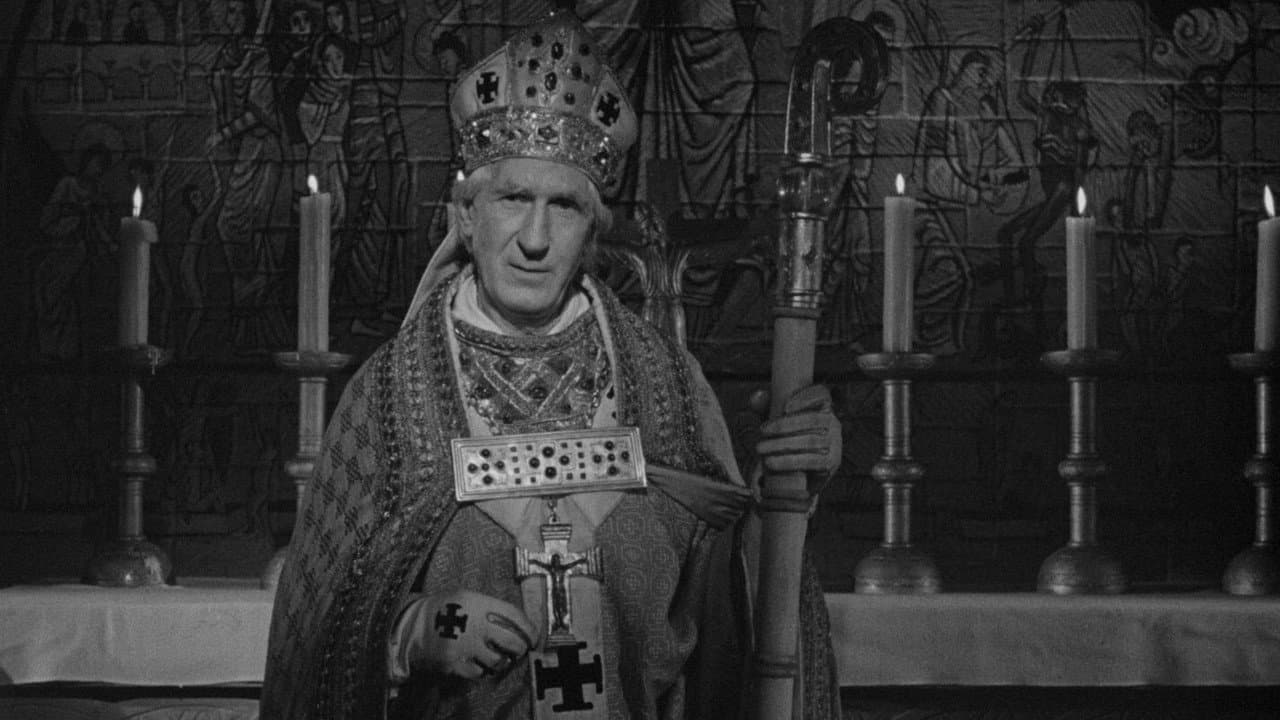
The story of Murder in the Cathedral unfolds in medieval England
Thomas Becket, Archbishop of Canterbury, stands at a crossroads between his spiritual calling and the worldly pressures that surround him. Murder in the Cathedral isn't a conventional historical thriller—it's a philosophical and theological examination of a man confronting his own pride, ambition, and the price of martyrdom. The film follows Becket's internal struggle as he returns to Canterbury after years of exile, knowing that his defiance of the Crown will likely cost him his life. What makes this narrative compelling isn't the mystery of whether he'll be murdered (spoiler: the title gives that away), but rather his wrestling with whether his willingness to die makes him a saint or simply a man intoxicated by his own righteousness. It's a story about the seductive nature of martyrdom itself.
Behind the making of Murder in the Cathedral: Eliot and Hoellering's collaboration
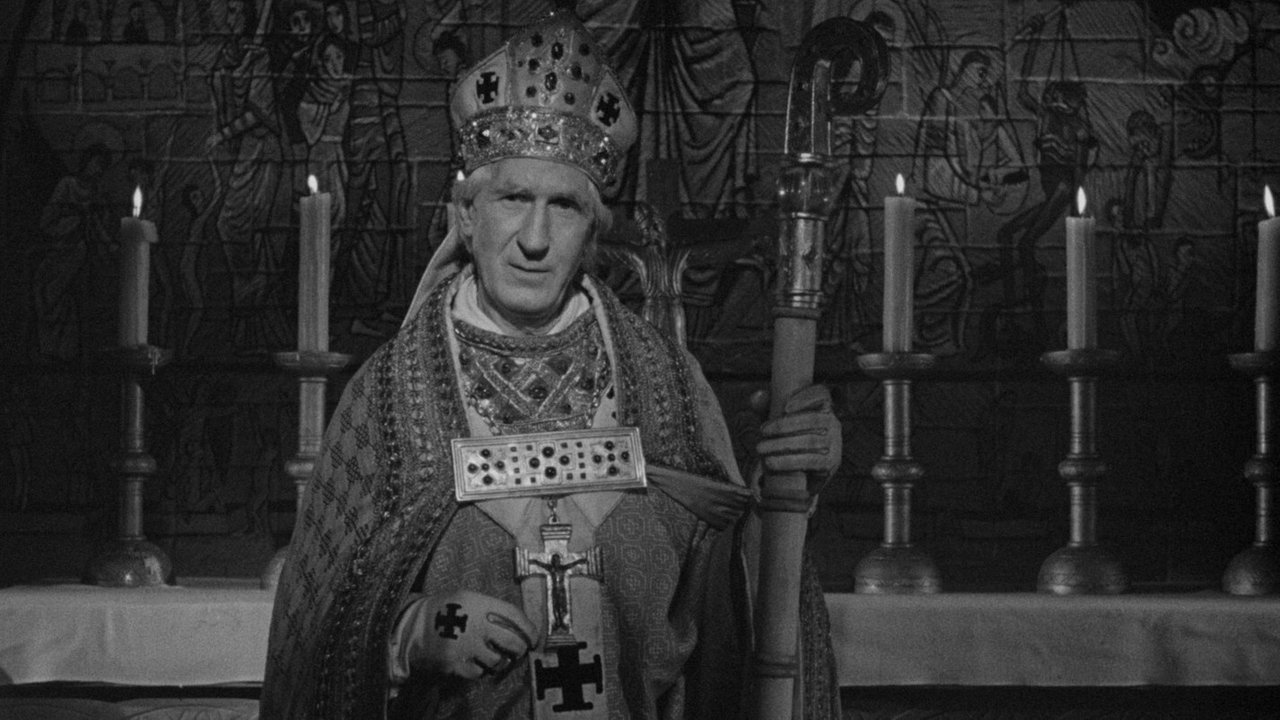
George Hoellering directed and produced this 1951 adaptation, working from T.S. Eliot's own 1935 verse drama—and crucially, Eliot co-wrote the screenplay alongside Hoellering, ensuring the film remained faithful to his original theological vision. The production came from Film Traders Ltd, a modest British outfit that took on an ambitious literary property. Rather than casting a major Hollywood star, Hoellering chose Father John Groser in the lead role, a decision that prioritized authenticity and spiritual gravity over box-office draw. Groser wasn't a professional actor in the traditional sense; he was an actual clergyman, which lends an undeniable gravitas to his portrayal of Becket's moral wrestling. The 114-minute runtime allows the film to breathe, refusing to rush through the philosophical debates and internal monologues that form the heart of Eliot's original work. The film carries a 6.5/10 rating on IMDb, a score that reflects its challenging, deliberately paced approach—this isn't entertainment designed to please everyone, and it doesn't pretend otherwise.
What makes Murder in the Cathedral stand out from typical period dramas
What's striking about this film is how little it cares about spectacle. There are no grand battle sequences, no sweeping romantic subplots, no attempts to "open up" the play for cinema in the way that often dilutes theatrical material on screen. Instead, Hoellering trusts the language, the ideas, and the moral architecture that Eliot constructed. The performances anchor everything—Groser's Becket isn't a heroic figure bravely marching toward sainthood, but a man genuinely torn between his ego and his faith, between the comfort of exile and the terrible knowledge of what awaits him in Canterbury. The film's power lies in its refusal to simplify. Becket doesn't arrive at martyrdom through some clean spiritual epiphany; he arrives there through a kind of exhausted acceptance, having confronted the ugly truth that his desire for martyrdom might itself be a form of vanity. It's a psychological and spiritual depth that most religious dramas shy away from. The dialogue—drawn directly from Eliot's verse—carries weight without feeling archaic or inaccessible, though it demands active engagement from the viewer. You can't half-watch this film and expect to understand it.
Where to stream Murder in the Cathedral online
Murder in the Cathedral is available on major OTT services, and Movie OTT tracks current streaming availability across multiple platforms to help you find it instantly. Rather than hunting across three different apps, you can check the Where to Watch widget at the top of this page to see exactly which service has it in your region right now. Streaming rights shift regularly, especially for older, lesser-known titles, so it's worth verifying availability before you settle in to watch. The film's modest runtime—just under two hours—makes it manageable for a single viewing session, though you may find yourself wanting to return to it, especially after reading about Eliot's original play or the historical context of Becket's actual murder in 1170.
Frequently asked questions
Q: Is Murder in the Cathedral based on a true story?
Yes—the film is based on the actual murder of Thomas Becket, Archbishop of Canterbury, in 1170. However, Eliot's 1935 verse drama (on which the film is based) uses the historical event as a springboard for a theological meditation on faith and martyrdom rather than a strict historical account. The film prioritizes Becket's internal spiritual struggle over historical accuracy.
Q: Who directed Murder in the Cathedral?
George Hoellering both directed and produced the 1951 film adaptation. He also co-wrote the screenplay with T.S. Eliot himself, ensuring the film remained true to Eliot's original vision and philosophical concerns. This was Hoellering's most significant film project.
Q: Who plays Thomas Becket in the film?
Father John Groser, an actual clergyman rather than a professional actor, takes the lead role. His casting brought authenticity and spiritual weight to the character, though his lack of conventional acting experience means the performance feels deliberate and measured rather than naturalistic in the modern sense.
Q: How long is Murder in the Cathedral?
The film runs 114 minutes, giving it enough time to explore the philosophical and theological dimensions of Eliot's work without feeling bloated. It's a patient film that rewards careful attention.
Q: What genre is Murder in the Cathedral?
The film is classified as drama and history. It's not a thriller or action film—it's a contemplative, dialogue-driven exploration of faith, temptation, and the nature of sacrifice.
Final thoughts on Murder in the Cathedral
Murder in the Cathedral won't appeal to everyone, and that's precisely the point. It's a film for viewers willing to sit with ambiguity, to listen carefully to language, and to wrestle with questions about faith, pride, and the human capacity for self-deception. If you're drawn to literary adaptations that respect their source material, or if you're interested in how cinema can explore theological ideas without preaching, this 1951 film deserves your time. Don't expect comfort or easy answers—expect a mirror held up to the messy reality of spiritual conviction.