



The story of Notes from Underground
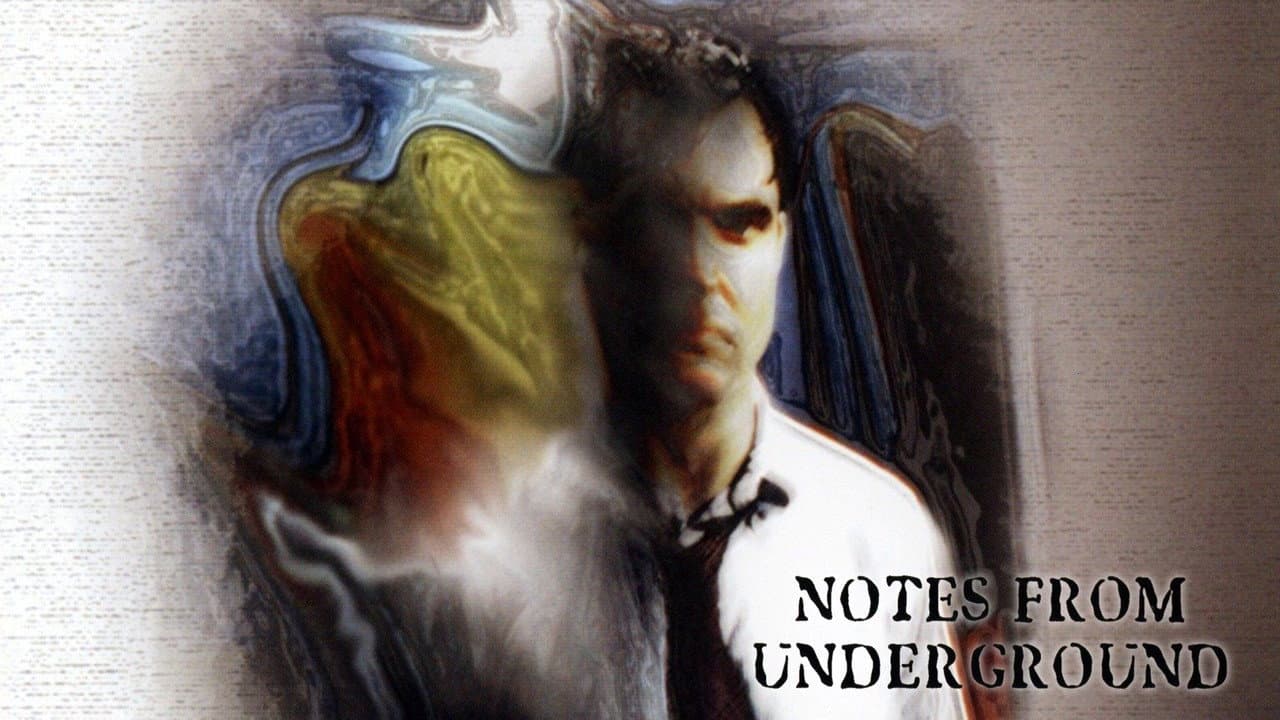
Notes from Underground is a 1995 drama that takes Fyodor Dostoevsky's 1864 novella—originally published as a serialized confession in the Russian journal Epoch—and transposes its psychological torment into a contemporary setting. Henry Czerny plays the narrator, a man consumed by self-hatred who documents his inner turmoil through video diary entries, each one a raw dissection of his own failures and his contempt for the world around him. The narrative builds toward a catastrophic dinner party with old college friends, an evening that spirals into humiliation and sends him fleeing to a nearby brothel, where he encounters Liza (played by Kristin Lee), a young prostitute who becomes the unexpected focal point of his fractured moral awakening. What unfolds is less a traditional story arc and more a descent—one that the film captures with claustrophobic precision.
Behind the making of Notes from Underground
The 1995 adaptation represents one of several attempts to bring Dostoevsky's deeply introspective work to the screen, a task that's notoriously difficult because so much of the novella's power comes from the narrator's interior monologue. The filmmakers made the bold choice to keep that first-person perspective front and center by using the video diary device, which grounds viewers in the Underground Man's distorted worldview without breaking into voiceover narration. Henry Czerny, known for his work in television and supporting film roles, carries the entire weight of the picture on his shoulders—and that's no small feat when you're playing a character whose defining trait is his inability to connect with anyone. Kristin Lee brings a quieter presence as Liza, her performance working as a kind of mirror to the narrator's chaos. The film's 88-minute runtime is deliberately tight, refusing to linger in conventional dramatic beats and instead favoring the jagged rhythm of a mind that won't stop picking at its own wounds. While the film didn't achieve significant box office success or major award recognition—it remains a cult curiosity rather than a canonical adaptation—it's the kind of project that rewards viewers willing to sit with discomfort. Movie OTT tracks where this title streams across major platforms, making it accessible to those curious about lesser-known literary adaptations.
What makes Notes from Underground stand out
Here's the thing about adapting Dostoevsky: you can't soften it. The Underground Man isn't likable. He's vindictive, contradictory, and actively hostile to the very people he craves connection with—and the 1995 film doesn't sand down those edges to make him more palatable. What's striking is how Czerny commits fully to the character's self-awareness without letting it become self-pity. He knows he's sick, he knows he's wrong, and he despises himself for it, yet he can't stop. That paradox—the inability to change even when you're acutely conscious of your own toxicity—is the emotional core that keeps the film from becoming a simple character study. The video diary format also works as a kind of visual representation of the novella's original form: a confession made in private, for an audience that may never exist, with all the desperate honesty that implies. Lee's scenes with Czerny crackle with tension precisely because they're not written as redemptive moments. When the Underground Man encounters Liza, he doesn't suddenly transform. Instead, he projects his own self-loathing onto her, and what could've been a sentimental arc becomes something far more complicated and unsettling. The film doesn't offer easy answers about whether genuine human connection is possible when you're this broken, and that refusal to comfort the audience is part of what makes it linger.
How to watch Notes from Underground online
Notes from Underground is currently available on major OTT services, and you can check the Where to Watch widget at the top of this page to see which platforms are carrying it in your region right now. Streaming availability shifts regularly, so Movie OTT's real-time tracking helps you avoid the frustration of searching for a title only to find it's been delisted. If you're hunting for Dostoevsky adaptations or psychological dramas that don't follow the conventional three-act structure, it's worth adding to your watchlist. The 88-minute runtime means it won't demand a huge time commitment, though the emotional weight might make it feel longer. This isn't a background-watch kind of film—you'll want to be present for it.
Frequently asked questions
Q: Is Notes from Underground based on a true story?
No. It's an adaptation of Fyodor Dostoevsky's 1864 novella of the same name, which is a philosophical work of fiction exploring themes of alienation and psychological torment. The novella is a cornerstone of Russian literature, but the characters and situations are entirely invented.
Q: Who stars in Notes from Underground?
Henry Czerny plays the protagonist, the Underground Man, and Kristin Lee plays Liza, the young prostitute he encounters. Czerny carries much of the film's weight through his video diary monologues and the dinner party sequence.
Q: How long is Notes from Underground?
The film runs 88 minutes, making it a lean adaptation that doesn't waste time on subplot padding. The compact runtime actually works in its favor, maintaining the claustrophobic intensity throughout.
Q: Why is this film rated so low on IMDb?
With a 5.0/10 rating, it's clearly divisive. The film's refusal to provide conventional catharsis, its unlikable protagonist, and the challenge of adapting such a dense psychological text likely alienate viewers expecting a more traditional drama. That said, low ratings don't always reflect artistic merit—sometimes they just mean a work isn't designed to please everyone.
Q: What year was Notes from Underground released?
The film came out in 1995. It's now nearly 30 years old, which gives it a certain period-specific quality in its aesthetic and approach to adaptation.
Final thoughts on Notes from Underground
Notes from Underground isn't a film for everyone. It's slow, it's uncomfortable, and its protagonist is genuinely difficult to root for. But that's precisely why it matters. In a landscape where streaming services often default to uplifting narratives and redemptive arcs, there's something valuable about a film that's willing to sit with moral ambiguity and psychological damage without offering easy resolution. If you're drawn to character studies that don't flinch, to Dostoevsky's work, or to performances that demand your full attention, this 1995 adaptation deserves a chance. It won't make you feel good. It might make you feel understood, though—and sometimes that's enough.