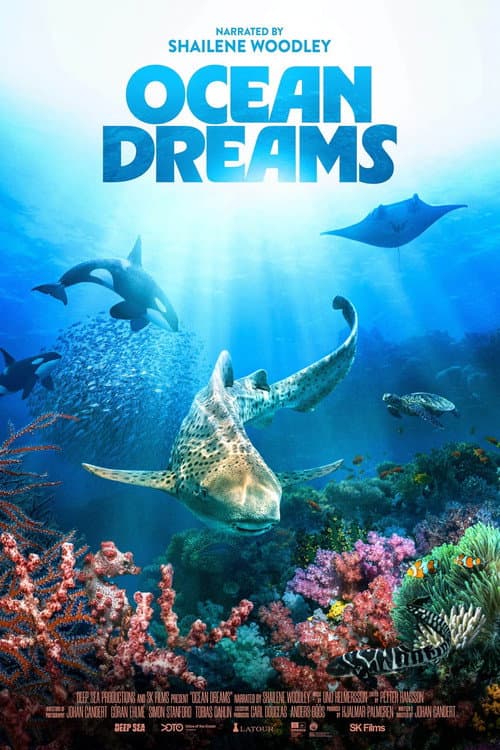

Ocean Dreams
Release Date: June 8, 2026 | Runtime: 43 minutes | Format: IMAX/Giant-Screen Documentary | Director: Johan Candert
Ocean Dreams is a 43-minute underwater documentary that arrives on World Oceans Day with a specific argument: the ocean can recover if we let it. Not because we deserve a happy ending, but because the biology is real. Directed by Swedish cinematographer Johan Candert, the film takes you from Norwegian fjords where orcas hunt herring in coordinated packs, to Raja Ampat in Indonesia — essentially the Serengeti of coral reefs — to Bikini Atoll, where fish and coral have been quietly rebuilding in waters that were functionally dead after nuclear testing in the 1940s.
The film doesn't lean on despair. That's what makes it different.
Why This Documentary Stands Apart From the Usual Ocean Doom
Here's the thing that stays with you: the wolffish sequence. These aren't charismatic animals. They're genuinely strange-looking creatures with powerful jaws that crunch through sea urchins—and by doing so, they protect entire kelp forest ecosystems. It's specific. Counterintuitive. The kind of ecological story that doesn't get made into documentaries very often because it requires the filmmaker to trust that viewers care about function, not just beauty.
Candert's background in underwater cinematography matters here (and it shows). The footage from Bikini Atoll carries weight — there's nothing manufactured about it. The film watches coral and fish populations staging a comeback in an environment that was essentially sterilized by mid-20th-century weapons testing. That's not a metaphor. That's marine biology.
The runtime deserves mention too. Forty-three minutes sounds short — and it is — but the film doesn't pad. Every location earns its place. You're not sitting through filler waiting for the next beautiful shot. The pacing works because Candert trusts the material enough to get out of its way.
Where to Actually Watch Ocean Dreams
Ocean Dreams premiered on the IMAX and giant-screen circuit — science centers, aquariums, planetariums. That's where it was designed to be seen, and if you have access to one of those venues, the scale difference is significant. The underwater footage does something different on a screen that size.
For everyone else — which is most of us — the film is available on major streaming platforms. Movie OTT tracks where it's currently streaming in your region, which matters because documentary licensing varies wildly by country. The widget updates in real time, so you're not chasing dead links or guessing which service has it this month.
The 43-minute length actually works in your favor here. It's the kind of thing you can fit into an evening without committing to a full feature. Honestly, that brevity makes it more watchable than a two-hour environmental doc that tests your patience by the halfway point.
Production and Distribution Details
Ocean Dreams came together as a co-production between SK Films and Deep Sea Productions, with SK Films handling international giant-screen distribution. SK Films has a track record with large-format nature documentaries — they know this circuit, they know what works in immersive venues, and they know how to get films into the right theaters.
The June 8, 2026 release date wasn't random. World Oceans Day. The timing is a statement. A film about ocean resilience arriving on the one day the world officially acknowledges that oceans exist.
There are two cuts: the 43-minute version (the primary release) and a shorter 23-minute cut for venues that need programming flexibility. Standard practice in the IMAX documentary world, where scheduling and runtime constraints are real constraints.
As for critical reception — review aggregators like Rotten Tomatoes and Metacritic have the title listed but no formal scores yet. That's typical for IMAX releases that skip the traditional wide-release press circuit. The giant-screen documentary world has its own awards ecosystem (the Giant Screen Cinema Association hands out honors), and that's where films like this tend to find recognition. Hard to say if mainstream critical consensus will materialize quickly.
If You Liked... Ocean Dreams Might Be Next
If you've watched other large-format nature documentaries — Planet Earth, Our Planet, that tier of production — you know the language. Candert's work doesn't reinvent that wheel. What it does differently is resist the exhaustion tone that defines a lot of environmental filmmaking right now. The doom-scroll approach to climate documentaries has become almost reflexive. This one doesn't do that.
Think of it as Blue Planet meets My Octopus Teacher — awe-struck cinematography paired with specific, character-driven ecological storytelling. The wolffish isn't cute. The orcas aren't there to be adorable. The recovering reefs of Bikini Atoll aren't a consolation prize for all the damage we've done. They're evidence of what resilience actually looks like when the pressure is removed.
Quick Answers to What You're Probably Wondering
Should I watch this? Yes, if you're fatigued by climate documentaries that leave you feeling helpless. This one actually has something to say.
How long is it? Forty-three minutes. Compact. No filler.
Where do I find it? Movie OTT's streaming tracker will show you which services have it live in your country right now. Availability changes with licensing windows, so checking there beats guessing.
Is it family-friendly? Yes. It's a nature documentary. No violence beyond predators doing what predators do (the orca hunt sequence is realistic but not graphic).
Who made it? Director Johan Candert, a Swedish filmmaker whose underwater cinematography background gives the whole project credibility it wouldn't have otherwise.
When was it released? June 8, 2026 — World Oceans Day — initially in IMAX and giant-screen venues. Now available on streaming platforms.
The Actual Case for Watching
What's striking is how Ocean Dreams refuses to make hope feel cheap. The Bikini Atoll recovery is real — marine biologists have documented coral and fish populations rebuilding in those waters over decades. The wolffish protecting kelp forests is real. The orcas hunting herring in Norway's fjords in coordinated groups is real. These aren't feel-good flourishes. They're facts the film trusts you to care about.
Look — most environmental documentaries operate on the assumption that you need to be scared into caring. Ocean Dreams operates on the assumption that you'll care if you actually understand what you're looking at. Forty-three minutes of underwater cinematography paired with specific ecological storytelling. No manipulation. No manufactured drama.
If you can catch it in a giant-screen venue, do. The immersive format was built for exactly this kind of material. But if streaming is your only option — and it is for most people — it's worth tracking down through Movie OTT. The film works on any screen because the story is strong enough to carry it.