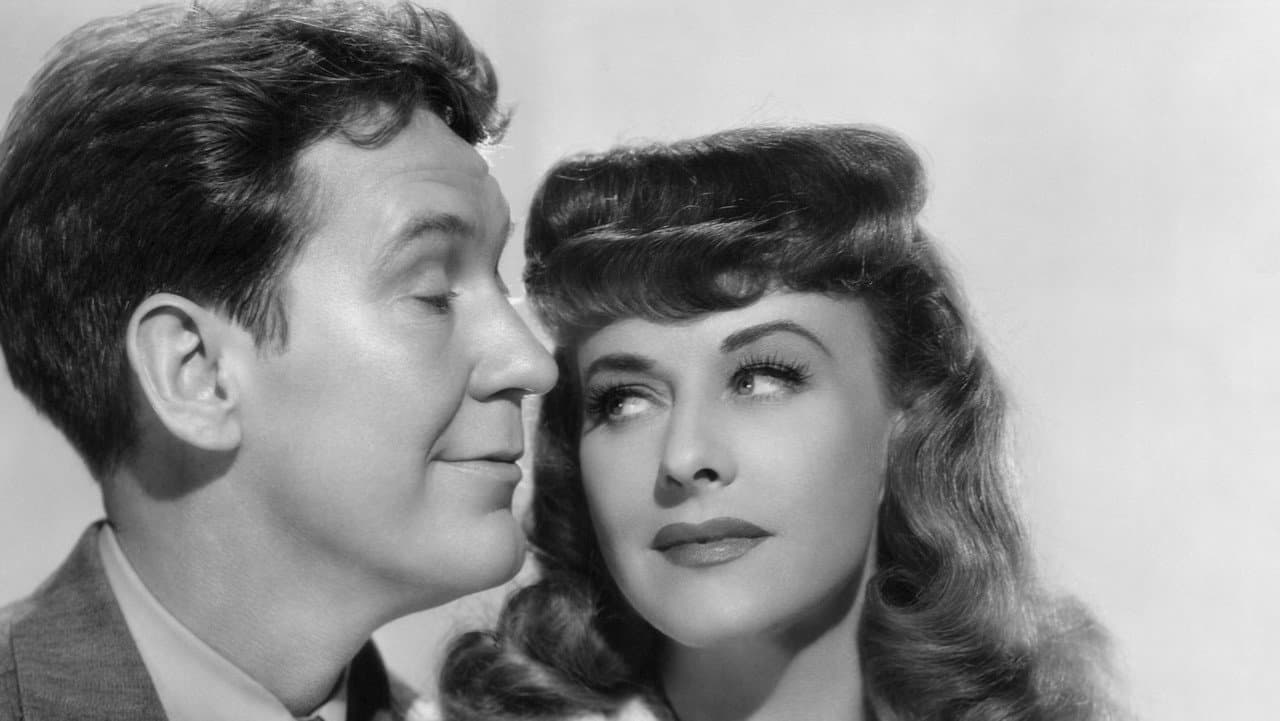
The Story of On Our Merry Way
Oliver Pease isn't living the life he imagined. He spends his days writing lost pet notices for the newspaper—a job that's honest enough, but hardly the stuff of journalism dreams. His wife Martha, though, won't let him settle. She pushes him to ask the editor for something bigger, something real. And it works. Oliver gets his shot: he'll roam the city asking everyday people a single question: "Has a little child ever changed your life?"
What he doesn't expect is that the answers will be anything but sentimental. The people he interviews—a pair of slow-talking musicians, a Hollywood actress famous for her sarong roles, a cardsharp drifter—all have stories about children, sure. But these aren't heartwarming tales of innocence and redemption. These kids are con artists, spoiled brats, and complications waiting to happen. The structure mirrors a patchwork quilt of Americana, each segment pulling the viewer deeper into the contradictions of what it means to change someone's life.
Behind the Making of On Our Merry Way
On Our Merry Way arrived in 1948 as a co-production between Benedict Bogeaus and Burgess Meredith, released through United Artists. The film was directed by King Vidor and Leslie Fenton, though the production's history is murkier than it first appears—DVD releases later credited John Huston and George Stevens with uncredited work on individual segments, which tells you something about how complicated the shoot must've been. The screenplay came from Laurence Stallings and Lou Breslow, adapted from an original story by Arch Oboler, and it borrowed heavily from the anthology-film playbook that Tales of Manhattan had established six years earlier.
The cast reads like a who's who of mid-century Hollywood: Paulette Goddard as the sarong-wearing actress, Burgess Meredith as the henpecked Oliver, James Stewart and Henry Fonda as the musicians (marking their first joint film appearance), Dorothy Lamour, Victor Moore, and Fred MacMurray rounding out the ensemble. Stewart and Fonda's pairing alone was enough to draw crowds—two major stars sharing screen time in what amounts to a vignette was still a draw in 1948. The film clocked in at 107 minutes, a generous runtime that allowed each story to breathe, though not always to flourish. The picture didn't set the box office on fire, and it's largely been forgotten by mainstream audiences, though it's occasionally rediscovered by film historians interested in the anthology format's early experiments.
What Makes On Our Merry Way Stand Out
What's striking about On Our Merry Way is how it refuses easy sentiment. You'd expect a film asking "how did a child change your life?" to deliver three stories of transformation, redemption, and growth. Instead, it gives you cynicism wrapped in comedy. The first musicians encounter a "baby" who turns out to be a fully grown woman—a musician herself, which is funny enough, but it also undercuts the premise entirely. The second segment, featuring the actress and a spoiled child star, does eventually deliver some kindness, but only after the kid's learned a hard lesson about entitlement. The third? A family that actively doesn't want their brat returned. It's dark humor, the kind that doesn't announce itself with a laugh track.
Burgess Meredith anchors the whole thing as Oliver Pease, and he's genuinely good in the role. He plays the character as someone caught between ambition and resignation, and there's a quiet dignity in watching him navigate each interview, never quite sure what he's stumbled into. The supporting performances vary—Stewart and Fonda are charming as the musicians, though their segment is the slowest paced—but the ensemble cast keeps things moving even when individual scenes lag. I keep coming back to the film's willingness to be uncomfortable, to suggest that life-changing moments aren't always the ones we'd choose or celebrate. It's not a masterpiece (the IMDb rating of 5.7 reflects that reality), but it's curious in ways that more polished comedies aren't.
Where to Stream On Our Merry Way Online
On Our Merry Way is available across major OTT services, and if you're hunting for it, the "Where to Watch" widget at the top of this page will show you exactly which platforms currently have it in their catalog. Streaming availability shifts constantly—a film from 1948 doesn't have the same licensing muscle as a contemporary release—so it's worth checking Movie OTT regularly if you can't find it on your primary service. The film's public domain status in some regions means it occasionally surfaces on free ad-supported platforms as well, so you might catch it there if you're patient. The 107-minute runtime makes it an easy watch for a lazy afternoon, especially if you're curious about how Hollywood approached the anthology format before it became a prestige-TV staple.
Frequently asked questions
Q: Who directed On Our Merry Way?
King Vidor and Leslie Fenton received directorial credit at release, though later sources credit John Huston and George Stevens with uncredited contributions to individual segments, suggesting a more complicated production than the credits suggest.
Q: Is On Our Merry Way based on a true story?
No. The screenplay was adapted from an original story by Arch Oboler, written specifically for the film. It's a work of fiction structured around the central premise of asking people how children have changed their lives.
Q: What's the runtime of On Our Merry Way?
The film runs 107 minutes, giving each of its three interconnected stories enough time to develop without feeling rushed.
Q: Why is On Our Merry Way structured as an anthology?
The film follows the model established by Tales of Manhattan (1942), using a framing device—Oliver Pease's newspaper assignment—to connect otherwise unrelated stories. This was a popular format in the 1940s for ensemble comedies.
Q: Where can I watch On Our Merry Way right now?
The "Where to Watch" widget at the top shows current availability across streaming platforms. Since licensing changes frequently, Movie OTT tracks updates across all major services so you don't have to hunt manually.
Final Thoughts on On Our Merry Way
On Our Merry Way isn't a film that's going to change your life—ironic, given its premise. It's a curiosity, a minor-key experiment in comedy that didn't quite land for audiences in 1948 and hasn't been rediscovered in the decades since. But that's partly what makes it worth watching. There's something refreshingly honest about a Hollywood comedy that doesn't try to wrap everything in sentiment. If you're a fan of ensemble casts, 1940s cinema, or just want to see James Stewart and Henry Fonda play musicians for 20 minutes, it's worth tracking down. Don't expect perfection. Just expect something a little weird and a little true.