The Story of Police Story
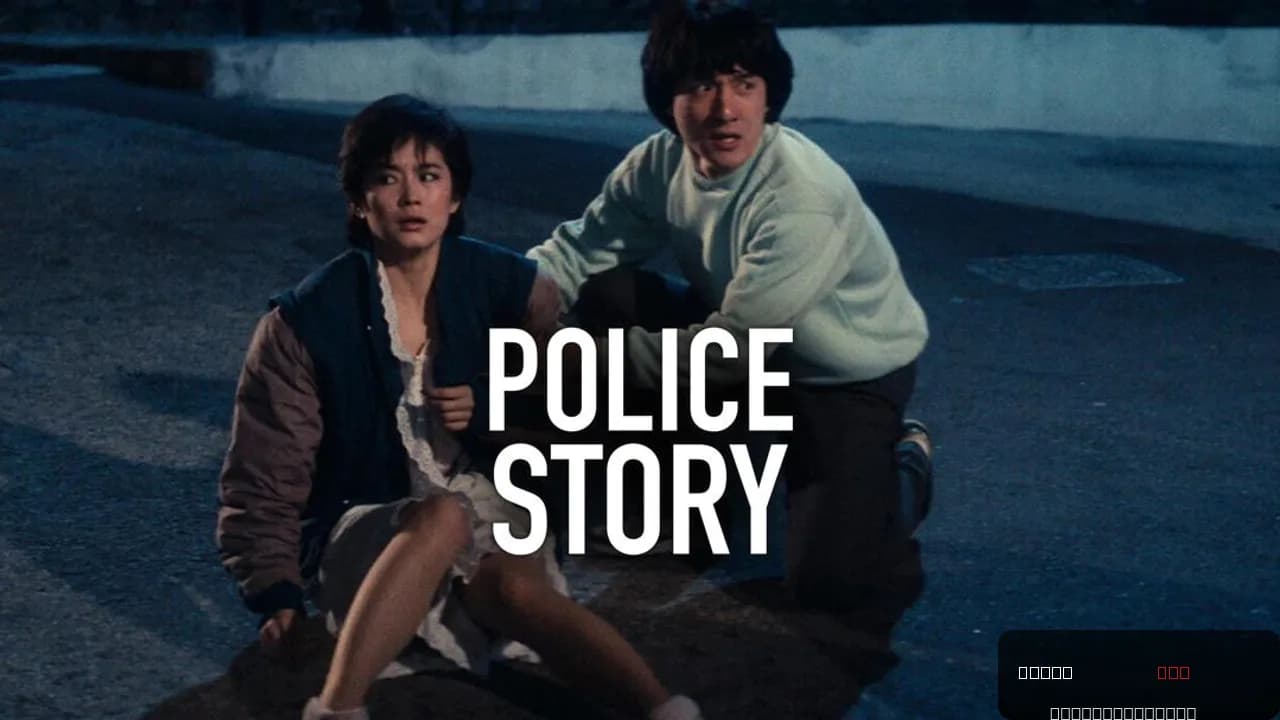
Police Story follows Hong Kong detective "Kevin" Chan Ka-Kui, played by Jackie Chan, as he navigates the dangerous intersection of undercover police work and organized crime. After successfully helping arrest a major drug lord, Chan finds himself framed for murder—a setup that forces him to go rogue and clear his own name while evading both criminals and his own department. What unfolds isn't a straightforward crime thriller, but rather a propulsive action comedy that blends genuine danger with moments of slapstick humor and unexpected warmth. The film's 100-minute runtime never feels bloated; every scene either pushes the plot forward or establishes character through action rather than exposition.
The premise is simple enough on paper, but Chan and director Jackie Chan (who also co-wrote the screenplay with Edward Tang) use it as a launching pad for something far more ambitious: a film that treats the human body as both a comedic and dramatic instrument. You're watching a man genuinely risk his life—not in a metaphorical sense—to entertain you while also telling a coherent story about loyalty, corruption, and redemption.
Behind the Making of Police Story
Police Story arrived in 1985 as a turning point for Jackie Chan's international profile, though he'd already been working in Hong Kong cinema for years. The film was a substantial production for its time, with Chan directing himself and assembling a cast that included Brigitte Lin (as a witness in protective custody) and Maggie Cheung, both established Hong Kong stars who brought credibility and chemistry to the ensemble. The screenplay, co-written by Chan and Edward Tang, was specifically designed to showcase Chan's unique blend of martial arts expertise and comedic timing—something that set him apart from the more serious action heroes of the era.
The production wasn't without its costs. Chan famously performed many of his own stunts, and the shoot involved genuine physical danger; this wasn't CGI or wire work in the modern sense, but rather Chan throwing himself at practical problems and solving them through sheer determination and creativity. The film earned $113,164 at the box office—modest by today's standards, but the real victory lay in critical recognition. Police Story holds a 90% on Rotten Tomatoes and a Metascore of 78, with the film earning 2 wins and 5 nominations across various awards bodies. The MPAA rating of PG-13 is perhaps the most surprising detail: this film contains car crashes, sword fights, and brutal hand-to-hand combat, yet somehow earned a rating that allowed younger audiences to experience it in theaters.
Chan's commitment to practical effects and real-world choreography influenced how action cinema would evolve, particularly in Hong Kong and eventually across the globe. Movie OTT tracks how films like this one continue to influence streaming recommendations and genre classification, as audiences increasingly seek out action titles that prioritize stunt work over digital manipulation.
What Makes Police Story Stand Out
What's striking about Police Story, even now, is how little it relies on dialogue or exposition to tell its story. Long stretches unfold through action—chases through crowded markets, fights in cramped spaces, a genuinely astonishing sequence involving a bus that's been stripped down to its frame. The thing nobody mentions is that this approach to storytelling was actually radical at the time. Most action films of the mid-1980s still followed a formula of plot-heavy setup, dramatic confrontations, and then action sequences. Chan's film inverts that logic: the action is the character development, the plot advancement, the emotional beats.
Critically, the film's reception reflected this innovation. Reviewers recognized that Chan wasn't just performing acrobatics; he was creating a new visual language for action cinema. The performances work because Chan, Lin, and Cheung commit fully to both the comedy and the danger—there's no winking at the camera, no sense that they're above the material. When Chan's character gets thrown through a storefront window or dangles from a moving bus, you're watching an actor genuinely putting himself in harm's way, and that stakes-raising commitment changes how you experience the film.
The martial arts choreography itself deserves mention. Chan doesn't fight like a kung fu master dispensing justice; he fights like a cop who's been trained but is also improvising, using environment and humor as weapons. A fight in a parking garage or a rooftop confrontation doesn't feel like a dance—it feels like a desperate, inventive problem-solving session where the body becomes the tool. That's a subtle but crucial distinction that separates Police Story from countless action films that came before and after. As Movie OTT has noted in tracking critical consensus across decades, this film's influence on how action is shot and choreographed remains quietly pervasive.
Where to Stream Police Story Online
Police Story is currently available on Prime Video, where you can stream it on-demand. The film's accessibility on a major platform means there's no excuse to miss it if you've heard the hype but haven't yet experienced it yourself. The 1985 original remains the definitive version—there are sequels and remakes, but this first entry is where Chan's vision is clearest and most inventive. For current streaming availability across multiple platforms, check the "Where to Watch" widget at the top of this page, which updates regularly to reflect licensing changes. If you're browsing through action titles on your streaming service, Police Story should be near the top of your queue.
Frequently asked questions
Q: Who directed Police Story?
Jackie Chan directed Police Story alongside starring in the lead role. He also co-wrote the screenplay with Edward Tang, giving him creative control over how his character and the action sequences would be realized on screen.
Q: Is Police Story based on a true story?
No, Police Story is a fictional screenplay created by Jackie Chan and Edward Tang. While it draws on familiar crime and police procedural tropes, the story of Detective Chan Ka-Kui and his quest to clear his name is an original creation designed to showcase Chan's physical abilities and comedic timing.
Q: How long is Police Story?
The film runs 100 minutes, a tight runtime that keeps the pacing brisk without sacrificing character development or allowing the action sequences to feel repetitive or exhausting.
Q: What's the IMDb rating for Police Story?
Police Story holds a 7.5 out of 10 on IMDb based on 46,659 votes, reflecting strong audience appreciation for the film's blend of action, comedy, and practical stunt work.
Q: Is Police Story appropriate for kids?
Police Story is rated PG-13, meaning parental guidance is suggested for children under 13. While it contains action violence and some intense sequences, the film's comedic tone and lack of graphic content make it more accessible to younger viewers than many action films.
Final Thoughts on Police Story
Police Story endures because it refuses to choose between being entertaining and being artful. Chan's commitment to practical effects, combined with a genuinely engaging plot and a supporting cast that matches his energy, creates something that doesn't feel dated even now. It's the kind of film that makes you appreciate the human body as a tool for storytelling—something we've gradually lost as action cinema has become more dependent on digital effects. If you're looking for a film that delivers genuine thrills, unexpected laughs, and a protagonist you actually care about, Police Story delivers all three. It's essential viewing for action fans and absolutely worth your time on Prime Video.