






The Story of Red Kiss and Its Political Awakening
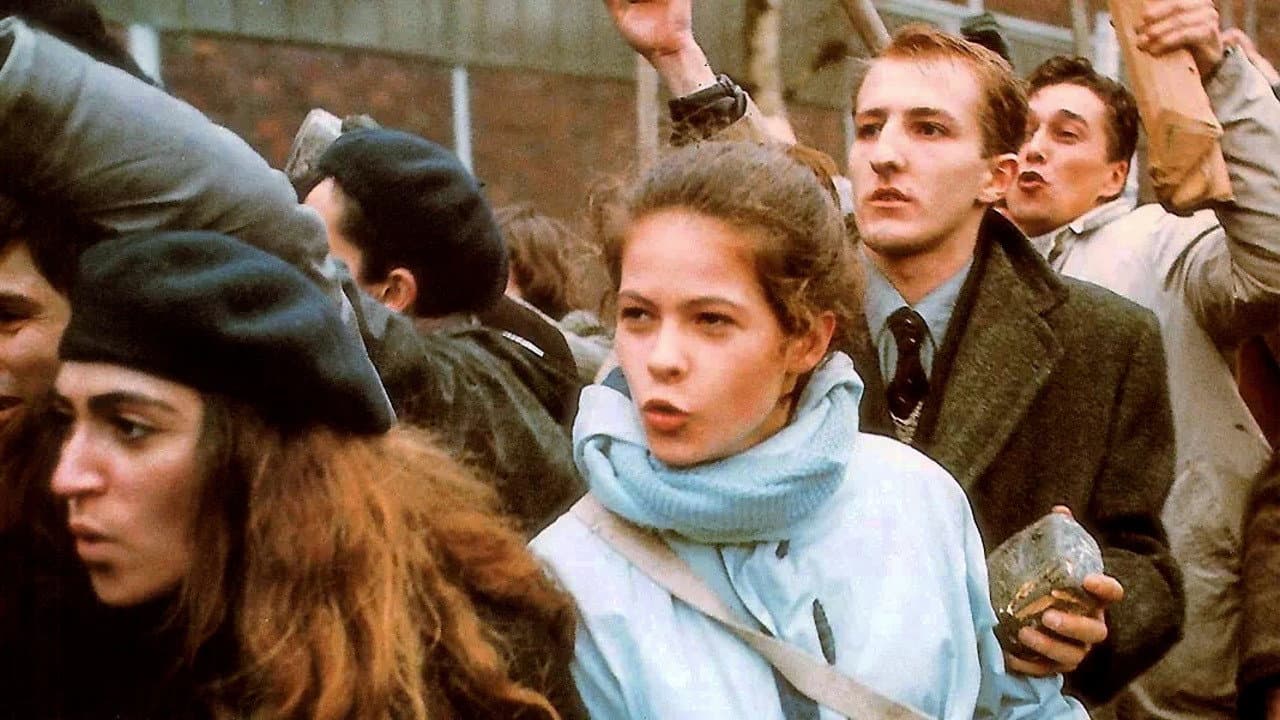
Red Kiss unfolds in 1952 Paris, a city still reeling from postwar upheaval and ideological fervor. The film centers on Nadia, a fifteen-year-old daughter of Polish Communist parents—what the film calls a "Red Diaper baby," raised from birth in the party's orbit. She's not a bystander to her family's convictions; she's an active true believer, marching in anti-American demonstrations with the kind of certainty only adolescence and inherited ideology can provide. When police brutality erupts during one of these protests, a photographer—a "Match" magazine man named Stéphane—pulls her from the chaos. What starts as rescue becomes something neither of them anticipated. As their friendship deepens into romance, Nadia's carefully constructed worldview begins to crack. The slogans that once felt unquestionable now sit uneasily against the reality of her feelings, her desire, her individuality. Some of the Red youth want her expelled for the transgression of falling in love with someone outside the movement. Meanwhile, her father—alarmed by the relationship—takes the step of going to the police, setting in motion consequences that'll force Stéphane to consider fleeing to cover the war in Indochina.
Behind the Making of Red Kiss: Production and Cast
Red Kiss was directed by Aldo Lado, an Italian filmmaker known for his work in genre cinema and socially conscious drama, and it represents a more intimate, character-driven project than much of his earlier output. The film was a European co-production—a collaboration between C&H-Film Berlin, Farena Films, Films A2, and Stéphan Films—reflecting the kind of transnational European cinema that thrived in the 1980s, when funding and creative partnerships flowed across borders more freely than they do today. The 112-minute runtime allows Lado breathing room to develop both Nadia's internal conflict and the parallel narrative involving her mother's reconnection with a prewar lover, a man released from Siberia who carries the scars of Stalin's regime and becomes a living counterargument to the French Communist Party's mythology. This dual storyline—the daughter's romantic awakening and the mother's reckoning with historical truth—gives the film a tragic, almost Shakespearean structure. While Red Kiss didn't become a major box-office phenomenon, it circulated through European film festivals and art-house circuits, gaining respect among critics who appreciated its refusal to simplify either its politics or its emotions. The film holds a 5.5 rating on IMDb, a score that reflects its modest but devoted following rather than mainstream acclaim.
What Makes Red Kiss Stand Out: Performance and Political Nuance
What's striking about Red Kiss is how it refuses to mock Nadia's Communist convictions even as it shows them crumbling. Lado doesn't position the film as a "girl learns capitalism is good" narrative—that would be too easy, too pat. Instead, he's interested in something messier: how a young person navigates the gap between inherited belief and lived experience, between the collective and the self. The performances anchor this tension. Nadia's actress carries the role with a kind of urgent vulnerability—you see her intelligence, her genuine commitment to justice, and her dawning awareness that the party's answers don't fit the questions her heart is asking. Stéphane, the photographer, isn't presented as a seducer or a corruptor; he's simply someone who sees her as a person rather than a party member. The film's treatment of her mother and the Siberian returnee is equally unsparing. Here's a man who's lived through Stalinist horror, who can speak to anti-Semitic purges and the gulags' reality, confronting French Communists who've built their identity on defending the Soviet Union from a safe distance. It's a collision between ideology and testimony, between theory and scar tissue. Lado shoots these scenes with a kind of restrained intensity—no melodrama, just the weight of what's being said. The cinematography has that cool, observant quality of 1980s European art cinema, letting you sit with the characters' discomfort rather than rushing past it.
Where to Stream Red Kiss Online
Finding Red Kiss requires a bit of patience, but it's available across major OTT services—check the Where to Watch widget at the top of this page to see which platforms currently carry it in your region. Streaming availability shifts regularly, so Movie OTT tracks where Red Kiss is streaming right now, saving you the hunt. The film's relatively modest profile means it doesn't always sit in the algorithmic spotlight the way blockbusters do, but it's exactly the kind of discovery that streaming platforms are supposed to enable. If you're a subscriber to multiple services—and who isn't these days—there's a decent chance you'll find it somewhere in your existing roster. The 112-minute runtime makes it an easy fit for an evening, and it's the kind of film that lingers longer than its length suggests.
Frequently Asked Questions
Q: What year was Red Kiss released?
Red Kiss came out in 1985. It was a European co-production that circulated through art-house and festival circuits rather than getting a wide commercial release.
Q: Who directed Red Kiss?
Aldo Lado, an Italian director known for his work across genre and socially conscious drama, helmed the film. It represents one of his more intimate, character-focused projects.
Q: Is Red Kiss based on a true story?
While not a direct adaptation, Red Kiss draws on the historical reality of Communist youth movements in 1950s Paris and the ideological tensions of the Cold War era. The film's exploration of how young believers grapple with the gap between party doctrine and lived experience speaks to genuine historical dynamics.
Q: What's the runtime of Red Kiss?
The film runs 112 minutes, giving Aldo Lado enough space to develop both Nadia's personal awakening and the parallel narrative involving her mother's past.
Q: Where can I watch Red Kiss?
Red Kiss is available on major streaming platforms. Use the Where to Watch widget on this page to find it on your preferred service, or visit Movie OTT's streaming tracker to check current availability in your region.
Q: What's the IMDb rating for Red Kiss?
The film holds a 5.5/10 rating on IMDb, reflecting a modest but devoted audience rather than mainstream blockbuster status.
Final Thoughts on Red Kiss
Red Kiss isn't a film that'll solve everything for you, and it doesn't pretend to have answers. What it does—and does well—is sit with the messiness of growing up, of believing in something, of discovering that conviction and desire don't always align. It's a quiet film, sometimes austere, asking you to pay attention to what's unsaid as much as what's spoken aloud. If you're drawn to European art cinema, to coming-of-age stories that don't condescend to their young protagonists, or to Cold War narratives that resist easy ideology, Red Kiss is worth your time. It won't be the most entertaining 112 minutes you spend streaming this month, but it might be among the most thoughtful.