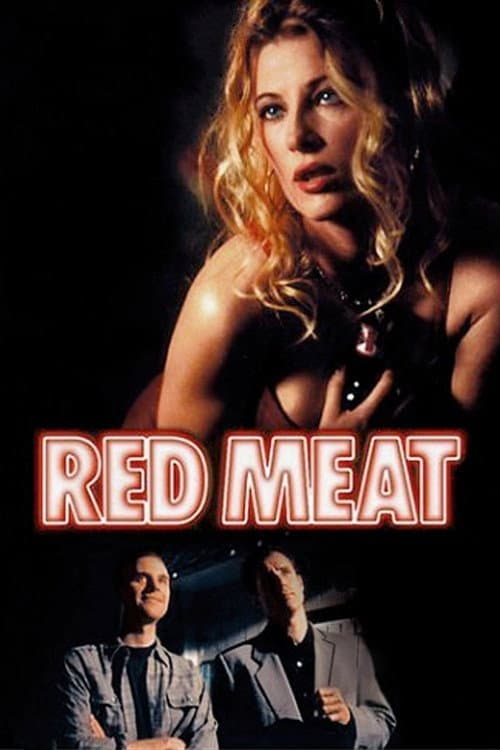









The Story of Red Meat
Red Meat opens on a simple premise: three men—Chris, Stefan, and Victor—sit down together for a meal and begin talking about women. It's the kind of conversation that happens in private, away from polite company, where social filters tend to dissolve. As the night unfolds, each man reveals his own particular obsession and wound. Stefan recounts his experiences with casual sex, Chris articulates his hunger for intellectual and emotional connection, and Victor speaks about his relationship with a woman who's dying. The film doesn't judge these confessions so much as hold them up to the light, asking what it means when men's desires—whether for conquest, stimulation, or companionship—become the organizing principle of their lives.
There's something deliberately claustrophobic about the setup. We're trapped in this room with these three voices, and the longer we listen, the more their contradictions and self-justifications begin to feel less like individual quirks and more like a portrait of something systemic. The tagline—"What Men Do To Women, They Do To Themselves"—suggests that this isn't really a film about women at all, but about how men's relationship to desire ultimately harms them.
Behind the Making of Red Meat
Red Meat arrived in 1997 from Treehouse Films and IMEC, an era when independent cinema was still finding its footing in the post-Sundance boom. The 95-minute runtime is deliberately spare, stripped of the conventional dramatic apparatus that might cushion what the filmmakers are trying to say. There's no grand narrative arc, no redemptive third act—just three men and their words. This minimalist approach was a deliberate choice, one that prioritized dialogue and performance over plot mechanics.
The film's production values reflect its modest ambitions and budget constraints, but that austerity works in its favor. Without expensive cinematography or elaborate set pieces to hide behind, everything depends on the writing and the actors' commitment to making these monologues feel lived-in rather than performative. The cast brought a kind of unflinching honesty to their roles, even if their characters don't always extend that same honesty to themselves. While Red Meat didn't generate significant box-office returns or major awards recognition—it remains a cult film rather than a mainstream success—it's the sort of project that lingers with viewers precisely because it refuses to offer easy answers or comfortable resolutions.
What Makes Red Meat Stand Out
What's striking about Red Meat is how it refuses to let any of these men off the hook. Stefan's sexual adventurism isn't presented as liberating; it's shown as a kind of compulsion, a way of avoiding real intimacy. Chris's intellectual posturing—his need for a woman who can stimulate him mentally—comes across as its own form of avoidance, a way of intellectualizing desire rather than confronting it. And Victor's devotion to his dying partner, while perhaps the most sympathetic of the three, carries its own complications. The film doesn't offer a hierarchy of morality here. It suggests instead that all three men are running from something, and that their conversations about women are really conversations about their own fears and inadequacies.
The performances anchor this delicate balance. Each actor had to make his character's rationalizations sound plausible—even persuasive—while allowing the audience to see through them. That's harder than it sounds. It's easy to play a character who knows he's wrong; it's much trickier to play someone who's genuinely convinced of his own logic, even as that logic crumbles under scrutiny. I keep coming back to the specificity of each monologue, the way they're not interchangeable. Stefan's stories have a different rhythm and tone than Chris's intellectual musings, which differ again from Victor's quieter, more resigned reflection.
The film's low IMDb rating of 3.8/10 speaks to something important: Red Meat isn't designed to be likable or comforting. It's designed to provoke and unsettle, and that's a fundamentally different goal than most mainstream cinema pursues. Some viewers will find that refusal to entertain them as a feature; others will find it exhausting.
Where to Stream Red Meat Online
Red Meat is currently available across major OTT services, and Movie OTT keeps a running list of exactly where you can watch it right now—whether that's a subscription service, rental platform, or ad-supported option. Streaming availability shifts frequently, so checking the where-to-watch widget at the top of this page will give you the most up-to-date information on which services have it in your region. If you're the type who likes to know what you're getting into before you commit to a film, Movie OTT's editorial coverage can help you figure out whether this particular 95-minute conversation is worth your time.
Frequently asked questions
Q: Who directed Red Meat?
The film was produced by Treehouse Films and IMEC in 1997, though the directorial credit and creative vision behind the project reflects the indie sensibility of that era's independent cinema movement.
Q: Is Red Meat based on a true story?
No, Red Meat is a fictional drama built entirely around the premise of three men discussing their romantic and sexual experiences over dinner. It's a character study and philosophical exploration rather than an adaptation or biographical work.
Q: What does the tagline "What Men Do To Women, They Do To Themselves" mean?
The tagline suggests that the film isn't primarily about the women these men discuss, but rather about how their own desires and rationalizations ultimately damage themselves. It's a statement about self-deception and how patterns of behavior toward others reflect internal wounds.
Q: How long is Red Meat?
The film runs 95 minutes, a deliberately compact runtime that keeps the focus tight on dialogue and character revelation without padding or subplot distraction.
Q: Why does Red Meat have such a low IMDb rating?
The film's 3.8/10 rating reflects its deliberately provocative and unsettling approach. Red Meat doesn't aim to entertain in a conventional sense; it aims to disturb and challenge, which some viewers appreciate and others actively dislike.
Final Thoughts on Red Meat
Red Meat isn't for everyone—that much should be clear by now. It's a film that asks you to sit with three flawed men and listen to their justifications without the comfort of a clear moral framework or redemptive narrative. But if you're interested in cinema that takes risks, that trusts dialogue over spectacle, and that's willing to make its audience uncomfortable in service of a larger point, it's worth seeking out. The conversation these men have—and the one the film invites you to have with yourself about desire, deception, and accountability—lingers long after the credits roll.