







The Story of Scandal in Sorrento
Scandale in Sorrento follows a former military marshal who's returned to his hometown with all the pomp and ceremony you'd expect from a decorated officer—medals gleaming, uniform pressed, expectations high. What he doesn't expect is to find his own house occupied by Sofia, a local fishmonger working the Sorrento docks with the kind of unfiltered energy that immediately puts their worlds at odds. He's all protocol and rank. She's all practicality and charm. The setup is deceptively simple: a man of standing returns to find his standing means almost nothing when it comes to matters of the heart. It's that collision between his rigid military past and her free-spirited present that drives the film's comedy and eventual warmth.
Behind the Making of Scandal in Sorrento
Director Dino Risi's 1955 film represents the third installment in the Bread, Love and... trilogy, following Bread, Love and Dreams (1953) and Bread, Love and Jealousy (1954). What's striking is how Risi chose to evolve the series rather than simply repeat it. While the earlier films were shot in black and white in a small village setting, Scandal in Sorrento made two significant creative leaps: it introduced color cinematography and relocated the action to the picturesque coastal town of Sorrento—a move that gave the entire production a more expansive, Mediterranean feel. The film was produced by Titanus, one of Italy's most respected studios at the time, and it brought together a stellar cast led by Vittorio De Sica in the role of the returning marshal. De Sica's presence alone carried weight; he was already a towering figure in Italian cinema, known for his work in neorealist masterpieces. Opposite him stood Sophia Loren, then at the height of her early career, bringing a magnetic energy to Sofia that would help define her screen persona for years to come. The film's international recognition came swiftly—at the 6th Berlin International Film Festival, it earned an Honorable Mention, a nod to both its artistic merit and popular appeal. As Movie OTT tracks across streaming platforms, this remains one of the era's most charming examples of post-war Italian romantic comedy.
What Makes Scandal in Sorrento Stand Out
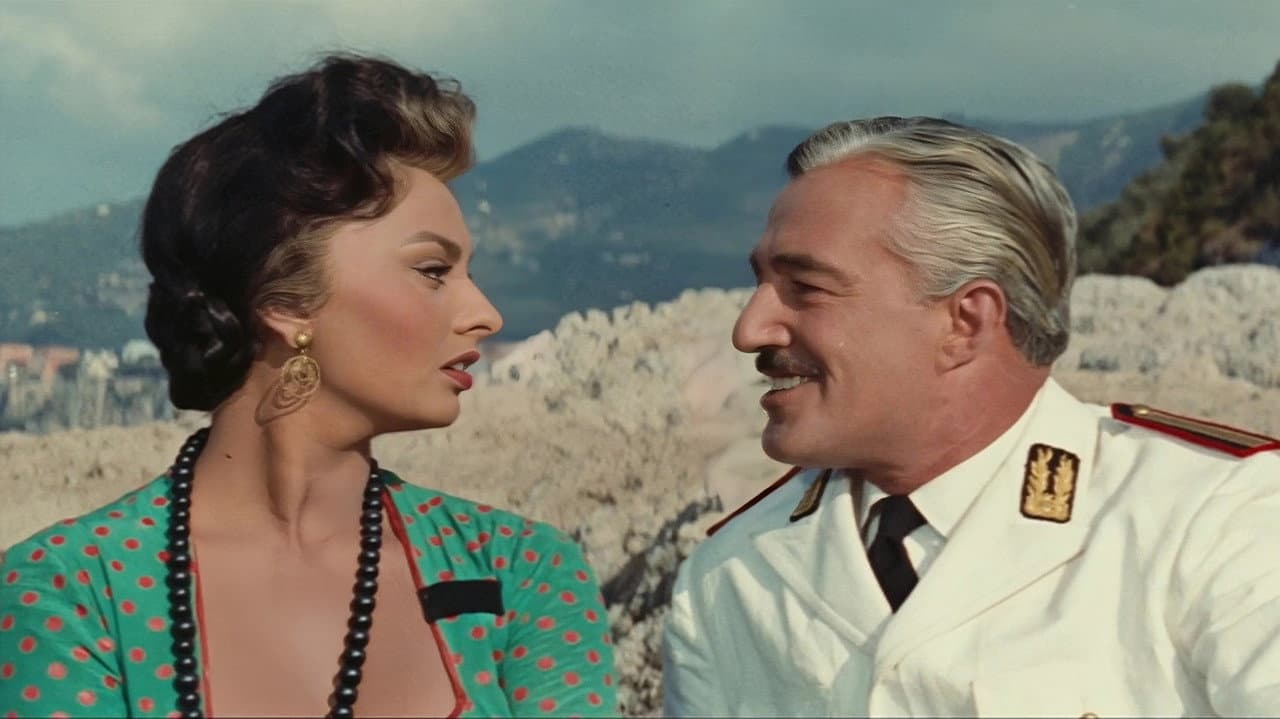
What's striking about this film—and what keeps audiences coming back to it—is how it balances broad comedy with genuine affection for its characters. De Sica's marshal isn't played as a buffoon; he's a man genuinely trying to navigate a world that's moved on without him. There's something almost poignant in how his medals and formality become increasingly irrelevant in a town where what matters most is whether you can mend a fishing net or make someone laugh. Sophia Loren, meanwhile, doesn't play Sofia as a simpering love interest waiting to be won over. She's got her own life, her own rhythms, her own refusal to be impressed by rank or decoration—and that's what makes the eventual romantic arc feel earned rather than imposed. The color cinematography deserves its own mention; it's not just a technical upgrade from the earlier films in the trilogy, but a visual statement that says this world is alive, vibrant, and full of possibility. The blues of the Sorrento coastline, the warm earth tones of the town's architecture, the brightness of the Mediterranean light—they all work together to create a setting that feels almost like a character itself. I keep coming back to how the film manages to be both light and substantive, funny without being cruel, romantic without being saccharine. The IMDb rating of 6.853/10 reflects a film that's endured for nearly seventy years precisely because it understands something fundamental about human nature: sometimes the person who disrupts your carefully ordered life is exactly the person you needed to meet.
How to Watch Scandal in Sorrento Online
Scandale in Sorrento is currently available on major OTT services, and finding it has never been easier. Rather than hunting across multiple platforms or settling for a grainy YouTube upload, you can check the Where to Watch widget at the top of this page to see exactly which streaming service has it available in your region right now. Movie OTT keeps that information updated as licensing agreements shift, so you're always seeing current availability. The film's 106-minute runtime makes it a perfect evening watch—substantial enough to feel like a full experience, but lean enough that you won't feel drained afterward. Whether you're a fan of classic Italian cinema or simply looking for a romantic comedy with genuine charm, the major platforms make accessing this 1955 gem straightforward.
Frequently Asked Questions
Q: Is Scandal in Sorrento part of a series?
Yes, it's the third film in the Bread, Love and... trilogy. The first two are Bread, Love and Dreams (1953) and Bread, Love and Jealousy (1954). You don't need to watch them in order to enjoy Scandal in Sorrento, though they share thematic DNA around romance and small-town life.
Q: Who directed Scandal in Sorrento?
Dino Risi directed the film. He was a major figure in Italian cinema and would go on to direct dozens of films across multiple genres throughout his long career.
Q: Was Scandal in Sorrento filmed in color?
Yes—this was a significant upgrade from the earlier films in the trilogy, which were shot in black and white. The color cinematography captures the beauty of Sorrento's coastline and architecture in ways that wouldn't have been possible before.
Q: Did Scandal in Sorrento win any awards?
The film earned an Honorable Mention at the 6th Berlin International Film Festival in 1956, which was a meaningful recognition of its artistic and entertainment value.
Q: Who stars in Scandal in Sorrento?
Vittorio De Sica leads the cast as the returning marshal, with Sophia Loren playing Sofia, the spirited fishwife. Both were major stars of Italian cinema at the time.
Final Thoughts on Scandal in Sorrento
Scandale in Sorrento deserves your time. It's a film that understands romance isn't about grand gestures or sweeping declarations—it's about two people learning to see each other clearly, without pretense or armor. The performances are warm, the setting is gorgeous, and the comedy lands without resorting to mean-spiritedness. Nearly seven decades later, it still works. If you appreciate classic cinema, Italian filmmaking, or simply a well-crafted romantic comedy that doesn't insult your intelligence, this one's for you.