





The story of Sharing: Memory as a weapon and a wound
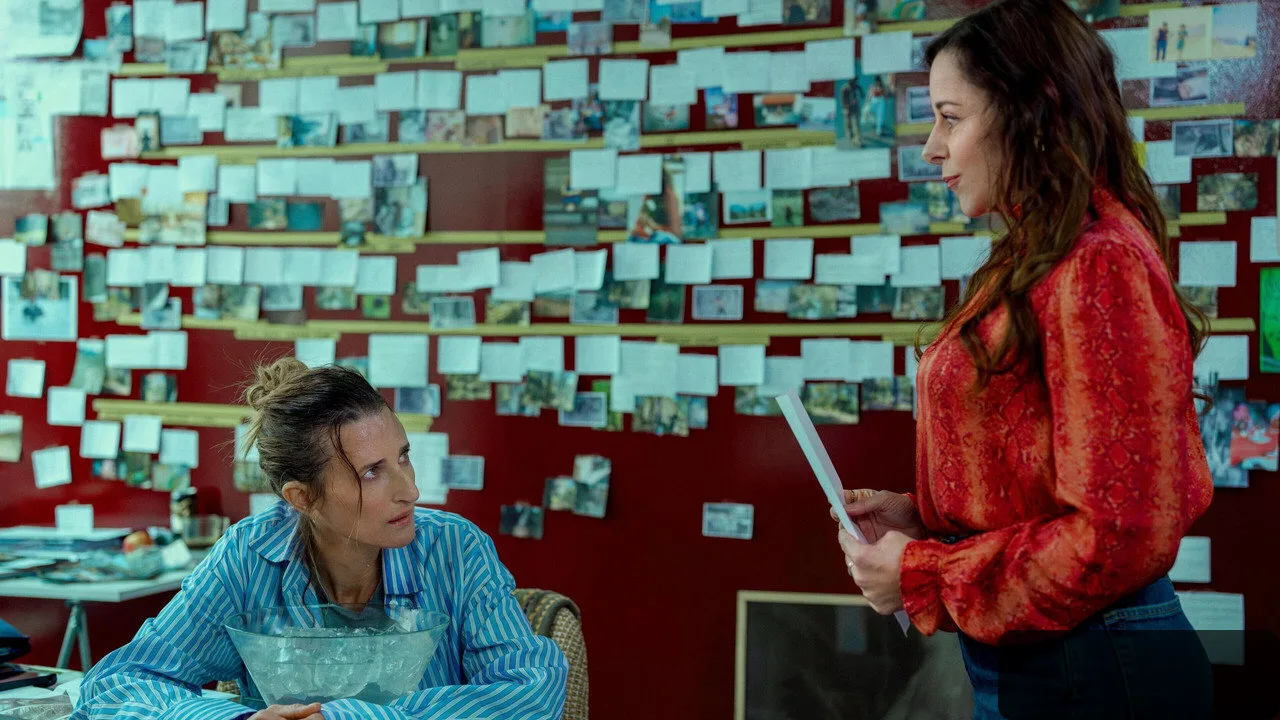
Sharing follows Eiko, a psychology professor who works with patients traumatized by Japan's devastating 2011 earthquake and tsunami. Her professional expertise—helping people process and recover blocked memories—becomes dangerously personal when her own past begins to surface. What starts as clinical distance collapses entirely as Eiko discovers that memories can be constructed, manipulated, and weaponized just as easily as they can be suppressed. The film's title takes on layered meaning: we share our stories, our spaces, our suffering, but we also share the burden of knowing which versions of the past are real. Narrative threads tangle and untangle. Reality becomes negotiable. By the film's final act, you're no longer sure whose mind you're actually inside—and that's precisely the point.
Behind the making of Sharing: Office Kitano and the Japanese art-house tradition
Sharing arrived in 2014 as a product of Office Kitano, the production company known for challenging, unconventional storytelling that doesn't always play well with mainstream audiences. Director Shinozaki's approach here is surgical—he cuts into the human psyche with the precision of someone who understands that trauma doesn't resolve neatly. The film clocked in at 94 minutes, a deliberate runtime that refuses to overstay its welcome, even as it leaves viewers disoriented. With an IMDb rating of 5.7/10, Sharing never achieved blockbuster status, and it's easy to see why: this isn't a film designed for comfort or easy catharsis. It's designed to make you doubt your own perceptions. The production team built the film around a central conceit—that the audience, like Eiko herself, can't fully trust what we're being shown. Japanese cinema has a long tradition of psychological storytelling that prioritizes ambiguity over resolution, and Sharing sits squarely in that lineage, asking difficult questions about the reliability of memory in an age of trauma.
What makes Sharing stand out: The unreliable architecture of the narrative
What's striking about Sharing is how it refuses the comfort of a single, authoritative truth. Most thrillers operate on the assumption that if you just gather enough clues, you'll crack the case—you'll know what really happened. Shinozaki dismantles that assumption entirely. The performances anchor this disorientation without letting it collapse into pure abstraction; the actors commit fully to characters who are themselves unsure of their own motivations and histories. There's a particular scene—I won't spoil it—where a conversation between Eiko and a patient suddenly reframes everything you thought you understood about their relationship, and you realize the film has been playing you the same way trauma plays its victims, revealing and concealing in the same breath. The thing nobody mentions is that this isn't a flaw in the filmmaking. It's the entire point. Shinozaki treats the viewer like a therapist treats a patient: with skepticism, with attention to contradiction, with the understanding that we're all unreliable narrators of our own lives. For those willing to sit with that discomfort, Sharing becomes something rare—a thriller that actually earns its psychological weight rather than just borrowing it for atmosphere.
Where to stream Sharing online
Sharing is currently available on major OTT services, and if you're looking to track down where it's streaming in your region, Movie OTT maintains an up-to-date widget showing all available platforms. The film's niche appeal means it won't always be front-and-center on every service's homepage, so checking the Where to Watch section at the top of this page will save you time. Availability shifts seasonally, and Movie OTT's aggregator tracks those changes so you don't have to hunt across multiple apps.
Frequently asked questions
Q: Is Sharing based on a true story?
No, Sharing is a fictional psychological thriller, though it does engage seriously with the real trauma of the 2011 earthquake and tsunami disaster in Japan. The film uses that historical tragedy as a backdrop for exploring how memory and trauma function psychologically, rather than telling a specific true account.
Q: Who directed Sharing?
Shinozaki directed Sharing as a production of Office Kitano. He's known for unconventional narratives that challenge audience expectations and play with structure in ways that can be unsettling—which is very much on display here.
Q: What does the title Sharing mean?
The title works on multiple levels: it refers to the act of sharing stories and memories in therapy, the sharing of trauma between people, and the way memories themselves can be shared, constructed, or distorted between different perspectives. It's deliberately ambiguous.
Q: Is Sharing a good movie?
That depends on what you're looking for. With a 5.7/10 on IMDb, it's clearly divisive—some viewers find it challenging and rewarding, while others find it frustratingly opaque. It's not a crowd-pleaser, but it's a film that respects your intelligence and doesn't offer easy answers.
Q: How long is Sharing?
The film runs 94 minutes, a tight runtime that keeps the narrative moving despite—or perhaps because of—its psychological complexity and narrative tangles.
Final thoughts on Sharing
Sharing won't be for everyone. It's too strange, too withholding, too committed to ambiguity to satisfy viewers who want their thrillers neatly resolved. But if you're the kind of person who finds yourself thinking about a film days after watching it—turning it over in your mind, reconsidering scenes in new light, wondering what you missed—then Sharing is exactly your kind of puzzle. It's a film that trusts you to sit with uncertainty, to question your own perceptions, to understand that memory is less like a video recording and more like a story we tell ourselves. That's not easy, but it's honest.