The Story of G.I. Joe and the journalist embedded in combat
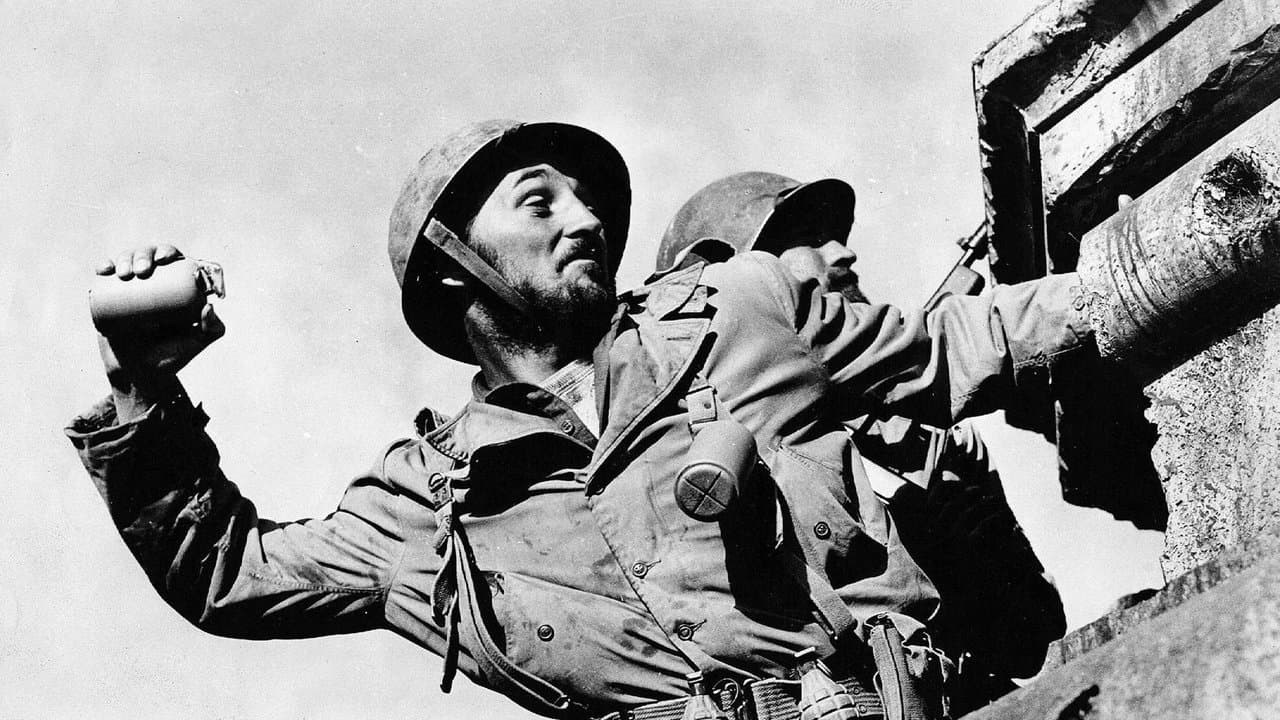
Story of G.I. Joe isn't your typical battle-focused war film. Instead, it plants you alongside Ernie Pyle—a real-life American war correspondent—as he joins Company C of the 18th Infantry Regiment moving through North Africa during World War II. The film follows Pyle's journey from observer to something closer to a member of the unit itself, capturing the quiet moments between firefights, the camaraderie that forms under pressure, and the human cost that no headline can fully convey. Director William A. Wellman built the 108-minute runtime around intimate character moments rather than spectacle, which was a deliberate choice that set it apart from other 1945 war releases.
What's striking is how the film treats journalism as a dangerous profession in its own right. Pyle doesn't just watch—he's exposed to the same risks as the soldiers around him, and the film doesn't shy away from showing that vulnerability. The narrative unfolds chronologically through the North African campaign and into the invasion of Italy, giving us a real sense of progression and the exhaustion that accumulates over time. It's a film about witness and testimony, about the person trying to tell the story back home while living inside the story itself.
Behind the making of Story of G.I. Joe and its Oscar recognition
Produced by Lester Cowan and released through United Artists, Story of G.I. Joe arrived in 1945 with significant pedigree and serious ambitions. The film earned four Academy Award nominations—a substantial achievement for a war drama that deliberately avoids melodrama. What matters most: Robert Mitchum earned his only career Oscar nomination for his supporting role as Lieutenant Walker, a moment that underscores just how strong the ensemble work is throughout the picture. Burgess Meredith, who'd already proven himself in earlier films, carries the weight of Pyle's perspective with a quiet intelligence that doesn't demand attention but absolutely commands it when the camera finds him.
Wellman, a director with genuine combat experience from his own military service, brought authenticity to the production that you can feel in every frame. The supporting cast wasn't filled with household names—many were working actors who'd go on to have long careers, though none achieved Mitchum's later fame. The film was made on a studio budget that allowed for location work and practical effects, and you can see where the money went: the North African landscapes feel genuinely hostile, and the military hardware is period-correct. The Academy Film Archive and The Film Foundation recognized the film's historical and artistic value enough to preserve it in 2000, which tells you something about how it's been regarded by film historians over the decades.
What makes Story of G.I. Joe stand out as a war correspondent's portrait
Here's the thing about this film that most war movies don't even attempt: it's genuinely interested in what it feels like to be a witness rather than a combatant. Pyle's job creates a strange distance and intimacy simultaneously—he's embedded but also separate, observing but also participating. The film explores that tension without ever becoming preachy about it. What I keep coming back to is how unglamorous everything is. There's no rousing orchestral score swelling at moments of heroism; instead, there's the sound of men talking, complaining, joking, worrying about mail from home and whether they'll survive the next week.
Burgess Meredith's performance anchors the entire picture. He plays Pyle not as a swashbuckling adventurer but as a slightly worn, genuinely curious man trying to do his job under impossible circumstances. There's a scene where Pyle sits with soldiers in a tent, just listening to them talk, and Meredith's face captures the weight of that responsibility—he's collecting their stories, their voices, for an audience that will never know them. Robert Mitchum, in his Oscar-nominated turn, brings a quiet authority to his scenes that suggests a man who's seen too much and accepted that he'll see more. The supporting performances never feel like they're acting; they feel like you're watching actual soldiers with actual concerns.
Audience responses over the years have consistently noted that the film respects its subjects in a way that feels almost radical for 1945. It doesn't sentimentalize combat or the men who fight in it. Instead, it shows them as ordinary people in extraordinary circumstances—tired, scared sometimes, capable of dark humor, capable of genuine kindness. The film moves at a deliberate pace that might test modern viewers accustomed to faster cutting, but that patience is exactly what allows the humanity to breathe.
Where to stream Story of G.I. Joe online
Story of G.I. Joe is currently available on major OTT services, and you can check the Where to Watch widget at the top of this page to see which platforms are carrying it in your region right now. Streaming availability shifts regularly, so if you're planning to watch, that widget will give you the most current information about where you can access it. Movie OTT tracks these availability changes across platforms, so if your usual service doesn't have it today, you can check back to see when it rotates in. The film's preservation by the Academy Film Archive means it's been restored and is available in solid picture quality on most services that do carry it—not a degraded public-domain transfer, but an actual restoration effort.
If you're a subscriber to multiple services, it's worth checking a few, since different platforms in different regions might have it at different times. The 108-minute runtime means it's not a massive time commitment, and it's the kind of film that rewards a focused viewing rather than background noise.
Frequently asked questions
Q: Is Story of G.I. Joe based on a true story?
Yes. The film follows the real career of war correspondent Ernie Pyle, one of the most celebrated American journalists of World War II. While the specific Company C unit and some character details are dramatized, Pyle's actual experiences embedding with soldiers in North Africa and Italy form the backbone of the narrative.
Q: Who directed Story of G.I. Joe and what else has he done?
William A. Wellman directed the film. Wellman was a prolific and respected director who'd worked across multiple genres; he had military experience himself, which informed his approach to the material and gave the film an authenticity that lesser directors might not have achieved.
Q: Why did Robert Mitchum only receive one Oscar nomination in his entire career?
Mitchum's sole nomination came for Story of G.I. Joe in 1945. Despite a long and acclaimed career, he was never nominated again—a fact that's often cited as one of the Academy's notable oversights, particularly given his iconic roles in films like Out of the Past and The Night of the Hunter.
Q: How long is Story of G.I. Joe and what's the runtime?
The film runs 108 minutes, which was a standard feature length for 1945. It's long enough to develop character and atmosphere without feeling padded, and short enough that it doesn't test patience even by modern standards.
Q: What rating did Story of G.I. Joe receive?
The film currently holds a 6.446 rating on IMDb. It's respected by critics and film historians, though it's not universally beloved by all modern audiences—some find its deliberate pacing and lack of action spectacle challenging compared to contemporary war films.
Final thoughts on Story of G.I. Joe as essential 1945 cinema
Story of G.I. Joe deserves to be seen by anyone interested in how cinema can capture the unglamorous reality of war and journalism. It's not a film that punches you in the gut with explosions or manipulates your emotions through manipulation—it just shows you people, and trusts that you'll care about them. The performances are understated, the direction is assured, and the perspective it offers remains genuinely rare. If you can find it on one of the major OTT services, it's absolutely worth your time. This is cinema that respects both its subjects and its audience.