





What The Belly of an Architect is Really About
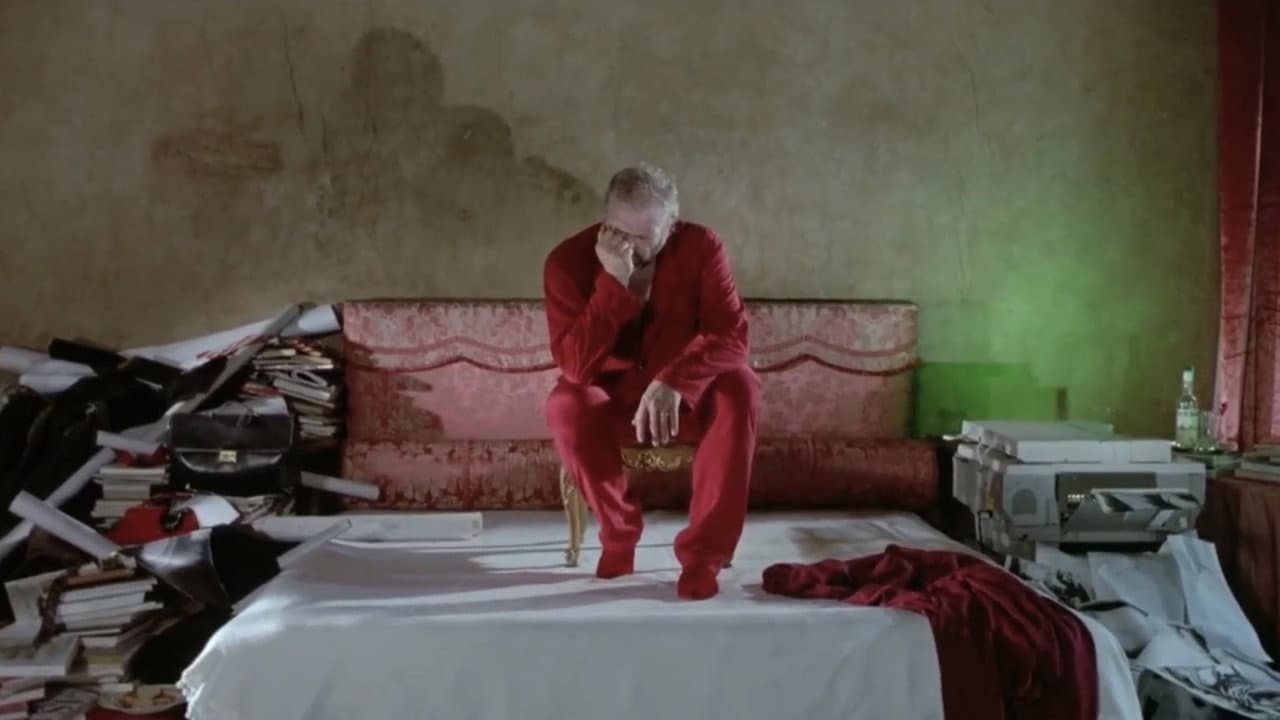
The story of The Belly of an Architect begins with a dream that curdles into nightmare. Stourley Kracklite, a meticulous American architect played by Brian Dennehy, arrives in Rome with his much younger wife, Louisa (Chloe Webb), to mount an exhibition celebrating Etienne-Louis Boullée, an 18th-century visionary he reveres. The couple conceive their long-desired child during the train journey—a moment that should be joyous. But what unfolds instead is a psychological unraveling where Stourley's obsession with his wife's expanding belly, his suspicions of her infidelity, and his own recurring abdominal pain become indistinguishable from each other, spiraling into something genuinely disturbing. It's a film that treats the body—particularly the pregnant body—as a site of terror, jealousy, and artistic projection.
Peter Greenaway doesn't make traditional narratives. His films are architectural in themselves, layered with recurring motifs, visual symmetries, and a kind of baroque excess that demands active viewing. The Belly of an Architect is no exception. The Rome setting isn't mere backdrop; it's a character—all classical proportions and historical weight, against which Stourley's private unraveling becomes almost absurdist. The tagline says it plainly: "Art is the food for madness."
Behind the Making of The Belly of an Architect
The Belly of an Architect emerged from a remarkable international production involving the Callender Company, Mondial, Tangram Film, British Screen, Hemdale Group, SACIS, and Film4 Productions—a sprawling coalition of European and British financing that reflects the film's ambitious scope. Released in 1987, it arrived at Cannes that same year as a contender for the Palme d'Or, a nod to its artistic ambition even if it didn't take the prize. The film runs 118 minutes, and every one of those minutes feels deliberately placed, nothing wasted.
Greenaway's collaboration with composer Glenn Branca—an avant-garde minimalist known for his droning, hypnotic guitar work—creates a score that's less musical accompaniment than psychological pressure. Paired with selections from Wim Mertens' ethereal compositions, the soundtrack becomes almost another character, pressing down on scenes with an unsettling weight. Brian Dennehy, primarily known for tough-guy roles in American cinema, delivers a career-best performance here, stripping away any protective masculinity to expose Stourley's fragility and paranoia. Chloe Webb, meanwhile, walks a razor's edge—is she complicit in Stourley's delusions, or is she his victim? Greenaway leaves that ambiguous, which is partly the point. The film's IMDb rating of 6.828/10 reflects its divisive nature; it's not a crowd-pleaser, and it doesn't pretend to be.
Why The Belly of an Architect Still Feels Transgressive
What's striking about The Belly of an Architect is how it refuses easy sympathy. Stourley isn't a tragic figure we're meant to pity—he's a man whose intellectual vanity, sexual possessiveness, and artistic ego have metastasized into something pathological. Greenaway doesn't flinch from showing his protagonist's ugliness. The recurring imagery of the belly—Louisa's pregnant belly, Stourley's own digestive distress, the rotund forms of Boullée's neoclassical buildings—creates a visual and thematic obsession that's frankly grotesque. That's the film's power. It makes you uncomfortable, and it means to.
Dennehy's performance is crucial here. Watch the scene where he photographs his wife's belly obsessively, treating her body as an architectural problem to be solved and controlled. There's no winking at the camera, no ironic distance. He commits fully to Stourley's unraveling, which makes the character's descent all the more disturbing. Webb, too, resists the role of passive object—she brings an intelligence and wariness to Louisa that keeps us from ever fully understanding her motivations, which is exactly what Greenaway wants.
The film's visual language is baroque and symmetrical, almost suffocating in its formal control—which makes the emotional chaos underneath feel all the more violent by contrast. Greenaway's use of Rome's architecture, the Tiber, and the city's layered history creates a kind of visual argument about permanence and decay that mirrors Stourley's psychological state. What critics responded to, even when they didn't fully embrace the film, was this commitment to form as meaning. The film doesn't just depict obsession; it constructs itself as an obsessive object.
Where to Stream The Belly of an Architect Online
Finding The Belly of an Architect used to mean hunting through specialty video stores or waiting for rare television broadcasts, but streaming has made Greenaway's work far more accessible. The film is available on major OTT services, and Movie OTT tracks current availability across platforms so you can find exactly where it's streaming in your region. Since licensing agreements shift regularly, checking the Where to Watch widget at the top of this page ensures you'll know the most current options. Whether you're a Greenaway devotee or a curious newcomer to his work, the barrier to entry has never been lower. Just be prepared: this isn't comfort viewing. Bring your attention span and your tolerance for the unsettling.
Frequently asked questions
Q: Who directed The Belly of an Architect?
Peter Greenaway wrote and directed the film. He's known for his formally experimental, visually dense approach to cinema—this remains one of his most provocative works, blending psychological drama with architectural obsession.
Q: Is The Belly of an Architect based on a true story?
No, it's an original screenplay by Greenaway, though it does center on a real historical figure—Etienne-Louis Boullée, an 18th-century French neoclassical architect. The fictional narrative around Stourley Kracklite and his wife is entirely Greenaway's invention.
Q: What's the runtime of The Belly of an Architect?
The film runs 118 minutes. Greenaway doesn't trim fat from his narratives; every scene is deliberate, so while it's not a quick watch, there's little sense of padding.
Q: Who stars in The Belly of an Architect?
Brian Dennehy leads as Stourley Kracklite, with Chloe Webb as his wife, Louisa. Both deliver career-defining performances that anchor the film's psychological intensity.
Q: What does the tagline "Art is the food for madness" mean in The Belly of an Architect?
It captures the film's central idea—that artistic obsession, when unchecked and intertwined with personal desire, can become indistinguishable from psychological breakdown. Stourley's professional ambition and his personal pathology feed each other.
Final Thoughts on The Belly of an Architect
If you're looking for a conventional drama about an architect's professional triumph, this isn't it. The Belly of an Architect is a film for viewers willing to sit with discomfort, to watch a man destroy his own life through jealousy and obsession, and to let a filmmaker use formal precision as a tool for psychological horror. It's austere, strange, and genuinely unsettling—which is exactly why it matters. Greenaway made something that feels like no other film, and that alone is worth seeking out. Don't expect catharsis. Expect provocation.