What The Big Sleep is really about
The Big Sleep begins with a simple job: wealthy General Sternwood hires private detective Philip Marlowe to handle a blackmail situation involving his youngest daughter, Carmen. What sounds straightforward unravels into something far messier. Before Marlowe can say "case closed," he's wading through murder, deception, and a web of shadowy figures whose motives shift like smoke. The film doesn't hold your hand—it trusts you to keep up, or frankly, doesn't care if you do. What matters is the journey: Marlowe's sharp tongue, the dangerous women who cross his path, and the sense that nobody in this world is quite telling the truth.
How The Big Sleep came together: Hawks, Bogart, and a legendary screenplay
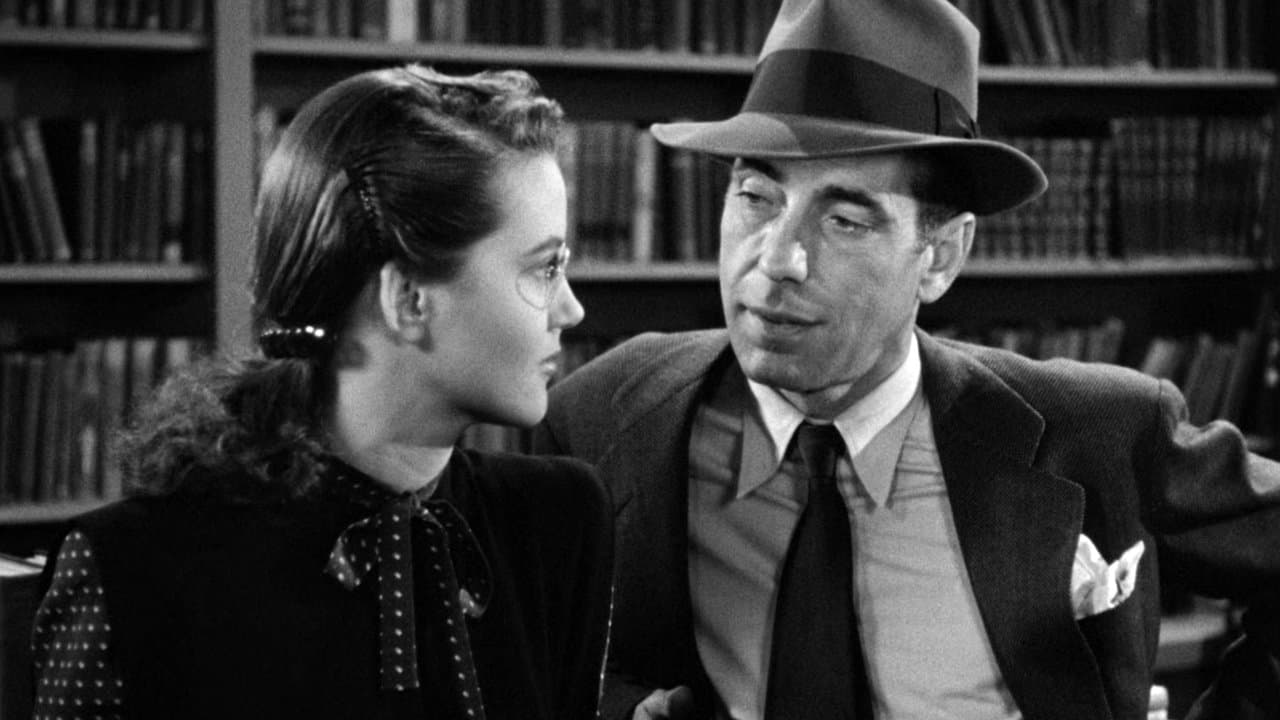
Howard Hawks directed The Big Sleep with the confidence of a master craftsman, adapting Raymond Chandler's 1939 novel through a screenplay by William Faulkner, Leigh Brackett, and Jules Furthman. That's no small pedigree—Faulkner was already a literary giant, and Brackett would go on to become one of Hollywood's finest screenwriters. The film reunited Humphrey Bogart and Lauren Bacall, who'd met on the set of To Have and Have Not just two years earlier and were now married in real life, a fact that crackles through every frame of their scenes together. Charles Waldron anchored the cast as General Sternwood, while Martha Vickers brought a troubling intensity to Carmen that audiences found both captivating and unsettling. Released in 1946 by Warner Bros. Pictures, the film ran 114 minutes and became a box-office success, though critical recognition took longer to solidify. The picture they were born for, as the tagline promised, proved to be a turning point for both stars and a blueprint for noir filmmaking that'd influence detectives and dames for decades. On IMDb, it holds a 7.591/10 rating—respectable for a film this old, though that number hardly captures what makes it essential viewing.
Why The Big Sleep endures: chemistry, craft, and controlled chaos
What's striking is how little the plot actually matters. Yes, there's blackmail, yes there's murder, yes there's a rare book seller and all manner of criminal enterprise—but the real engine of the film is something else entirely. It's the banter. Bogart and Bacall trade dialogue like they're playing tennis, each line a volley designed to charm, provoke, or misdirect. The script crackles because Hawks understood that noir isn't about solving puzzles; it's about watching intelligent people navigate a world that doesn't reward intelligence. Bogart's Marlowe is weary but sharp, a man who's seen enough of human nature to be amused by it rather than shocked. Bacall's Vivian Rutledge isn't a damsel waiting to be saved—she's a player with her own agenda, which makes her infinitely more interesting. Reviewers have consistently praised the film's crackling energy, the way Hawks orchestrates scenes with invisible precision, and the performances that feel lived-in rather than acted. The thing nobody mentions is how funny it is. There's genuine comedy here, dark and knowing, that keeps the film from sinking into the self-serious murk that can drag down lesser noirs. The women in the film—and there's a parade of them—are drawn with complexity that's genuinely ahead of its time, even if they're also undeniably objects of desire in ways that feel very much of 1946. That contradiction sits uneasily, and that's part of what makes the film honest.
Where to watch The Big Sleep online
The Big Sleep is available on major OTT services, making it easier than ever to catch up on this classic. Check the "Where to Watch" widget at the top of this page to see current streaming availability in your region—platforms rotate titles regularly, so it's worth confirming before you settle in. Movie OTT tracks streaming availability across multiple services, so you can find exactly where to stream The Big Sleep without hunting through menus. Since it's a 1946 film, it's in the public domain in some territories, which means you might find it on archive sites as well, though the restoration quality varies wildly. For the best picture and sound, your paid streaming service will likely be your best bet.
Frequently asked questions
Q: Is The Big Sleep based on a book?
Yes. The film adapts Raymond Chandler's 1939 novel of the same name. Chandler's Philip Marlowe stories defined the hard-boiled detective genre, and this adaptation captures the essence of his protagonist—cynical, principled, and perpetually amused by human folly.
Q: Who directed The Big Sleep?
Howard Hawks directed the film. Hawks was one of Hollywood's greatest craftsmen, known for his ability to draw naturalistic performances and his mastery of both comedy and drama. His touch is evident in every scene.
Q: What's the deal with the plot of The Big Sleep?
Honestly, even Chandler himself couldn't fully explain who killed one of the characters—the book's plot is that intricate. The film follows suit, prioritizing atmosphere and character over a neat resolution. If you're looking for a tidy mystery, this isn't it.
Q: Why do Bogart and Bacall have such incredible chemistry?
They were married in real life, which helps, but it's also the script and Hawks' direction. They're playing intelligent people who genuinely enjoy sparring with each other, and that joy is infectious. Watch their eyes more than their lines.
Q: Is The Big Sleep appropriate for modern audiences?
The film's attitudes toward women are complicated—they're drawn as intelligent and desirable, but also as objects. It's a product of 1946, and viewing it requires acknowledging both its brilliance and its blind spots. That said, the craftsmanship and performances transcend those limitations.
Why you should watch The Big Sleep right now
If you've never seen The Big Sleep, you're missing one of the films that defined what cinema could be. It's not a perfect film, and the plot does genuinely confuse some viewers—but that's almost beside the point. What matters is spending two hours with Humphrey Bogart and Lauren Bacall, watching them navigate a world of shadows and secrets with style, wit, and a kind of weary grace. The dialogue alone is worth the price of admission. It's the kind of film that rewards repeat viewing, the kind where you notice something new each time. Don't overthink it. Just watch.