The story of The Caine Mutiny
The Caine Mutiny tells the story of what happens when a U.S. Navy destroyer-minesweeper falls under the command of Captain Queeg, a man whose paranoia and erratic decisions begin to jeopardize both the ship and its crew. The narrative unfolds primarily aboard the USS Caine during World War II in the Pacific theatre, where Lieutenant Commander Maryk, the ship's executive officer, must decide whether to relieve his captain of command—an act that constitutes mutiny under naval law. It's a premise that sounds simple enough until you realize the film isn't really asking whether Maryk was right to act. It's asking something far messier: what do you do when the system itself becomes your enemy?
The tension builds slowly at first, with small moments of Queeg's instability—obsessing over a missing quart of strawberries, zigzagging the ship in combat to avoid imaginary threats. But these scenes accumulate. They don't feel like character development; they feel like a slow-motion collision that nobody can stop. By the time Maryk finally takes action during a typhoon, the audience understands exactly why, even if the law won't.
Behind the making of The Caine Mutiny
Produced by Stanley Kramer Productions and released through Columbia Pictures in 1954, The Caine Mutiny arrived as a prestige adaptation of Herman Wouk's Pulitzer Prize-winning 1951 novel—a bestseller that had already captured the public imagination. Director Edward Dmytryk brought considerable craft to the material, assembling a cast that read like a who's who of mid-century Hollywood: Humphrey Bogart in his final starring role as the unraveling Captain Queeg, José Ferrer as the principled Maryk, Van Johnson as the idealistic junior officer Ensign Keith, Robert Francis in a breakout performance, and Fred MacMurray rounding out the ensemble. The film ran 124 minutes, a substantial runtime that allowed the narrative to breathe and the courtroom sequences to unfold without rushing.
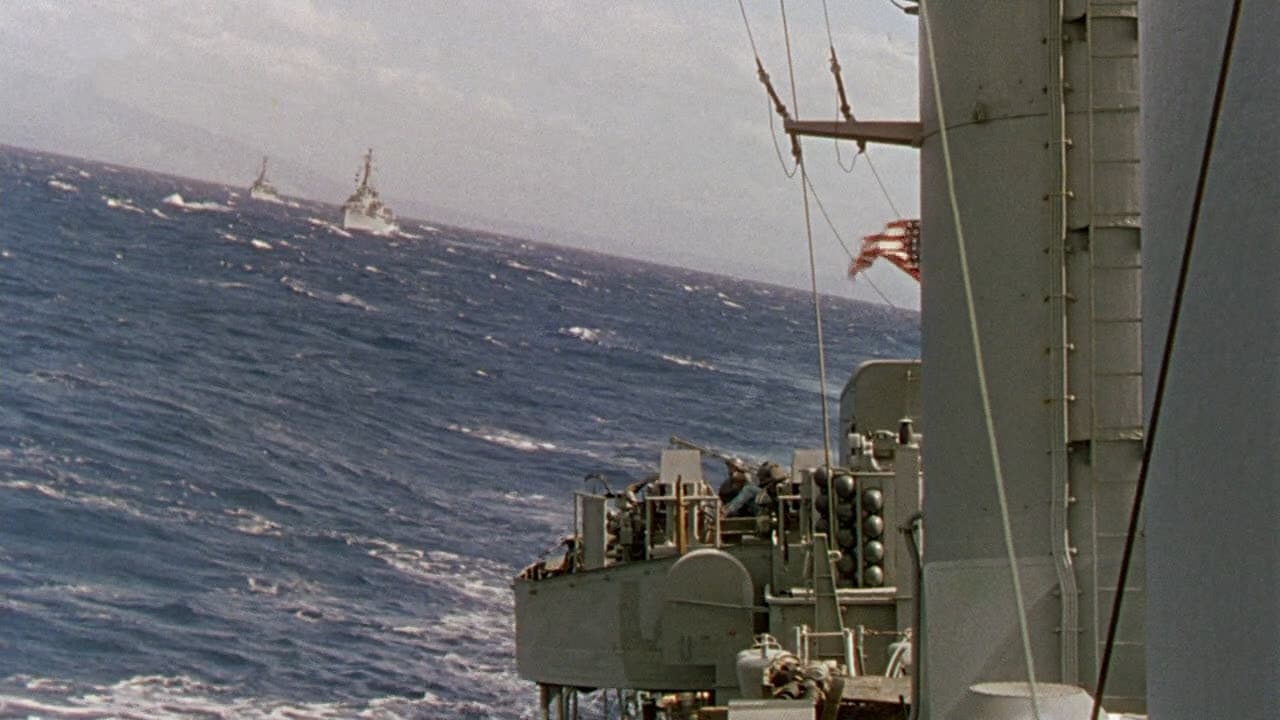
The production was notable for its technical authenticity—the naval sequences were shot with genuine attention to detail, and the film's depiction of shipboard life carries a documentary-like precision that grounds even the most heightened dramatic moments. Box office returns were solid for a serious drama of its era, and the film earned widespread critical acclaim. It received multiple Academy Award nominations, cementing its status as one of the decade's significant achievements. Variety reported at the time that the film's exploration of command and conscience struck a chord with audiences still processing the moral ambiguities of World War II.
What makes The Caine Mutiny stand out
What's striking about The Caine Mutiny is how it refuses to offer easy answers. Bogart's Captain Queeg isn't a simple villain—he's a man whose competence is genuine but whose mental state is deteriorating in ways that make him dangerous precisely because he's not entirely wrong about everything. The famous scene where Queeg testifies, rolling steel balls in his hand as his story unravels, remains one of cinema's great portraits of a man losing his grip on reality. It's uncomfortable to watch. It should be.
The film's real genius lies in its courtroom sequences, where the legal arguments become as tense as any action scene. The defense attorney, played by Ferrer with surgical precision, systematically dismantles the prosecution's case—but here's where the film gets clever, and maybe a little cruel: winning the trial doesn't feel like winning at all. The verdict comes, but the cost of that victory, the way it exposes the system's failures rather than vindicating Maryk's actions, lingers long after the gavel falls. That ambiguity is what separates this film from standard military dramas.
The performances across the board are understated and intelligent. Nobody chews scenery; everyone seems aware that they're inhabiting a world governed by rules and hierarchies that can't simply be shouted down. Van Johnson brings a particular poignancy to his role as the young officer caught between loyalty to his captain and loyalty to his crew. It's a film that trusts its audience to sit with moral complexity without needing a narrator to explain what it all means.
Where to stream The Caine Mutiny online
The Caine Mutiny is available on major OTT services, and you can check the Where to Watch widget at the top of this page for current streaming availability on your preferred platform. Availability shifts over time, so Movie OTT tracks real-time updates across all major services to help you find exactly where you can watch it right now. The film's 124-minute runtime makes it ideal for a single sitting, and its themes about institutional loyalty and personal conscience feel surprisingly contemporary—worth seeking out whether you're revisiting it or encountering it for the first time.
Frequently asked questions
Q: Is The Caine Mutiny based on a true story?
The Caine Mutiny is based on Herman Wouk's 1951 Pulitzer Prize-winning novel of the same name. While the novel and film are fictional, Wouk drew on his own naval service during World War II to create an authentic depiction of shipboard life and military hierarchy. The events of the mutiny itself are invented, though they're grounded in realistic naval procedures.
Q: Who directed The Caine Mutiny?
Edward Dmytryk directed The Caine Mutiny. Dmytryk was an accomplished director known for his work in film noir and drama, and he brought considerable technical skill to the film's naval sequences and its tense courtroom scenes.
Q: What is the runtime of The Caine Mutiny?
The Caine Mutiny has a runtime of 124 minutes, giving the narrative plenty of space to develop the characters and the legal proceedings without feeling rushed or compressed.
Q: What's the IMDb rating for The Caine Mutiny?
The Caine Mutiny holds a 7.2/10 rating on IMDb, reflecting solid critical and audience appreciation for its performances, direction, and exploration of moral ambiguity in military life.
Q: Who stars in The Caine Mutiny?
The film features Humphrey Bogart as Captain Queeg, José Ferrer as Lieutenant Commander Maryk, Van Johnson as Ensign Keith, Robert Francis, and Fred MacMurray. It was Bogart's final starring role and remains one of his most memorable performances.
Final thoughts on The Caine Mutiny
The Caine Mutiny endures because it understands that institutions are made of people, and people are fallible. It doesn't celebrate mutiny or demonize command; instead, it traces the impossible position of someone trying to do the right thing within a system that may not allow for right answers. Nearly seventy years later, that tension—between individual conscience and institutional loyalty—hasn't become any easier to resolve. If you haven't seen it, it's worth your time. If you have, it's worth watching again.