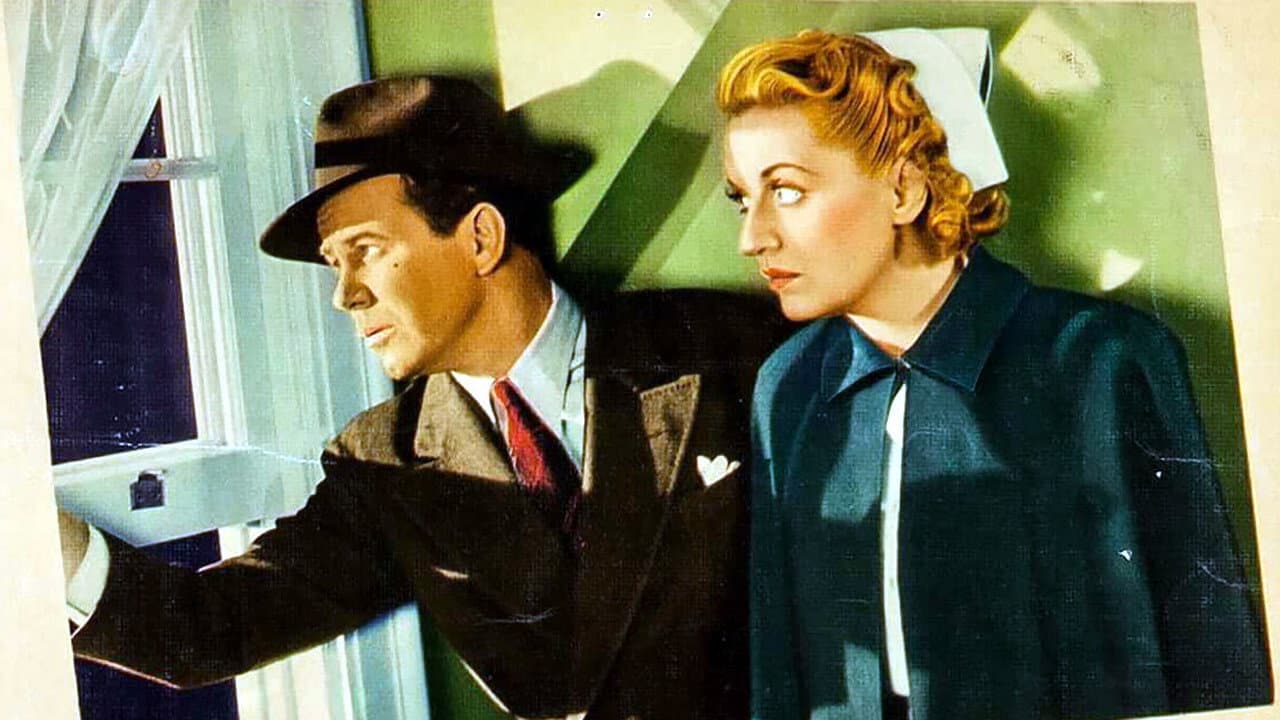
What The Nurse's Secret is about
The Nurse's Secret opens on a death that nobody can quite agree on. A wealthy woman is found dead—suicide, the coroner declares. Accident, her family insists. Murder, the police suspect. It's the kind of premise that pulls you in immediately, because right from the start, the official story doesn't sit right. Our protagonist, a sharp-minded nurse who's been close to the case, teams up with a determined policeman to pick apart the contradictions and lies. What they uncover isn't just a death—it's an elaborate insurance scheme that reaches into the dead woman's inner circle. The film doesn't waste time getting to the heart of the mystery. With a runtime of just 64 minutes, every scene counts, and the plot moves with the kind of lean efficiency that studio-era pictures did better than almost anything made today.
Behind the making of The Nurse's Secret
Warner Bros. released The Nurse's Secret in 1941 as a second feature—the kind of B-picture that studios churned out to fill out double bills at neighborhood theaters. Directed by Noel M. Smith, it was a workhorse production designed to deliver solid entertainment without the star power or lavish budgets of prestige releases. The film stars Lee Patrick as the nurse protagonist, a capable actress who'd go on to have a long career in both film and television. Her supporting cast includes Regis Toomey and Julie Bishop, both reliable character actors of the era who brought credibility to their roles. Warner Bros. was hitting its stride in the early 1940s, producing everything from A-list dramas to these efficient crime pictures that satisfied audiences hungry for mystery and intrigue. While The Nurse's Secret didn't become a box-office sensation or rack up major awards, it represented the kind of solid, professional filmmaking that kept studios profitable and audiences entertained during the studio system's golden age. These second features were often where younger directors and actors cut their teeth, and Smith's handling of the material shows competent pacing and an understanding of how to build tension on a modest budget.
The performances that anchor The Nurse's Secret
What's striking about this film is how much it relies on the intelligence and screen presence of its leads rather than on spectacle or melodrama. Lee Patrick carries the picture with a performance that's both practical and perceptive—she plays a woman who's observant, skeptical, and willing to push back against authority figures who aren't asking the right questions. There's something modern about her character; she doesn't swoon or defer unnecessarily, and she won't let the official story stand if it doesn't add up. Regis Toomey, as the policeman, gives the film a grounded quality—he's not a dashing detective but a working cop who's learned to trust his instincts. The chemistry between them works because neither actor is trying too hard. They're not winking at the camera or chewing scenery. Instead, they're moving through a puzzle together, and that sense of collaboration keeps the mystery engaging even when the plot turns are familiar. What I keep coming back to is how economical the performances are. Nobody's overplaying the drama, and that restraint actually makes the darker turns feel sharper when they arrive. The film trusts its audience to stay interested without constant histrionics—a confidence that feels almost quaint now.
Where to stream The Nurse's Secret online
Finding The Nurse's Secret on streaming platforms is easier than it used to be, thanks to the revival of interest in classic Hollywood pictures. The film is currently available on major OTT services, and you can check the Where to Watch widget at the top of this page to see which platforms are carrying it right now. Streaming availability shifts regularly, so Movie OTT tracks current placements across services to help you find what you're looking for without the guesswork. Whether you're a classic film enthusiast or just curious about how mysteries were told in the 1940s, you'll find The Nurse's Secret accessible without much hunting. The short runtime is actually a bonus for streaming—it's the kind of film you can fit into an evening without committing to a three-hour epic.
Frequently asked questions
Q: Who directed The Nurse's Secret?
Noel M. Smith directed The Nurse's Secret in 1941. Smith was a reliable studio director who worked frequently for Warner Bros., specializing in crime and mystery pictures that needed to be efficient and engaging.
Q: Who stars in The Nurse's Secret?
Lee Patrick leads the cast as the titular nurse, with Regis Toomey and Julie Bishop in supporting roles. Patrick was a skilled actress who balanced dramatic weight with a naturalistic approach to her character.
Q: Is The Nurse's Secret based on a true story?
There's no evidence that The Nurse's Secret is based on a specific real crime. It's an original screenplay designed as a studio mystery picture, though it draws on familiar murder-mystery tropes that audiences of the era knew well.
Q: How long is The Nurse's Secret?
The film runs 64 minutes, making it a compact mystery that wastes no time getting to the central conflict and resolving its plot.
Q: What was The Nurse's Secret's critical reception?
The film holds a 5.6/10 rating on IMDb, reflecting its status as a solid but not exceptional B-picture. Contemporary reviews were likely modest, as second features rarely received the critical attention given to major releases, though audiences who caught it on double bills probably found it entertaining enough.
Final thoughts on The Nurse's Secret
The Nurse's Secret isn't a masterpiece, and it doesn't pretend to be. What it is, though, is a tight, unpretentious mystery that knows exactly what it's doing and does it well. If you appreciate classic Hollywood craftsmanship, performances that don't rely on histrionics, and a plot that keeps moving without unnecessary padding, it's worth your time. The 1941 setting gives it a period charm, but the core appeal—a puzzle to solve, characters you can trust, and a payoff that makes sense—is timeless. Sometimes the best entertainment doesn't come with fanfare or critical accolades. Sometimes it's just a well-made film from a studio system that understood how to deliver value to its audience, and that's exactly what you're getting here.