



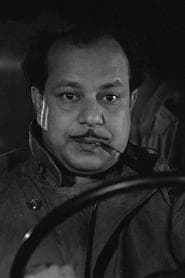
The Story of The Red Door: When the Present Becomes Unbearable
The Red Door follows a middle-aged dentist whose life is collapsing in real time. His marriage has disintegrated, his son barely speaks to him, and his body has become a source of constant, baffling pain—psychosomatic illnesses that no doctor can quite explain or cure. Rather than face this deteriorating reality, he finds himself drawn backward, into the vivid, idyllic memories of his childhood. What begins as nostalgic escape gradually becomes something more complicated: a psychological refuge that feels increasingly more real than the present moment. The film's 95-minute runtime moves deliberately through this emotional terrain, treating the boundary between past and present not as a simple flashback device but as something far more porous and unsettling.
Behind the Making of The Red Door: Production, Cast, and Artistic Ambition
Released in 1997, The Red Door emerged during a period when independent and European cinema were exploring psychological realism in ways that mainstream Hollywood largely avoided. The film's production reflects this sensibility—a modest budget allowing for intimate, character-driven storytelling rather than spectacle. While it didn't achieve major box-office traction (a common fate for introspective fantasy-dramas that resist easy categorization), the film found an audience among viewers drawn to unconventional narratives about mental and emotional dissolution. The cast, though not composed of household names at the time, brings a naturalistic quality to what could easily have become melodramatic material. The ensemble work—particularly in scenes where present-day tension bleeds into memory sequences—suggests actors who understood the film's central conceit: that memory isn't decoration or exposition, but the actual substance of the character's existence. The film's genre classification as fantasy-mystery-drama reflects its refusal to settle into any single mode; it's neither a straightforward psychological thriller nor a whimsical period piece, but something that moves between registers with deliberate unease.
What Makes The Red Door Stand Out: Performance, Atmosphere, and the Weight of Unraveling
There's something genuinely unsettling about watching a film that treats mental and physical dissolution with such seriousness and restraint. The Red Door doesn't sensationalize the dentist's psychosomatic illnesses or his emotional estrangement—instead, it sits with them, lets them breathe, and refuses to offer easy explanations or resolutions. What's striking is how the film uses the contrast between the austere, sterile present and the warmer, more vivid childhood sequences not as simple nostalgia but as a form of psychological self-harm. The protagonist isn't just remembering; he's retreating, and the film doesn't let us off the hook by positioning this retreat as understandable or sympathetic in the conventional sense. The performances anchor this difficult emotional terrain without ever winking at the audience or softening the edges. I keep coming back to the scenes where the dentist is in his office, performing routine procedures on patients, while his mind is elsewhere—the disconnect between professional competence and internal collapse is palpable. Critics who've engaged with the film have noted its willingness to sit in ambiguity, to resist the kind of narrative clarity that might make the story more accessible. This isn't a film that wants to be understood in the way most dramas do; it wants to be experienced, to create a kind of vertigo in the viewer that mirrors the protagonist's own disorientation.
Where to Stream The Red Door Online
Finding The Red Door requires a bit of hunting, but it's worth the effort if you're drawn to unconventional psychological dramas. The film is currently available on major OTT services, and Movie OTT tracks its streaming availability across multiple platforms in real time—so you can see exactly where it's currently streaming in your region without having to check five different apps. The "Where to Watch" widget at the top of this page shows you all the platforms carrying it right now. Since streaming rights shift frequently, especially for older independent films, checking Movie OTT's database before you start searching is a smart move. The film's relatively modest profile means it doesn't always get prominent placement on platform homepages, so knowing where to find it saves frustration.
Frequently asked questions
Q: Is The Red Door based on a true story?
No, it's a fictional narrative, though its exploration of psychosomatic illness and memory-based psychological retreat draws on real psychological phenomena. The film uses these authentic emotional and medical elements within a fantasy-mystery framework.
Q: What does "The Red Door" symbolize in the film?
The red door itself functions as a threshold between present reality and the world of memory. Without spoiling its specific role, it represents the boundary the protagonist is constantly crossing—and the question of whether crossing back is possible or even desirable.
Q: Is The Red Door a horror film?
It's classified as fantasy-mystery-drama rather than horror, though it has moments of genuine psychological unease. If you're looking for jump scares or gore, you'll be disappointed. If you want something that creates dread through atmosphere and emotional disintegration, you're in the right place.
Q: How does The Red Door handle the passage between memory and present-day scenes?
The film doesn't use conventional flashback editing. Instead, it treats memory as a kind of parallel reality that the protagonist inhabits with increasing frequency and intensity. The transitions are sometimes jarring, sometimes seamless—deliberately so.
Q: What's the runtime, and is it worth the full watch?
The film runs 95 minutes, which is lean for the amount of psychological ground it covers. It's not a film for passive viewing, but if you're willing to meet it halfway, most viewers find the investment pays off.
Final Thoughts on The Red Door: Who Should Watch
The Red Door isn't for everyone. It's slow, deliberately ambiguous, and skeptical of the kind of narrative resolution that makes most films feel conclusive and satisfying. But if you're the kind of viewer who gravitates toward character studies, who doesn't mind sitting with discomfort, and who's interested in how cinema can represent the interior life of someone coming apart—it's absolutely worth your time. This is exactly the kind of film that streaming platforms exist to preserve and make accessible, and it's the sort of thing you'll find discussed in depth on Movie OTT among viewers who appreciate cinema that takes real emotional and psychological risks.