The Story of The Trial: Kafka's Nightmare on Screen
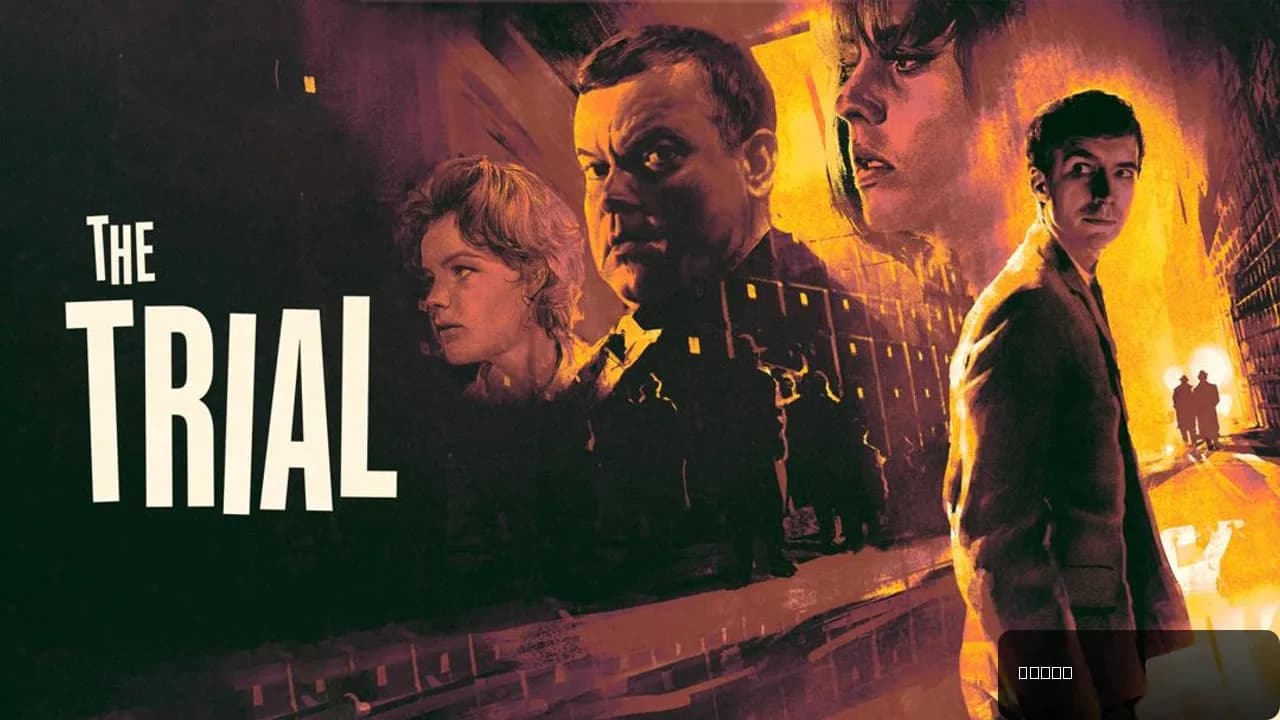
The Trial opens with a jolt. Josef K., an ordinary office worker, wakes to find police in his bedroom. He's arrested. But here's the thing — nobody will tell him why. That's the entire premise, and it's genuinely terrifying in ways that stick with you long after the credits roll. Based on Franz Kafka's 1925 novel of the same name, Welles' 1962 adaptation captures the suffocating logic of a system that doesn't require guilt to punish. K. is summoned to trial after trial, each one more labyrinthine than the last, yet the charges remain maddeningly obscure. He's caught in a machinery that grinds forward regardless of his pleas, his protests, his desperate search for answers.
Behind the Making of The Trial: Welles' Vision and International Production
Orson Welles didn't just direct The Trial—he wrote it, starred in it, and later called it "the best film I have ever made," a statement that reveals both his ambition and his defiant faith in the project. The film was a co-production between France, Germany, and Italy, a European venture that gave Welles the freedom he'd struggled to find in Hollywood. Shot in black and white across multiple locations, the production design is deliberately claustrophobic: narrow corridors, towering staircases, cavernous offices that seem to expand and contract like a living organism. The opening sequence—where Welles himself narrates Kafka's parable "Before the Law" over pinscreen animation by Alexandre Alexeieff and Claire Parker—sets the tone immediately: this isn't a conventional legal thriller. It's a descent into surrealism.
The cast Welles assembled was formidable. Anthony Perkins, fresh from Psycho, plays K. with a vulnerability and mounting panic that anchors the entire film. Jeanne Moreau and Romy Schneider bring European sophistication to their roles, while Welles himself appears as the Advocate, a figure of dubious authority. Akim Tamiroff, Elsa Martinelli, and Suzanne Flon round out a roster that feels both intimate and vast—you're never sure who's ally and who's adversary. The film runs 118 minutes and doesn't waste a second of it. At 6.8 on IMDb, it's been divisive with audiences, though critics have long recognized its ambition and craft.
What Makes The Trial Stand Out: Bureaucratic Terror and Perkins' Brilliance
What's striking is how Welles takes Kafka's existential dread and makes it visceral. This isn't a film about the justice system failing—it's about the justice system functioning exactly as designed, which is somehow worse. The bureaucracy doesn't care about K.'s innocence or guilt because innocence and guilt are irrelevant to the machinery. You're arrested first; the charges come later, if at all. It's a chilling vision of institutional power that doesn't require justification. Perkins delivers what many consider a career-best performance (and I keep coming back to scenes where his face registers a dawning horror as he realizes no answer will ever come). His K. isn't a hero fighting the system—he's a man slowly understanding that the system doesn't fight back because it doesn't have to.
The film's visual language is deliberately disorienting. Welles uses deep focus, stark shadows, and impossible angles to make ordinary spaces feel nightmarish. A staircase becomes a trial. An office becomes a trap. The thing nobody mentions is how funny the film can be—there's dark comedy threaded through the bureaucratic absurdity, moments where the sheer ridiculousness of the situation becomes almost comic before the dread settles back in. Critics have drawn lines from The Trial to later dystopian works like 1984 and Brazil, and for good reason: this film explores how power doesn't need to be visible to be absolute.
Where to Stream The Trial Online
The Trial is currently available to stream on Prime Video, where you can watch Welles' complete vision without interruption. If you're tracking where this title and similar classics are available, Movie OTT keeps an updated list of streaming homes for both canonical works and hidden gems across all major platforms. The film's black-and-white cinematography and intricate sound design benefit from a clean digital transfer, so streaming quality matters—Prime Video's presentation does the film justice.
Frequently asked questions
Q: Who directed The Trial and what did he say about it?
Orson Welles wrote and directed The Trial in 1962, and immediately after completing it, he stated it was "the best film I have ever made." That's a bold claim from a director who'd already made Citizen Kane, but it speaks to how much he believed in this adaptation.
Q: Is The Trial based on a true story?
No. The Trial is based on Franz Kafka's 1925 novel of the same name, a work of philosophical fiction about bureaucratic absurdity and existential dread rather than any real legal case.
Q: What's the runtime and what year was it released?
The Trial runs 118 minutes and was released in 1962. It's a European co-production between France, Germany, and Italy.
Q: Who plays Josef K. in The Trial?
Anthony Perkins plays the lead role of Josef K., delivering a performance many consider among his finest work. Jeanne Moreau and Romy Schneider also star alongside Welles himself in a supporting role.
Q: Why is The Trial so confusing?
The film's narrative is deliberately disorienting because that's the point—K. (and the viewer) are meant to experience the confusion and helplessness of being caught in a system that operates on its own logic, where explanations never arrive and the rules are never fully revealed.
Final Thoughts on The Trial: A Masterpiece for the Skeptical
The Trial isn't easy to watch. It's not meant to be. But if you're willing to sit with its dread, to let Welles and Kafka and Perkins drag you through the bureaucratic nightmare, you'll find something rare: a film that doesn't just depict injustice but makes you feel its weight. It's bleak, it's brilliant, and it's absolutely worth your time—especially if you've ever wondered what happens when the system doesn't need to explain itself.