The story of The Truth About Bebe Donge
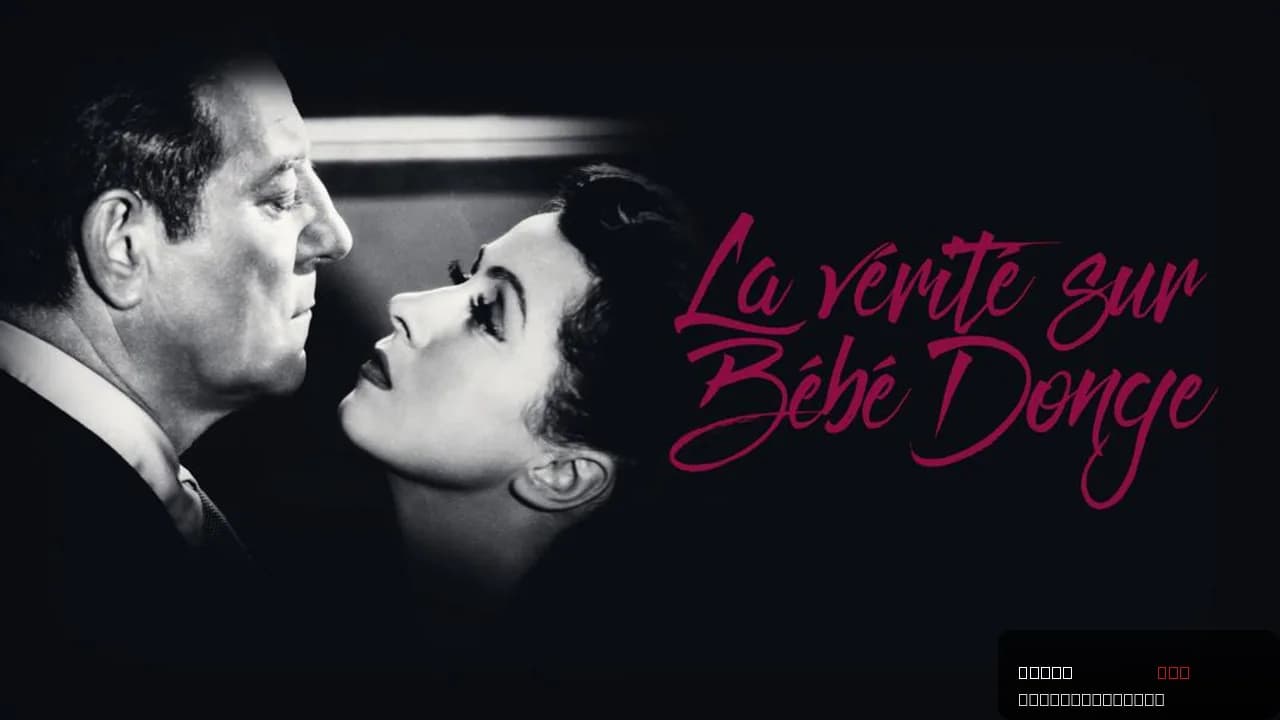
The Truth About Bebe Donge (original French title: La Vérité sur Bébé Donge) is a 1952 French psychological thriller that peels back the veneer of a seemingly respectable marriage to reveal something far darker underneath. The film opens on a household in crisis — a woman lies poisoned, her husband stands accused, and the question of who actually committed the crime becomes the engine driving the entire narrative. What makes this adaptation of Georges Simenon's novel so compelling isn't the mystery itself, but rather how the film refuses to give you easy answers. Instead, it methodically reconstructs the couple's fractured relationship, examining the small humiliations, the quiet resentments, and the moments of genuine affection that somehow coexist in the same toxic union. You're watching a marriage autopsy, really—one that forces you to reconsider guilt and innocence with every scene.
Behind the making of The Truth About Bebe Donge
Director Henri Decoin brought considerable prestige to this project, having already established himself as a skilled craftsman of French cinema in the post-war era. His decision to cast Danielle Darrieux opposite Jean Gabin was inspired: Darrieux was one of France's most elegant and sophisticated actresses, while Gabin—by then in his late fifties—carried the weight of being cinema's archetypal working-man antihero. The pairing created an immediate class tension that the script exploited brilliantly. Gabin plays Donge, a man who feels diminished by his wife's social superiority and her family's wealth, while Darrieux embodies a woman trapped between duty and desire, between the woman she's expected to be and the person she actually wants to become.
The supporting cast—including Gabrielle Dorziat, Claude Génia, and Jacques Castelot—filled out a world that felt lived-in and authentic, the kind of bourgeois French household where every object and social convention carried weight. The film runs 110 minutes, a runtime that allows Decoin to build tension gradually rather than rely on melodramatic shortcuts. Though specific box office figures and awards recognition for this title are less documented than some of its contemporaries, the film's endurance in French film history speaks to its craftsmanship. It's the kind of picture that doesn't need a trophy case to prove its worth—it proves itself every time someone sits down and watches it.
What makes The Truth About Bebe Donge stand out
What's striking about this film is how it refuses the comfort of a conventional thriller structure. You come in expecting a whodunit, and instead you get something closer to a character study that happens to involve poison. The performances are the backbone here. Gabin doesn't play Donge as a villain or a hero—he's a man whose frustration has calcified into something dangerous, someone whose resentment has metastasized over years of small slights and imagined betrayals. There's a scene near the middle where he confronts his wife about her infidelity, and the raw hurt underneath his anger is almost unbearable to watch. Darrieux, for her part, plays Bebe not as a femme fatale but as someone genuinely conflicted—she's made choices she regrets, but she's also a woman who wanted more than what her marriage offered.
The film's real innovation is how it treats the question of guilt as almost irrelevant. By the time you reach the ending, you realize that whether Donge actually poisoned his wife matters far less than understanding why the marriage had to end in poison at all. That's a mature, almost tragic vision of human relationships—one that doesn't believe in simple answers or clean moral categories. I keep coming back to how Decoin uses the family home itself as almost a character, with its heavy furniture and formal arrangements reflecting the emotional suffocation at the heart of this union. It's a film that understands how intimacy and violence can live in the same space, how the person you love most can also be the person who destroys you. Hard to say if audiences in 1952 were ready for that level of ambiguity, but it's exactly what makes the film feel contemporary now.
Where to stream The Truth About Bebe Donge online
If you're ready to experience this psychological noir, you've got plenty of options. The Truth About Bebe Donge is currently available across a range of streaming platforms, including Disney+, Prime Video, Apple TV Store, and several European VOD services like Canal VOD, Orange VOD, and LaCinetek. The film also streams on ARTE Boutique, Gaumont Amazon Channel, Molotov TV, Premiere Max, and VIVA by videofutur. Movie OTT tracks where classic and contemporary titles are currently streaming, so you can check the "Where to Watch" widget at the top of this page to see which platform offers the best picture quality and availability in your region. Some of these services rotate their catalogs seasonally, so it's worth verifying availability before you settle in.
Frequently asked questions
Q: Is The Truth About Bebe Donge based on a true story?
No, it's an adaptation of a novel by Belgian crime writer Georges Simenon, whose work often explored psychological tension and moral ambiguity rather than real events. Simenon was a master of the psychological thriller, and his novels provided rich material for filmmakers interested in character-driven narratives.
Q: Who directed The Truth About Bebe Donge?
Henri Decoin directed the film in 1952. Decoin was an accomplished French director known for his work in noir and psychological dramas during the post-war period.
Q: What's the runtime of The Truth About Bebe Donge?
The film runs 110 minutes, which gives it enough space to develop its characters and atmosphere without feeling padded or rushed.
Q: Can I watch The Truth About Bebe Donge on streaming right now?
Yes. The film is available on multiple platforms including Prime Video, Disney+, Apple TV Store, and several European VOD services. Check the Where to Watch widget to see which option works best for you.
Q: Is The Truth About Bebe Donge a noir film?
It's more accurately described as a psychological drama-thriller with noir elements. While it has the dark atmosphere and moral ambiguity associated with noir, it's primarily concerned with the interior emotional landscape of its characters rather than the crime itself.
Final thoughts on The Truth About Bebe Donge
This is a film for viewers who don't need everything spelled out, who can sit with ambiguity and appreciate the slow burn of character revelation. It won't give you the cathartic ending that most thrillers promise—instead, it offers something more valuable: an honest portrait of how marriage can become a kind of slow poison, how two people can destroy each other without ever raising their voices. The performances from Gabin and Darrieux alone make it worth seeking out, but it's the film's refusal to judge its characters that makes it truly memorable. If you're looking for intelligent, character-driven cinema that doesn't talk down to you, The Truth About Bebe Donge deserves a place on your watchlist.