The Wind's Thirst
A documentary about how "clean energy" can replicate colonialism.
What you're actually watching
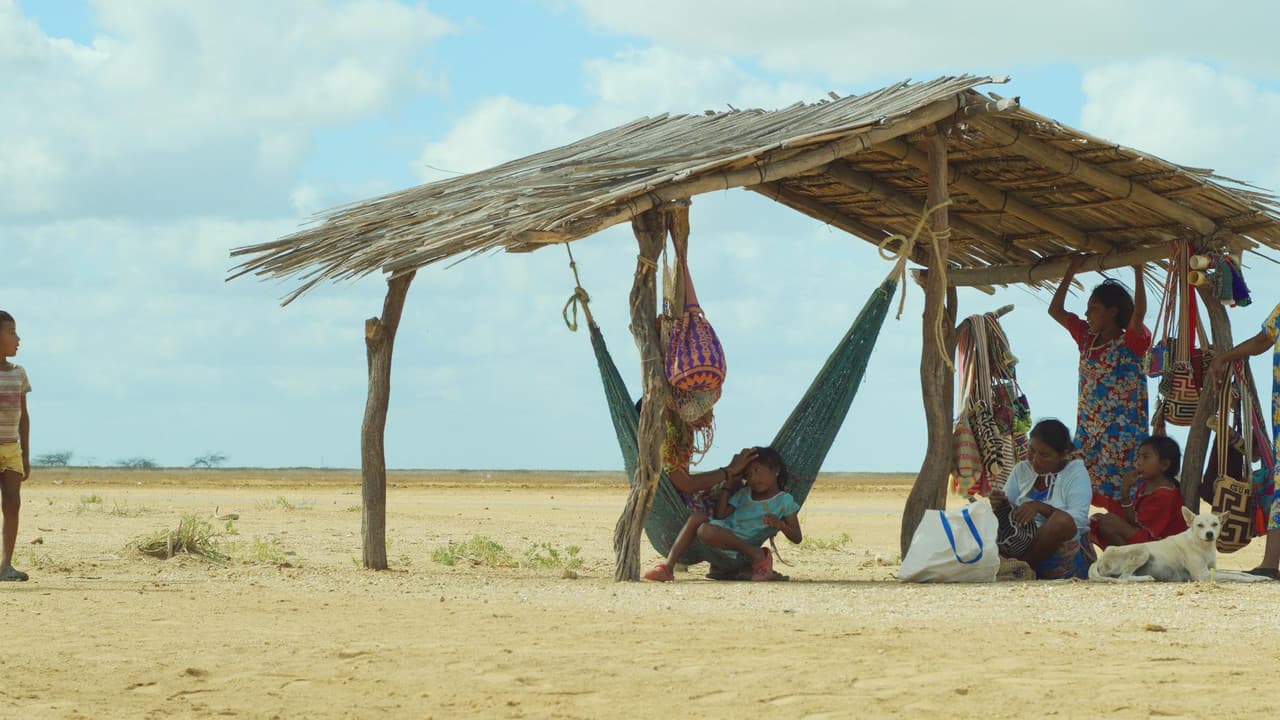
The Wind's Thirst (2026, 84 minutes) follows three Wayuu Indigenous guardians in Colombia's La Guajira desert as they resist multinational wind-energy corporations building on ancestral land. The film's central irony is brutal: the same winds that sustained Wayuu culture for generations are now being harvested as a commodity — and the people living there see almost none of the benefit. A reservoir serves the region's power ambitions. It doesn't serve the Wayuu.
This isn't a film that treats renewable energy as an unambiguous good with a few unfortunate side effects. It asks something harder: good for whom? Wind farms are pitched globally as climate solutions, and they may well be — but the guardians in Alejandro Valbuena's film prove that "clean energy" can replicate the same colonial extraction logic as the coal mines that came before it.
Why Sheffield DocFest noticed it, and why you should too
Directed by: Alejandro Valbuena (Colombian-Canadian filmmaker)
Produced by: Ana Maria Bustos and Arantza Maldonado (Curare Films)
World premiere: Sheffield DocFest 2026
Languages: Wayunaiki and Spanish
Sheffield DocFest has a track record of championing politically urgent work from underrepresented regions. The fact that they selected this film for their 2026 lineup signals real industry confidence — this isn't a festival slot handed out casually. Movie OTT has been tracking the film's 2026 festival trajectory, and their editorial team considers it one of the more significant nonfiction premieres of the year.
The decision to shoot in Wayunaiki — the Wayuu's own language — is a political act embedded in the filmmaking itself. You're not watching subjects being explained to you. You're watching people speak for themselves. I keep coming back to how that choice reframes the viewer's relationship to the guardians: it's a refusal to translate the story into something more legible or more marketable before the audience gets a chance to sit with it.
The 84-minute runtime is tight by documentary standards. No padding. That editorial restraint tells you Valbuena was confident in his material — he didn't need to bloat the runtime to make the argument land. Hard to say if every strand gets equal weight (the film touches on coal mining, evangelical influence, paramilitary violence, and what some advocates call an ongoing genocide against the Wayuu), but the character-led structure suggests he chose human faces over policy charts, which is almost always the right call.
Where the film lands in a crowded documentary landscape
What strikes me about The Wind's Thirst is how it refuses the comfortable framing most green-energy documentaries lean into. The setup — Indigenous communities vs. corporate extraction — isn't new, but Valbuena's specificity is. He's not making a general argument about renewable energy. He's making a precise one: about power, about land, about whose definition of "progress" gets to win.
If you've watched documentaries like The Territory (about the Uru-Eu-Wau-Wau in Brazil resisting illegal logging) or Homeland: Notes from the Land of the Free (which examines Indigenous sovereignty), you'll recognize the territory — but The Wind's Thirst occupies its own space. The film treats the Wayuu guardians as protagonists of their own story, not victims waiting for an outsider to explain their situation. That distinction matters.
The production gestation was long. This wasn't a film rushed out to catch a news cycle. According to the RDV Canada production listing, Valbuena and his producers were building something considered — something that could hold multiple contexts at once (energy transition, colonial history, environmental justice, Indigenous resistance) without collapsing under the weight of it all.
How to watch it right now
Streaming availability: The Wind's Thirst is currently in festival circulation following its Sheffield DocFest 2026 world premiere. The where-to-watch widget above has the most up-to-date platform list for your region. As a Canada–Colombia co-production with international festival momentum, it'll likely land on documentary-friendly platforms (MUBI, Hot Docs, specialty streamers) rather than broad entertainment services like Netflix or Prime.
Movie OTT's streaming tracker aggregates real-time availability across platforms — check there if the widget shows limited options in your area. Streaming windows for festival documentaries can shift fast, so the tracker's better than hunting through multiple apps manually.
Theatrical or limited release details haven't been finalized yet, but that's typical for a film this early in its festival run. Give it another couple of months and formal distribution should be clearer.
Questions before you commit
Q: Is this a feature or a short?
Feature documentary. 84 minutes.
Q: Do I need to know about La Guajira before watching?
No. The film brings you up to speed on the history and stakes — you don't need background reading. That said, the more you know about Colombian extraction politics, the richer the film will feel.
Q: Is it angry or balanced?
It's clear-eyed. Not neutral in a false way. The film doesn't pretend the Wayuu guardians and the corporations have equally valid positions — it doesn't. But it also doesn't rely on shouting or melodrama to make that case. The clarity comes from listening to the people living it.
Q: Will my family watch this?
Depends on your family. It's not a kids' film. It deals with land dispossession, environmental conflict, and systemic injustice. Teenagers who care about climate politics or Indigenous rights would probably engage with it. Younger kids? Probably not.
Q: What language will I hear most?
Wayunaiki and Spanish with subtitles. The film doesn't shy away from letting long stretches play in Wayunaiki — which is part of the point. You're not being translated to. You're being included.
Who should actually watch this
The Wind's Thirst is essential if you think the green energy transition is a clean story. It's for documentary viewers who want character over statistics — the kind of nonfiction that stays with you after the runtime ends, not because of one perfect scene, but because the question it raises doesn't have a tidy answer.
You don't need 90 minutes free right now. But if you do — and if you're paying attention to Indigenous land rights in Latin America, or if you've started questioning the "clean energy" narrative — this is the film to prioritize on your watch list.