The story of Twisted Mistress
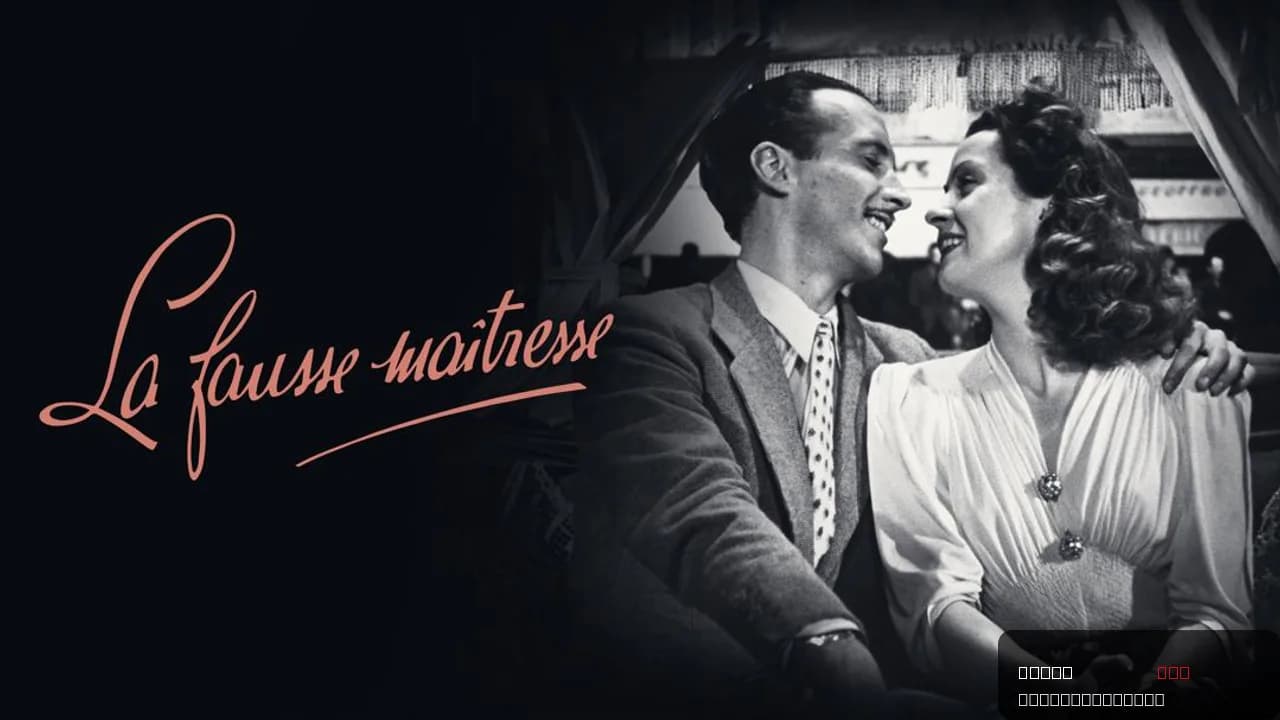
Twisted Mistress tells the tale of a circus owner's daughter who finds herself caught between two worlds—the sawdust and spectacle of her father's traveling show, and the promise of genuine love. The film's central character performs on rope, sings, and eventually falls for a local rugby player, setting up a collision between the bohemian life she's always known and the domesticity he represents. What unfolds is a romantic comedy that hinges on mistaken identities and the gap between public persona and private desire. It's a premise that Honoré de Balzac understood intimately when he wrote the 1841 novel La Fausse Maîtresse—the false mistress, the woman who appears to be one thing but is secretly another. Cayatte's adaptation doesn't shy away from that central deception; instead, it leans into the comedy of misunderstanding and the ache of genuine feeling caught in the machinery of performance.
Behind the making of Twisted Mistress
Director André Cayatte brought this Balzac property to the screen in 1942, during the German occupation of France—a time when cinema became both escape and resistance. The production was mounted at Billancourt Studios in Paris, the era's most prestigious facility, with location work shot around Perpignan in Languedoc-Roussillon, a region that stood in for the provincial charm the story demanded. Art director Andrej Andrejew, a Soviet-born designer who'd worked across European cinema, created the sets, lending the film a visual sophistication that belied its modest budget and wartime constraints. Danielle Darrieux, already an established star of French cinema, carried the lead, supported by Lise Delamare, Bernard Lancret, Maurice Baquet, and a supporting ensemble that included Monique Joyce, Huguette Vivier, and Gabrielle Fontan. The 81-minute runtime was typical for the period—compact, efficient, designed for double-feature programming. While box office figures for wartime French productions are notoriously incomplete, the film's survival and subsequent VHS release by TF1 Vidéo in 1998 suggests it maintained enough cultural currency to warrant preservation. That said, Twisted Mistress never achieved the critical or commercial standing of Cayatte's later work, which would earn him international recognition and festival prizes in the postwar decades.
What makes Twisted Mistress stand out
There's something genuinely odd about Twisted Mistress that's hard to pin down—the thing nobody mentions is that it's neither a straightforward comedy nor a romantic drama, but something caught between the two, and that unresolved tension is actually what makes it worth watching. Darrieux brings a wry, almost world-weary charm to the role, someone who's spent her life performing and knows exactly how to work a room, but who can't quite perform her way out of genuine feeling. The circus setting, which could've been handled as mere spectacle, becomes instead a metaphor for the artifice we all construct around ourselves—the rope-walking and singing aren't just plot points, they're visual reminders that everyone in this film is performing, even when they think they're being authentic. Cayatte's direction is lean and purposeful; he doesn't linger on sentiment or wallow in melodrama. The pacing moves you along, and there's a real elegance to how he frames the interaction between the circus world and the "respectable" world beyond it, never letting you forget that these boundaries are constructed, permeable, ultimately beside the point. What's striking is that despite the film's modest 4.2 IMDb rating, it captures something true about the gap between how we appear and who we actually are—a theme that doesn't age, even if the specific execution of it sometimes feels creaky or dated to contemporary viewers.
Where to stream Twisted Mistress online
Finding older French films can be a hunt, but Twisted Mistress has found its way onto a surprising number of platforms. The film is currently available across multiple streaming services, including Disney+, Prime Video, Apple TV Store, and several French-specific VOD platforms like Canal VOD, Orange VOD, and Premiere Max. If you're in France, you'll also find it on Gaumont Amazon Channel, Molotov TV, Sooner, and VIVA by videofutur. The Movie OTT "Where to Watch" widget at the top of this page aggregates current availability across all these services, so you can see exactly which platform has it in your region right now—streaming catalogs shift constantly, and what's on Disney+ today might move to Prime Video next month. Given the film's obscurity in English-language markets, its broad availability suggests that European streaming services have been quietly investing in catalog depth, pulling lesser-known titles from their national archives and making them accessible to international audiences. That's good news if you're curious about 1940s French cinema but don't want to hunt through specialty distributors.
Frequently asked questions
Q: Is Twisted Mistress based on a novel?
Yes. The film is an adaptation of Honoré de Balzac's 1841 novel La Fausse Maîtresse, which translates to "The False Mistress." Balzac's story explores themes of deception and hidden identity that Cayatte's 1942 adaptation carries into its circus-set narrative.
Q: Who directed Twisted Mistress?
André Cayatte directed the film. Though Twisted Mistress didn't become his most celebrated work, Cayatte went on to earn international recognition for later films, particularly his socially conscious dramas of the 1950s and 1960s.
Q: What's the runtime of Twisted Mistress?
The film runs 81 minutes, a typical length for 1940s double-feature programming. It's a brisk watch that doesn't overstay its welcome.
Q: Where was Twisted Mistress filmed?
Principal production took place at Billancourt Studios in Paris, with location shooting around Perpignan in the Languedoc-Roussillon region of southern France. The provincial setting was crucial to the story's romantic geography.
Q: Why is the IMDb rating so low?
Twisted Mistress scores 4.2 on IMDb, which reflects both the film's age—older, less-accessible films tend to attract fewer, more selective raters—and genuine mixed reactions to its tonal balance. It's a film that doesn't quite land for everyone, though that doesn't mean it's without merit or interest.
Final thoughts on Twisted Mistress
Twisted Mistress won't revolutionize your understanding of cinema or make you weep. It's a modest 1942 French comedy that's more interesting as a historical artifact and a glimpse into wartime Parisian filmmaking than as a timeless masterpiece. But if you're willing to meet it on its own terms—to accept its slightly creaky pacing, its tonal shifts, its earnest belief in the redemptive power of genuine feeling—there's real charm here. The circus setting gives it visual texture, Darrieux brings intelligence and warmth to her role, and there's something refreshing about a film that doesn't feel the need to apologize for its romantic core. Don't expect perfection. Expect instead a window into a specific moment in French cinema, when directors were working under occupation, when stories about performance and authenticity had particular resonance, and when even small, imperfect films could find their way into the world.