









The story of Unfair Competition
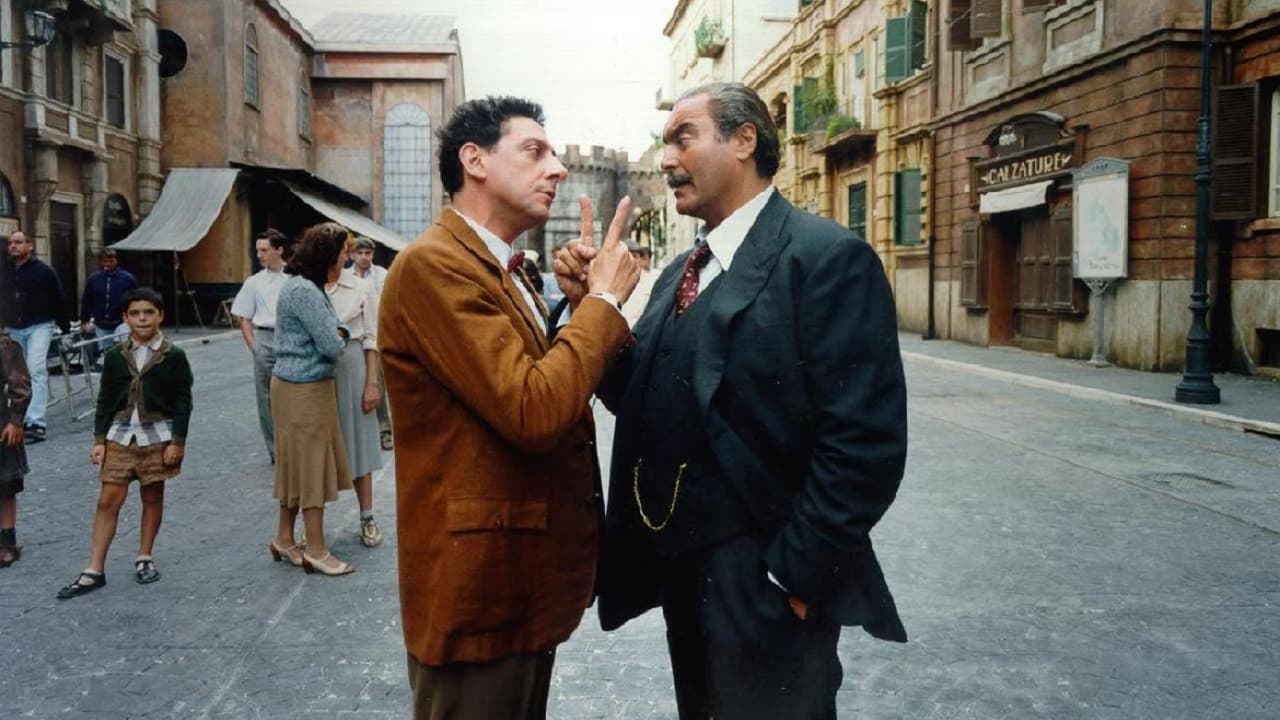
Unfair Competition tells the story of two linen fabric dealers whose shops sit uncomfortably close to each other in what appears to be a pre-war Italian neighborhood. Umberto and Leone aren't just business rivals—they're locked in the kind of grinding, personal competition that defines small-town commerce. Leone undercuts Umberto's prices relentlessly, winning over customers with better deals and sharper tactics. Umberto watches his clientele shrink, his profits dwindle, his dignity erode with each lost sale. The tension between them feels permanent, the sort of grudge that hardens into identity. But then the world shifts. When Fascism tightens its grip and anti-Semitic regulations begin to strangle businesses run by Jewish owners like Leone, Umberto faces an unexpected moral reckoning. Their rivalry suddenly looks trivial. What unfolds is a transformation from enemies to allies—a story about how shared humanity and decency can override years of calculated animosity.
Behind the making of Unfair Competition
Director Ettore Scola brought Unfair Competition to the screen in 2001 as a late-career project that drew on his long experience mining Italian history for moral complexity. The film was a co-production among several European companies—Medusa Film, A.Gi.Di., Filmtel, and Mass Film—pooling resources to tell a story about ordinary people caught in extraordinary circumstances. What's striking is that Scola chose to shoot the film at Cinecittà, Rome's legendary studio complex. Those same soundstages would later host Martin Scorsese during production of Gangs of New York, a fact Scola himself mentioned in conversations about the film's legacy. The 110-minute runtime gives the narrative room to breathe, allowing character development to unfold without rushing toward sentiment. The production design captures the texture of the period without ever feeling like a museum piece—the shops, the streets, the small transactions that make up daily life all feel lived-in and real. While Unfair Competition didn't become a massive box-office phenomenon, it found its audience among viewers who appreciate character-driven historical drama that refuses easy answers. On IMDb, the film holds a respectable 7.032/10 rating, reflecting the kind of solid, word-of-mouth appreciation that keeps a film alive across decades and streaming platforms.
What makes Unfair Competition stand out
The film works because it refuses to make either man a villain. That's harder than it sounds. Scola could've painted Leone as a cutthroat operator or Umberto as a hapless traditionalist, but instead both men come across as people trying to survive in a competitive marketplace. Their conflict isn't moral—it's economic, which is precisely what makes the shift in their relationship so powerful when history forces a reckoning. The performances carry this nuance without strain. What I keep coming back to is how the film treats the rise of Fascism not as a distant historical backdrop but as a creeping, suffocating force that makes petty grievances suddenly meaningless. When anti-Semitic laws begin to target Leone's business, the audience understands viscerally why Umberto's decision to stand with his former rival matters. It's not redemption—it's recognition. The dialogue doesn't overexplain this; the film trusts viewers to feel the moral weight of the moment. Scola's direction remains understated throughout, which paradoxically makes the emotional stakes feel higher. There's no swelling score telling you what to feel, no dramatic monologues spelling out the themes. Just two men, their shops, their choices, and the historical moment that forces them to choose between profit and principle. That restraint is what separates Unfair Competition from lesser historical dramas that mistake earnestness for depth.
Where to stream Unfair Competition online
Unfair Competition is currently available on major OTT services, making it accessible to viewers across multiple streaming platforms. You can check the Where to Watch widget at the top of this page to see which services have it in your region right now—availability shifts based on licensing agreements, so it's worth verifying before you settle in to watch. Movie OTT tracks current streaming availability across all the major platforms, so you'll always know where to find titles like this one. The film's 110-minute runtime makes it an ideal evening watch, substantial enough to feel like a complete experience without demanding an exhausting time commitment. Whether you're browsing on a weeknight or planning a weekend film session, you'll find Unfair Competition waiting on at least one of your subscribed services.
Frequently asked questions
Q: Who directed Unfair Competition?
Ettore Scola directed the film, bringing his characteristic attention to historical detail and human complexity. Scola was known for mining Italian history for stories about ordinary people navigating extraordinary circumstances, and Unfair Competition represents that sensibility in full.
Q: When was Unfair Competition released?
The film came out in 2001, making it one of Scola's later works. It was shot at Cinecittà in Rome and involved production companies from multiple European countries.
Q: What's the runtime of Unfair Competition?
The film runs 110 minutes, giving the story room to develop character relationships and historical context without feeling rushed or padded.
Q: Is Unfair Competition based on a true story?
While the film doesn't appear to be based on a specific historical event, it's rooted in the real experience of Italian Jews under Fascism and the moral choices ordinary people faced during that period.
Q: What genres does Unfair Competition fall under?
The film blends drama with comedy, using lighter moments to offset the darker historical material and keeping the tone human rather than purely tragic.
Final thoughts on Unfair Competition
Unfair Competition deserves attention from anyone interested in historical drama that treats its audience as thoughtful and capable of sitting with moral ambiguity. It's not a film that shouts its message or wraps everything in a neat bow. Instead, it offers a quiet meditation on how circumstance can transform enemies into allies, and how decency—when it appears—can feel like the most radical choice of all. The 2001 film stands as a reminder that some rivalries matter far less than the stakes of history. If you're looking for something that'll stick with you after the credits roll, Unfair Competition is absolutely worth your time.