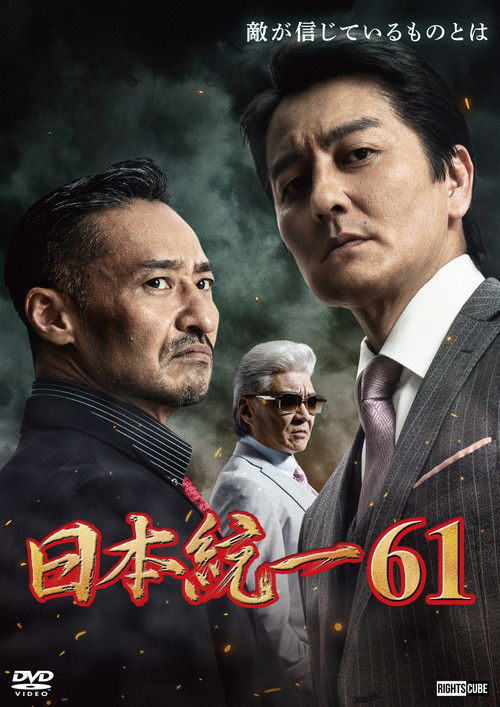


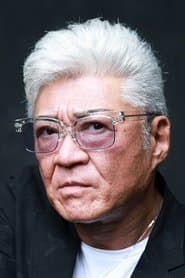

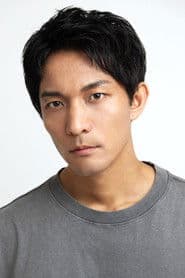
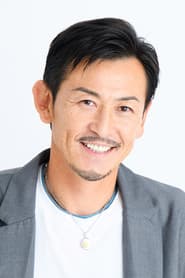


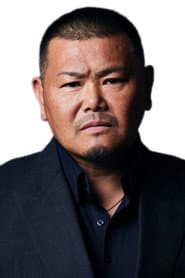
The story of Unification of Japan 63
Unification of Japan 63 opens in the aftermath of destruction. Himuro and Tamura have just wiped out the Kamome Church—a criminal operation that demanded everything from them—and now they're attempting to process what comes next. The film doesn't linger on exposition or hand-holding; it drops you into a world where the violence is over, but its weight lingers. Himuro returns to Kobe, the city that's become something like home, and there he's reunited with Joji, another figure from their tangled past. What unfolds is a meditation on how geography, memory, and violence shape identity. The 71-minute runtime is deceptive—it's not a constraint but a choice, a refusal to pad or sentimentalize what's essentially a reckoning.
Behind the making of Unification of Japan 63
Unification of Japan 63 emerged in 2024 as a lean, focused entry into the crime-drama landscape. The film centers on Yasukaze Motomiya's portrayal of Himuro and Yoshiyuki Yamaguchi as Tamura, two performers who bring a weathered authenticity to characters shaped by violence and survival. Takashi Kitadai rounds out the core cast as Joji, completing a triangle of men bound by shared trauma. The production philosophy seems to have prioritized restraint over spectacle—there's no bloat here, no subplot that doesn't earn its place. Box office and awards recognition data for this title remain limited in broader circulation, but that's partly because Unification of Japan 63 operates in a register that doesn't always align with mainstream festival circuits or commercial metrics. What matters is that the filmmakers committed to a specific vision: a character-driven crime story that trusts the audience to sit with ambiguity and moral complexity. The 71-minute duration becomes a signature—this is a film that knows exactly what it wants to say and stops when it's said it.
What makes Unification of Japan 63 stand out
The real strength here isn't plot mechanics (though the setup is solid). It's the way the film treats its characters as people who've survived something and now have to figure out what survival means. Motomiya's Himuro carries a quiet exhaustion—not the theatrical kind, but the kind that comes from making terrible choices and having to live with them. What's striking is how little the film explains or justifies; you're watching men move through a world that's shaped them, and you're left to infer the rest. The Kobe setting becomes almost a character itself, a place of refuge that's also a reminder of everything they've done to get here. There's a scene early on where Himuro simply walks through the city, and the camera holds on his face—no dramatic music, no voiceover, just a man existing in a space that's supposed to be safe but probably never will be. That's the film's core gesture. It doesn't need to explode into action or revelation; it trusts that watching someone sit with their own history is enough. The crime-drama genre often relies on plot twists and reversals, but Unification of Japan 63 moves in a different direction entirely—it's interested in what happens when the plot is over and you have to keep living.
Where to stream Unification of Japan 63 online
Unification of Japan 63 is available across major OTT services, making it accessible to viewers looking for crime drama that doesn't follow the usual playbook. You can check the Where to Watch widget at the top of this page to see which platform currently carries it in your region—availability shifts, so Movie OTT keeps that information updated in real time. If you're browsing for similar titles, Movie OTT's streaming-aggregator database tracks where these kinds of focused, character-driven dramas land, so you won't waste time hunting across three different apps. The 71-minute runtime makes it a perfect evening watch—substantial enough to feel complete, lean enough that you won't feel like you're making a major time commitment.
Frequently asked questions
Q: Is Unification of Japan 63 based on a true story?
The film draws on crime-drama conventions and character archetypes, but it's a fictional narrative. That said, the specificity of the Kobe setting and the grounded tone give it a documentary-like quality that can feel rooted in real experience.
Q: Who stars in Unification of Japan 63?
Yasukaze Motomiya leads as Himuro, with Yoshiyuki Yamaguchi playing Tamura and Takashi Kitadai as Joji. The ensemble is small and focused, allowing each performer significant space to develop their character.
Q: How long is Unification of Japan 63?
The film runs 71 minutes, a deliberate choice that prioritizes narrative economy over sprawl. It's short enough to feel urgent but long enough to explore its characters with real depth.
Q: What genre is Unification of Japan 63?
It's categorized as action, crime, and drama, though it leans more heavily into character study and moral reflection than typical action fare. The crime elements are present, but they're backdrop rather than the main event.
Q: Where can I watch Unification of Japan 63?
The film is streaming on major OTT platforms. Use the Where to Watch widget on this page to find which service has it available in your area right now.
Final thoughts on Unification of Japan 63
Unification of Japan 63 isn't here to entertain you in the conventional sense. It's here to sit with you in a room and make you think about what violence costs, what home means when you've destroyed it, and whether redemption is even possible for people like Himuro and Tamura. The film doesn't offer easy answers—it offers presence, specificity, and the kind of quiet intensity that stays with you after the credits roll. If you're tired of crime dramas that mistake plot complexity for depth, this one's worth your time.