The Story of Voyager: Chance Encounters Across Two Continents
Voyager opens in April 1957 with a premise that immediately upends everything its protagonist believes about the world. An engineer named Faber—a man whose entire existence is built on rational thought, probability, and the predictable laws of technology—survives a plane crash in Mexico. The crash itself is the first crack in his worldview, but what comes next shatters it completely: he learns that he fathered a child in 1938, a son he never knew about. Suddenly, the man who'd spent decades believing in facts and figures finds himself confronting something far messier—the weight of a past he couldn't calculate his way out of. From Mexico, Faber boards a ship bound for France, hoping perhaps to outrun this revelation. Instead, he meets Sabeth, a young woman whose presence on that voyage will test everything he thinks he understands about chance, coincidence, and whether such things even exist at all.
The film doesn't rush its premise. It lets the meeting unfold naturally, the way real connections happen—with small talk that gradually deepens, glances that linger a beat too long, conversations that veer into territory neither person expected. What's striking is how the 1991 film takes its time with these moments, trusting that the audience will feel the tension building between two people who don't yet understand what they mean to each other. It's a meditation on whether we're in control of our own stories or whether we're just passengers watching fate write them for us.
Behind the Making of Voyager: Schlöndorff, Shepard, and Literary Adaptation
Voyager arrived in 1991 as a German-American co-production from Stefi 2 and Neue Bioskop Film, directed by Volker Schlöndorff, a filmmaker known for his meticulous approach to adaptation and psychological depth. Schlöndorff's source material was Max Frisch's 1957 novel Homo Faber (which translates to "Man the Maker"), a Swiss literary classic that explores the collision between technological rationalism and human fate. Screenwriter Rudy Wurlitzer handled the adaptation, tasked with translating Frisch's philosophical novel into cinematic language without losing its intellectual core—no small feat. The film runs 117 minutes, a length that allows Schlöndorff to build atmosphere and let scenes breathe rather than rush toward plot beats.
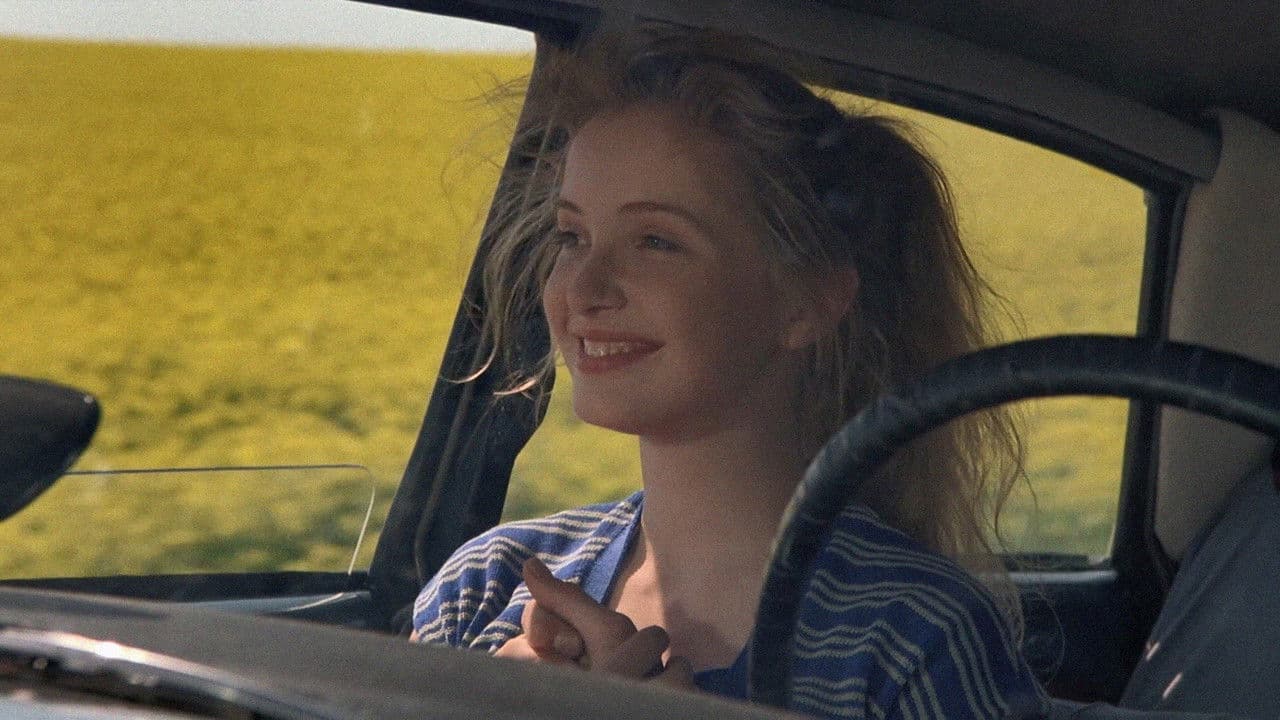
The cast brought serious pedigree to the project. Sam Shepard, an actor-playwright whose own work often grapples with American identity and hidden truths, embodied Faber with a quiet intensity that made his character's rigidity feel like a defense mechanism rather than a character flaw. Julie Delpy, then in her twenties, brought a luminous vulnerability to Sabeth, the kind of performance that makes you believe in her without needing explanation. Barbara Sukowa rounded out the principal cast, adding gravitas to the ensemble. The film's IMDb rating of 6.2/10 suggests it's a polarizing work—the kind of film that some viewers find meditative and profound while others find it slow or emotionally distant. That's often the mark of a serious literary adaptation: it doesn't aim to please everyone, and it doesn't apologize for asking its audience to sit with ambiguity.
What Makes Voyager Stand Out: Philosophy Meets Romance
Here's the thing about Voyager that doesn't fit neatly into most romantic dramas: it's fundamentally skeptical of romance itself. Or rather, it's skeptical of the idea that we can ever fully understand or control our emotional lives the way Faber believes he can control his professional one. The film's tagline—"Destiny is the most powerful coincidence of all"—captures this paradox perfectly. Faber is a man who's built his entire identity on dismissing fate, on believing that everything can be reduced to cause and effect, probability and engineering. The film then systematically dismantles that worldview by throwing coincidences at him that seem too perfect, too symmetrical to be mere chance.
What's remarkable about Schlöndorff's direction is how he refuses to make this easy. He doesn't give us a moment where Faber suddenly "gets it" and embraces fate. Instead, the film presents his growing unease as something he can't quite articulate—a nagging sense that the rules he's lived by aren't holding up. Sam Shepard's performance is crucial here; he plays Faber as a man slowly realizing he's been living in a prison of his own making, and the realization doesn't feel liberating so much as terrifying. Julie Delpy, meanwhile, brings an almost ethereal quality to Sabeth, making her feel less like a conventional love interest and more like a force of nature that Faber can't rationalize away. The performances aren't showy—they're understated in a way that rewards patient watching. When Faber and Sabeth share a scene, there's a charge between them that comes from what isn't said as much as what is, and that restraint is what makes the film's emotional stakes feel genuine rather than manufactured.
Where to Stream Voyager Online
Voyager is currently available on major OTT services, though availability varies by region and subscription tier. The easiest way to find exactly where it's streaming right now is to check the "Where to Watch" widget at the top of this page—Movie OTT keeps that information updated across Netflix, Prime Video, and other platforms in real time, so you don't have to hunt across multiple sites. Since this is a 1991 film with a modest theatrical footprint, it doesn't cycle through streaming services as aggressively as newer releases, which means when it's available, it's worth catching it. If you're a fan of literary adaptations or slow-burn character studies, this is absolutely worth tracking down.
Frequently asked questions
Q: Is Voyager based on a true story?
No, Voyager is adapted from Max Frisch's 1957 novel Homo Faber, which is a work of philosophical fiction rather than autobiography. However, Frisch drew on his own experiences traveling through Europe and the Americas, so the novel has an autobiographical texture even if the specific plot isn't drawn from real events.
Q: Who directed Voyager?
Volker Schlöndorff directed the film. He's a German filmmaker known for his literary adaptations and psychological dramas, including The Tin Drum (1979), which won the Academy Award for Best Foreign Language Film.
Q: What's the runtime of Voyager?
The film runs 117 minutes, which gives Schlöndorff time to develop the relationship between Faber and Sabeth without rushing toward melodramatic payoffs.
Q: Is Voyager a romance or a drama?
It's both, though calling it a "romance" might set the wrong expectations. It's more accurately a philosophical drama with romantic elements—it uses the meeting between two people to explore larger questions about fate, rationality, and whether we can ever truly know ourselves or others.
Q: Why is Voyager not more well-known?
The film arrived in 1991 with minimal marketing and didn't find a large theatrical audience, partly because literary adaptations of this caliber often struggle commercially. It's the kind of film that builds a devoted following over decades through word-of-mouth and festival circuits rather than becoming an immediate hit.
Final Thoughts on Voyager: A Film for the Philosophically Inclined
Voyager isn't a film that'll give you easy answers or a tidy resolution. It's a film that trusts you to sit with questions, to feel the discomfort of a man whose entire framework for understanding the world is collapsing, to recognize that sometimes the most powerful moments in life are the ones we can't rationalize or control. If you're drawn to character-driven stories, literary adaptations, and films that linger in your mind long after the credits roll, Voyager deserves your time. It's a quiet masterpiece—the kind of film that rewards patient, attentive viewing.