The Story of We Are All Murderers
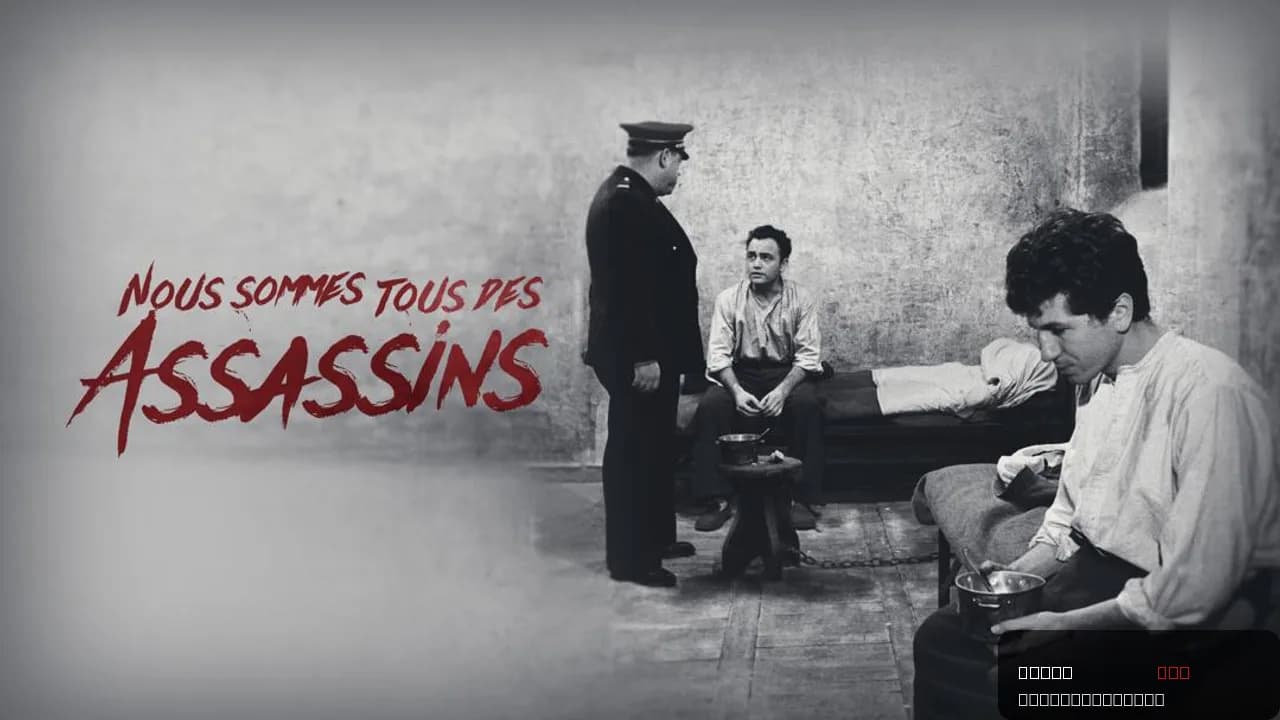
We Are All Murderers tells the story of René, a young man from the slums whose life takes a dark turn when the French Resistance recruits him during World War II. They train him to kill Germans — to be efficient, obedient, effective. But when the war ends, the killing doesn't. René doesn't know how to stop. The skills that made him valuable to the Resistance have become his only currency, his only identity. What unfolds is a descent into a criminal underworld where the line between wartime necessity and peacetime murder blurs into something almost indistinguishable. Director André Cayatte doesn't offer easy answers about culpability or redemption. The film's title itself is provocative — we're all murderers — suggesting that society, the state, the war itself share responsibility for what René has become. It's not a comfortable watch, and that's the point.
Behind the Making of We Are All Murderers
André Cayatte, a French screenwriter and director with a reputation for socially conscious cinema, wrote and directed this film as a co-production between France and Italy. Shot at the Boulogne Studios in Paris with sets designed by art director Jacques Colombier, the production had the resources and craft of a major European effort. The film premiered at the 1952 Cannes Film Festival, where it made an immediate impact — the festival awarded it the Special Jury Prize, a significant honor that signaled Cayatte's arrival as a filmmaker willing to tackle morally complex material. The ensemble cast includes Marcel Mouloudji in the central role of René, alongside Raymond Pellegrin, Antoine Balpêtré, Julien Verdier, Claude Laydu, and Georges Poujouly. Mouloudji, in particular, brings a raw vulnerability to the role of a man trapped by his own training. At 113 minutes, the film takes its time — there's no rush to judgment, no tidy resolution waiting at the end. Movie OTT tracks where this rare European crime drama is currently available for streaming, making it easier to discover films like this that don't always get wide theatrical distribution today.
What Makes We Are All Murderers Stand Out
What's striking about We Are All Murderers is how it refuses the usual crime-film catharsis. You don't watch René get caught and punished, or escape and find redemption. Instead, Cayatte builds something more unsettling — a portrait of a man who's become a weapon and doesn't know how to become human again. The film operates in moral gray zones. The Resistance needed killers to fight fascism. René was useful. Necessary, even. But does that obligation end when the war does? The performances anchor the film's refusal to simplify. Mouloudji doesn't play René as a monster or a tragic hero — he's just a kid, really, lost in a system that chewed him up and spat him out. The thing nobody mentions is how quietly devastating the film can be. There's no big dramatic monologue explaining René's psychology. Instead, Cayatte lets you watch him move through the world, increasingly isolated, increasingly desperate, and you understand without being told. The cinematography captures post-war Paris and the criminal underworld with a documentary-like precision that makes the violence feel immediate and inescapable. It's the kind of film that sticks with you — not because it's flashy, but because it won't let you look away from uncomfortable truths about power, violence, and moral responsibility.
Where to Stream We Are All Murderers Online
We Are All Murderers is available across multiple platforms, though availability varies by region and subscription status. You can stream it on Amazon Prime Video with Ads, Disney+, Prime Video, and through several specialized VOD services including Gaumont Amazon Channel, Canal VOD, FOD, LaCinetek, Orange VOD, Premiere Max, and VIVA by videofutur. For the most current and region-specific availability, check the Where to Watch widget at the top of this page — it'll show you exactly which platform has it in your area right now. Since this is a 1952 European film, it's not always on the mainstream services, so knowing where it's currently streaming can save you time.
Frequently Asked Questions
Q: Who directed We Are All Murderers?
André Cayatte wrote and directed the film. He was a French filmmaker known for socially conscious crime dramas, and this 1952 work became one of his most acclaimed films, winning the Special Jury Prize at Cannes.
Q: How long is We Are All Murderers?
The film runs 113 minutes, giving Cayatte plenty of time to develop René's character and explore the moral complexities of his situation without rushing to resolution.
Q: What's the IMDb rating for We Are All Murderers?
The film holds a 6 out of 10 rating on IMDb, though critical reception at film festivals was stronger — the Cannes Special Jury Prize suggests critics and industry professionals valued it more highly than the general audience rating might indicate.
Q: Is We Are All Murderers based on a true story?
The film is a fictional drama, though it's inspired by real historical circumstances — the experience of Resistance fighters trained to kill during WWII and their struggle to reintegrate into civilian life afterward.
Q: Where was We Are All Murderers filmed?
The film was shot at the Boulogne Studios in Paris, with sets designed by art director Jacques Colombier, giving it a polished production value despite its bleak subject matter.
Final Thoughts on We Are All Murderers
We Are All Murderers isn't an easy film to recommend — it won't entertain you in the conventional sense. But if you're interested in cinema that takes moral questions seriously, that trusts its audience to sit with ambiguity and discomfort, it's essential viewing. Cayatte made a film that questions who bears responsibility for violence, and that question doesn't get easier seventy years later. For serious film lovers exploring European cinema of the 1950s, or anyone curious about how filmmakers tackled trauma and post-war society, this is worth seeking out. It's the kind of film that reminds you why cinema matters.