






The story of When Night Is Falling
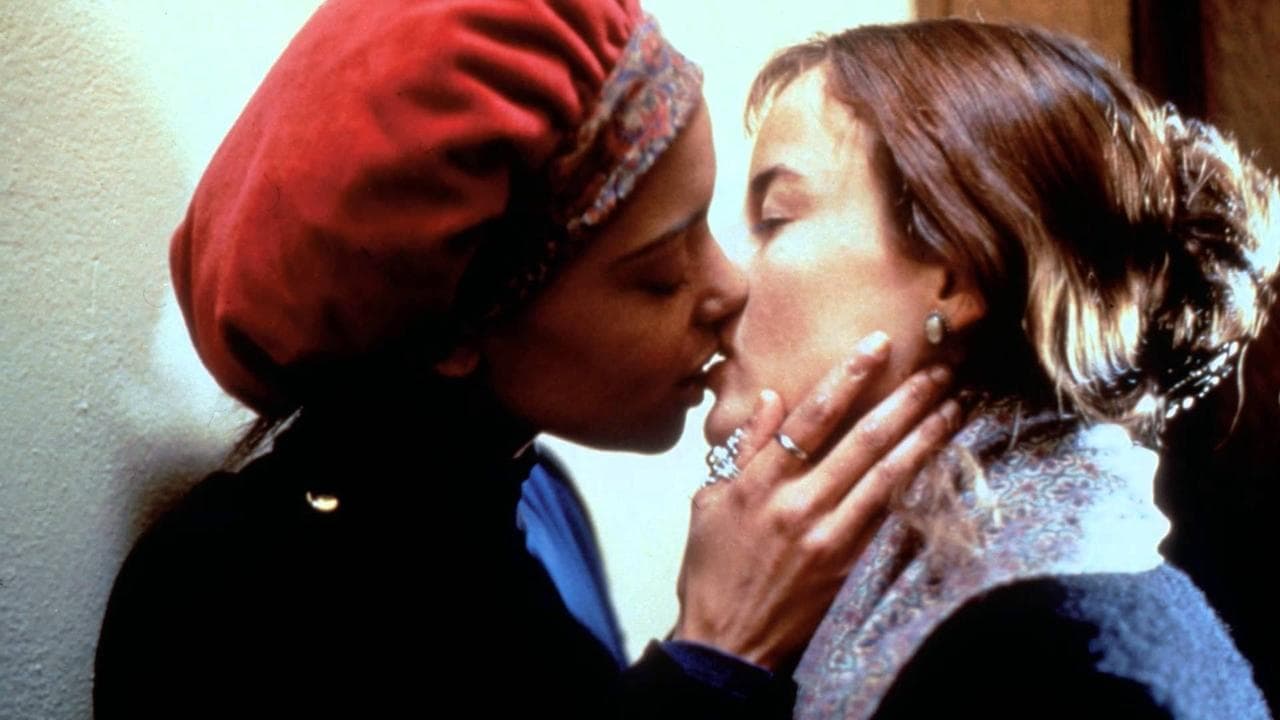
When Night Is Falling opens on a life that looks perfect from the outside. Camille teaches at a Protestant college and shares a long-term relationship with Martin, a respected minister and fellow professor. They're the kind of couple that fits neatly into the world around them—respectable, stable, integrated into their community. Then Camille meets Petra. She's a performer with a circus troupe, bold and flamboyant in ways that Camille has never allowed herself to be. What starts as an inexplicable attraction becomes something far more consuming: Camille finds herself questioning everything she's built, everything she's believed about who she is and what she wants. The film follows her as she throws her carefully constructed conservative life into complete disarray, pursuing someone who represents everything she's been taught to suppress.
Behind the making of When Night Is Falling
When Night Is Falling emerged from Alliance Films in 1995, a moment when mainstream cinema was still largely uncomfortable with explicitly queer narratives, especially those centered on women's desire. Director Patricia Rozema crafted the film with visual ambition—the title itself borrowed from a Leonard Cohen lyric—and a commitment to treating Camille's awakening with the same emotional weight that mainstream cinema reserved for heterosexual romance. The film runs 96 minutes and carries an IMDb rating of 6.3/10, a score that doesn't fully capture its cult resonance among those who've discovered it. The cast features Pascale Bussieres as Camille and Rachael Crawford as Petra, performances that ground the film's more abstract visual language in genuine human vulnerability. While it didn't achieve major box office success on initial release, When Night Is Falling has found its audience through television, home video, and now streaming platforms—the kind of film that builds reputation over time rather than conquering multiplexes on opening weekend. The film's exploration of sexuality and identity was, for 1995, genuinely transgressive in mainstream cinema, even if it didn't receive the awards recognition that might have amplified its reach at the time.
What makes When Night Is Falling stand out
What's striking about When Night Is Falling is how seriously it takes the interior life of desire. This isn't a film that treats Camille's attraction to Petra as a plot twist or a scandal to be resolved through conventional narrative mechanics. Instead, Rozema lets the camera linger on moments of connection—the way light falls across a face, the texture of a gesture—in a way that feels almost dreamlike. The film's visual language is deliberately sensual; it's not shy about the fact that its tagline promises "a visual treat on lust." But there's real psychological complexity underneath that aesthetic beauty. Camille isn't simply rebelling or going through a phase. She's confronting the gap between the person she's been told to be and the person she actually is, and that reckoning costs her something. The performances carry this weight. Bussieres brings a kind of quiet intensity to Camille—the way her character's eyes widen, the hesitation in her voice when she's on the edge of saying something true. Crawford, meanwhile, embodies a kind of freedom and self-knowledge that Camille both envies and fears. There's a scene where Petra performs in the circus, moving through space with absolute confidence, and you see Camille watching from the audience, and in that moment the entire emotional architecture of the film is visible.
How to watch When Night Is Falling online
When Night Is Falling is available on major OTT services, and Movie OTT tracks current streaming availability so you can see exactly where it's streaming right now. The film has become easier to access over the past decade as streaming platforms have expanded their catalog of independent and international cinema. Rather than hunting across multiple services, you can check the Where to Watch widget at the top of this page to see which platform has it available in your region. The 96-minute runtime makes it easy to carve out time for a viewing, and it's the kind of film that rewards rewatching—the visual language reveals itself differently on a second encounter, and knowing where the story goes lets you catch all the small moments of foreshadowing that Rozema plants throughout.
Frequently asked questions
Q: Who directed When Night Is Falling?
Patricia Rozema directed the film. She brought a visual sophistication and emotional intelligence to the story that elevated it beyond a simple coming-out narrative into something more complex about identity and desire.
Q: Is When Night Is Falling based on a true story?
No, it's an original screenplay. Rozema created the characters and story specifically for the film, though the emotional truths it explores resonate with real experiences of people navigating identity and desire.
Q: What year was When Night Is Falling released?
The film came out in 1995. For context, this was a time when queer narratives—especially those centered on women's desire—were largely absent from mainstream cinema, making Rozema's work particularly notable.
Q: Who are the main actors in When Night Is Falling?
Pascale Bussieres plays Camille, the professor, and Rachael Crawford plays Petra, the circus performer. Both deliver nuanced, vulnerable performances that ground the film's visual poetry in genuine emotion.
Q: What genres does When Night Is Falling belong to?
It's classified as drama and romance. The film blends intimate character study with sensual, poetic filmmaking—it's less interested in plot mechanics than in exploring the emotional and physical dimensions of desire and self-discovery.
Final thoughts on When Night Is Falling
When Night Is Falling isn't a film for everyone. It moves at its own pace, trusts the viewer to sit with ambiguity and visual metaphor, and doesn't pretend that choosing authenticity over convention comes without cost. But for those who connect with it—and increasingly, people are discovering it through streaming—it's the kind of film that stays with you. There's something about watching a character risk everything for the possibility of being truly seen that doesn't fade. If you're drawn to cinema that treats desire with artistic seriousness, or if you're interested in how queer narratives have evolved since the 1990s, this one's worth your time.", "hook_length_check": 280