The story of Zoom.Mov: Crime, suspicion, and a leaked video
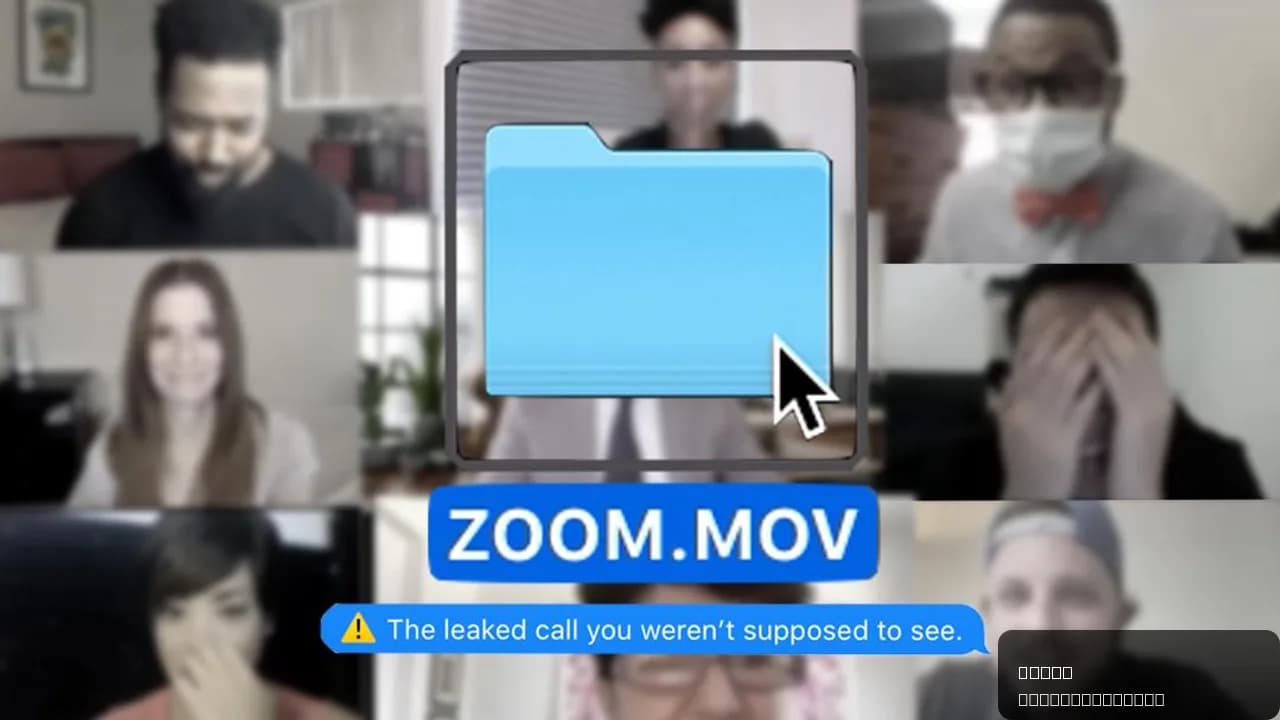
Zoom.Mov operates on a deceptively simple premise that spirals into something far more unsettling. The film centers on a hacker who discovers a video file buried on a local police server—the kind of file that's been deliberately hidden to prevent public outcry and community unrest. Once he leaks it online, what should've been a straightforward act of whistleblowing becomes the catalyst for something much darker. The leaked material appears to show nothing more than a standard office video-conference call, the kind of mundane Zoom meeting that became the default backdrop for work in 2020. But then an employee goes missing. Suddenly, everyone involved in that conference call becomes a potential suspect, and the investigation threatens to unravel the social fabric holding the community together. It's a setup that trades on real pandemic-era anxiety—the strange intimacy and isolation of being trapped in a grid of faces on a screen—and weaponizes it.
Behind the making of Zoom.Mov: Directors, cast, and the indie horror approach
Zoom.Mov was directed by Josef Cannon and Justin Nesbitt, who also appear in the film alongside a cast including Tristan Cunningham, Jakeem Hawkins, Alexandra Marlin, Kate McIntyre, and Nick Yaya. The 70-minute runtime signals a lean, efficient approach—this isn't a sprawling prestige drama but rather a tight, contained thriller that respects the viewer's time. Released in 2020, the film tapped into something culturally immediate: the strangeness of video conferencing as a setting for human drama, before that novelty had fully worn off. The production carries the marks of independent filmmaking, with the directors taking on dual roles as both storytellers and performers, a hands-on approach that often results in more intimate, experimental storytelling than studio productions allow. Without major studio backing or awards-season buzz, Zoom.Mov operated outside the traditional prestige pipeline, which actually freed it to take stranger formal risks. The film's modest budget and scope meant the filmmakers could focus on what matters most in a mystery: the architecture of suspicion and the slow revelation of secrets.
What makes Zoom.Mov stand out: Formal innovation and paranoia as genre
What's striking about Zoom.Mov is that it takes the video-conference format seriously as a storytelling tool rather than treating it as a gimmick. The constraint—that most of the action unfolds within a grid of rectangles, with people unable to leave or fully escape one another—becomes the engine of paranoia. You can't read the room when the room is a Zoom call. Glitches, frozen frames, dropped connections, the awkward silence when someone's on mute without realizing it. These aren't just authentic details; they're sources of genuine dread. The film doesn't wink at the audience or lean into dark comedy (though there are moments of dark humor threaded through). Instead, it asks: what if the technology that's supposed to connect us actually isolates us in ways that make us vulnerable? What if a missing person investigation conducted through a screen, where you can only see what the camera permits, becomes impossible to solve? The performances anchor this experiment—the cast members playing versions of themselves or near-versions, which creates an unsettling ambiguity about where the performance ends and the paranoia begins. It's the kind of meta-textual move that could easily collapse into pretension, but here it works because the filmmakers commit to the tone and don't undercut the tension with irony. Movie OTT tracks where films like this—unconventional indie thrillers that don't fit neatly into traditional genre categories—are currently streaming, making it easier to find boundary-pushing work that might otherwise slip past.
Where to stream Zoom.Mov online
Zoom.Mov is currently available on Prime Video, where you can stream it on-demand. Given its 70-minute runtime, it's the kind of film that works well as a late-night watch or a palate cleanser between longer viewing commitments. Prime Video's catalog includes a lot of indie horror and thriller content, and Zoom.Mov fits naturally into that space. The Where-to-Watch widget at the top of this page will show you the most current availability across all platforms, but as of now, Prime Video is your destination. If you're the type of viewer who appreciates films that experiment with form and take risks with their premise, this is worth tracking down on the platform.
Frequently asked questions
Q: Who directed Zoom.Mov?
Zoom.Mov was directed by Josef Cannon and Justin Nesbitt, who also star in the film. This dual role as director-performer gives the project a distinctly independent and experimental feel.
Q: Where can I watch Zoom.Mov?
Zoom.Mov is currently streaming on Prime Video. You can find it there on-demand, and the Where-to-Watch widget on this page shows real-time availability across all platforms.
Q: How long is Zoom.Mov?
The film runs 70 minutes, making it a lean, efficient thriller that doesn't overstay its welcome. It's designed to be watched in one sitting.
Q: What's the IMDb rating for Zoom.Mov?
Zoom.Mov has an IMDb rating of 4.1 out of 10, which reflects a mixed critical and audience reception. It's the kind of film that will appeal more to viewers seeking experimental horror and unconventional mysteries than to those looking for traditional genre satisfaction.
Q: Is Zoom.Mov based on a true story?
No. Zoom.Mov is a fictional thriller that uses the video-conference format as its central premise. While it taps into real anxieties about surveillance, digital communication, and missing persons, it's not adapted from actual events.
Final thoughts on Zoom.Mov: An experiment worth seeking out
Zoom.Mov won't be for everyone. It's deliberately strange, formally experimental, and designed to make you uncomfortable with the technology you use every day. But that's precisely what makes it worth watching. In a streaming landscape crowded with content, films that take genuine risks—that use their constraints as creative fuel rather than limitations—deserve attention. If you're tired of predictable mysteries and want something that'll sit with you long after those 70 minutes are done, this is it.