Actor
Hildegard Knef
2 films on Movie OTT · Active 1978–1980
Hildegard Knef was born on December 28, 1925, in Ulm, Germany, and went on to become one of the most distinctive presences in postwar European cinema — an actress, singer, and writer whose career refused to stay in any single lane for long. She trained at the UFA studios in Berlin during the war years, which gave her a technical grounding that would serve her through decades of work across film, stage, and cabaret. Most audiences outside Germany know her either from her early film appearances in the late 1940s and 1950s or from her recordings as a chanson singer, but the full arc of her career is considerably stranger and more interesting than either of those entry points suggests.
About Hildegard Knef
Hildegard Knef was born on December 28, 1925, in Ulm, Germany, and went on to become one of the most distinctive presences in postwar European cinema — an actress, singer, and writer whose career refused to stay in any single lane for long. She trained at the UFA studios in Berlin during the war years, which gave her a technical grounding that would serve her through decades of work across film, stage, and cabaret. Most audiences outside Germany know her either from her early film appearances in the late 1940s and 1950s or from her recordings as a chanson singer, but the full arc of her career is considerably stranger and more interesting than either of those entry points suggests.
Her breakthrough came with the 1946 German production Die Mörder sind unter uns, one of the first films made in postwar Germany, shot in the rubble of Berlin with an urgency that can't really be faked. She played Susanne Wallner, a concentration camp survivor returning to a shattered city — and the performance had a quality of worn-down endurance that felt less like acting and more like bearing witness. That film established her as a serious dramatic presence at a moment when German cinema was still figuring out what it was allowed to say about itself. A few years later, her appearance in Die Sünderin (1951) caused a national scandal over a brief nude scene, which says something about the era more than it does about Knef. She didn't seem particularly interested in the controversy. She just kept working.
What's striking is how consistently she moved between registers — serious drama, Hollywood productions, stage musicals in New York, and eventually the kind of wry, self-aware cabaret performance that suited her voice and her temperament better than almost anything else. She worked with directors across multiple countries, and there's a thread running through her best work of characters who've seen too much and aren't going to pretend otherwise. Not tragic figures, exactly. More like people who've made their peace with difficult knowledge. Her 1970 memoir, Der geschenkte Gaul, was a bestseller in Germany and showed she could do on the page what she did on screen — hold your attention through sheer specificity and refusal to sentimentalize.
By the late 1970s and into the 1980s, Knef was taking on work that reflected a looser, more playful relationship with the film industry. Warum die UFOs unseren Salat klauen — the 1980 German comedy whose title translates roughly as "Why the UFOs Are Stealing Our Lettuce" — placed her in a context far removed from the rubble-strewn drama of her early career. Hard to say if that tonal shift was liberating or simply practical, but Warum die UFOs unseren Salat klauen is worth mentioning precisely because it illustrates how far her range extended. She wasn't precious about genre. An actress who'd defined herself through postwar realism appearing in an absurdist sci-fi comedy in 1980 — that's not a contradiction, that's just a long career.
The thing nobody mentions often enough is that Knef spent decades being underestimated by the international film press, which tended to treat her either as a curiosity of German cinema history or as a footnote to her own scandal. Neither framing did justice to the consistency of her output or the intelligence she brought to very different kinds of material. She passed away in 2002, but her films — from the stark immediacy of Die Mörder sind unter uns to the odd detour of Warum die UFOs unseren Salat klauen — hold up as a record of someone who worked seriously and on her own terms across more than five decades.
Currently streaming
1 of 2 on platforms
Filmography
Frequently asked questions
When and where was Hildegard Knef born?
Hildegard Knef was born 1925-12-28 in Ulm, Germany.
What films is Hildegard Knef known for?
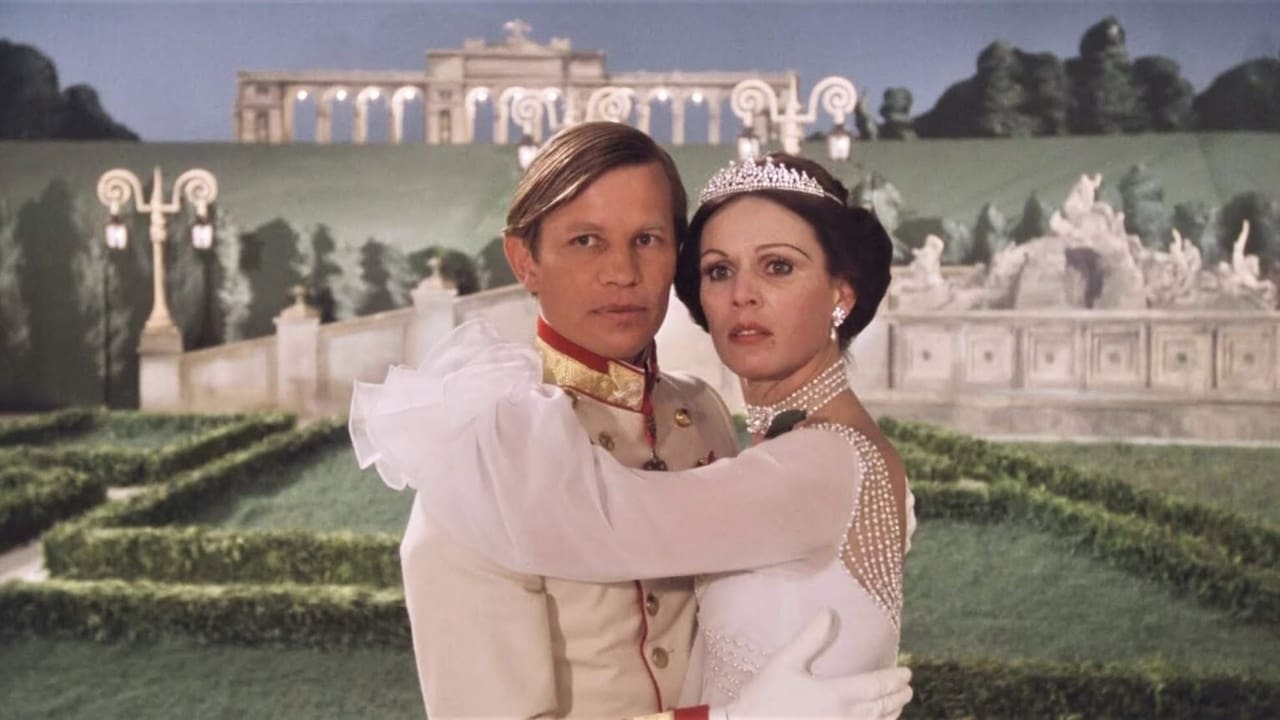
Hildegard Knef has 2 titles indexed on Movie OTT, including Warum die UFOs unseren Salat klauen, Fedora.
Where can I watch Hildegard Knef's films?
1 of Hildegard Knef's films are currently streaming, available on Prime Video.