Catherine Deneuve at 82: Two Cannes Films and No Intention of Stopping
TL;DR: Catherine Deneuve returns to the 2026 Cannes Film Festival with two films in official competition — Asghar Farhadi's ensemble drama Parallel Tales and Marie Kreutzer's Gentle Monster. At 82, the French screen legend is still choosing roles on her own terms, still setting the agenda, and still the most compelling argument for why French cinema exists.
"I still love going to the cinema — being in a theater with people, feeling that shared atmosphere. And I still love making films. I try to choose only what I truly want to do. It's not just work — it's something I love." That's Catherine Deneuve, speaking at 82, in a Left Bank hotel with her Shiba Inu (Jack — "not Jacques, Jack!") sitting at her feet like a small, attentive bodyguard. The quote tells you everything you need to know about where she is right now: present, deliberate, and completely unbothered by the idea of slowing down.
Two Films, One Festival, and What That Actually Means
Catherine Deneuve arrives at the 2026 Cannes Film Festival not as a retrospective figure, not as a lifetime-achievement honoree, but as a working actor with two films in official competition. That's a distinction worth sitting with for a moment.
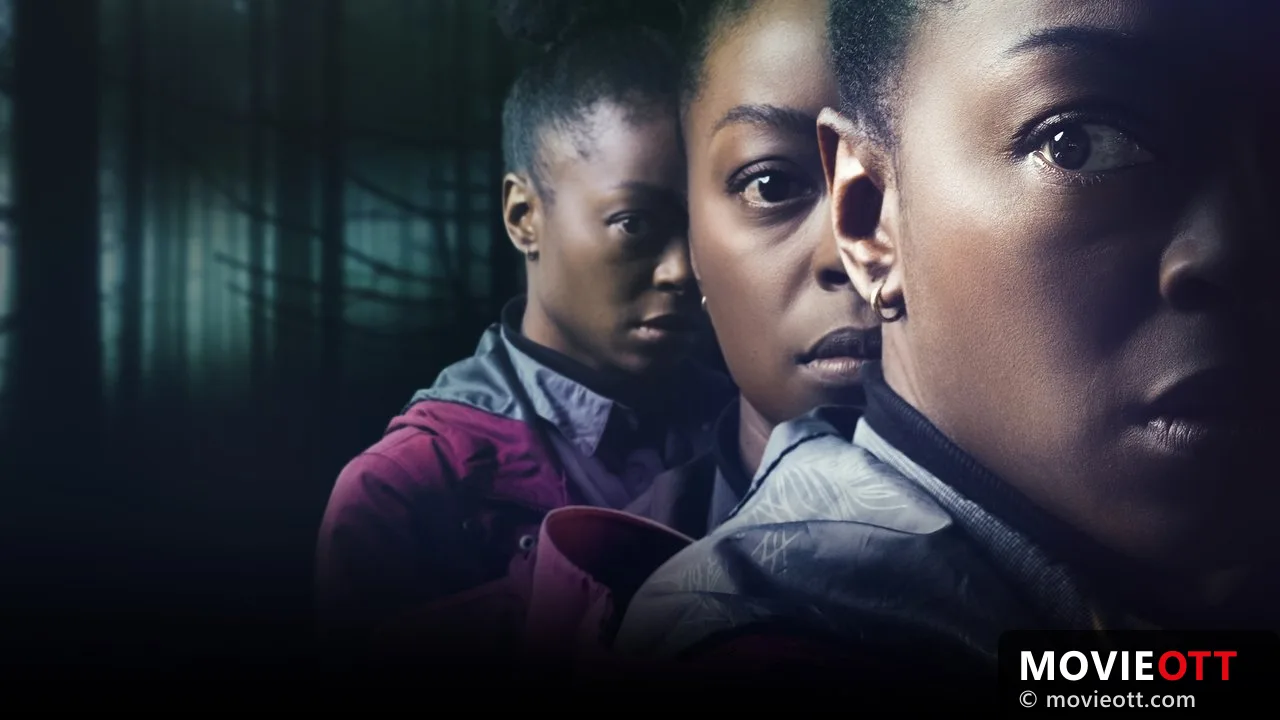
The first film is Parallel Tales, an ensemble drama directed by Asghar Farhadi — the Iranian filmmaker who won the Academy Award for Best Foreign Language Film twice, for A Separation (2011) and The Salesman (2016). The cast alongside Deneuve includes Isabelle Huppert and Vincent Cassel, which means the film is essentially a summit meeting of European cinema's most formidable personalities.
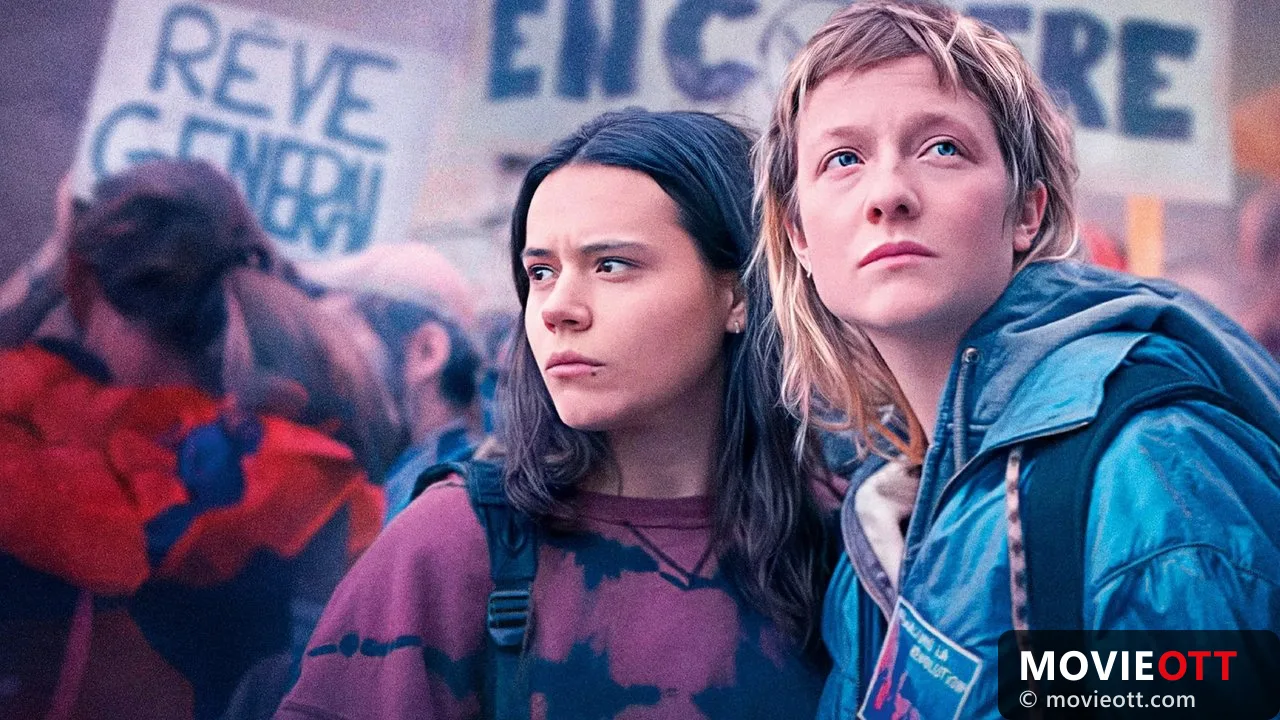
The second is Gentle Monster, directed by Austrian filmmaker Marie Kreutzer, whose period drama Corsage earned considerable festival attention in 2022. Here, Deneuve plays the mother of Léa Seydoux — two generations of French screen royalty sharing the frame.
Both films premiered at Cannes 2026. Streaming and theatrical release dates for international markets, including the US, UK, India, and Spain, are yet to be confirmed at the time of writing — but given Farhadi's distribution track record and Kreutzer's growing international profile, acquisitions are expected quickly. Movie OTT is tracking both titles for streaming availability across regions as deals are announced.
Deneuve is characteristically modest about her involvement: "Oh, they are very small roles," she told The Hollywood Reporter. "But even a small role must be necessary."
Why Her Standard for Choosing Roles Should Be the Industry's Standard
What's striking is how clearly Deneuve articulates what most actors spend decades fumbling toward. Her test for whether to accept a small part is surgical: if the character were removed from the script entirely, would it matter? If not, she's not interested.
The other factor is the director. Specifically, young directors — and the energy with which they talk about their own work. "If they are young and the way they speak about the film has energy, something open and new," she explained, "then I want to be part of it." That's not a nostalgic icon lending her name to a project. That's a craftsperson still hunting for the right collaborators.
This philosophy — ruthless selectivity combined with genuine curiosity about new voices — is part of what makes Deneuve's late career so different from the ceremonial cameos that often define this stage of a legendary actor's working life.
From the Palme d'Or to Pulp Fiction: A Cannes History Unlike Any Other
The 1964 Palme d'Or. That's where the Cannes story begins. The Umbrellas of Cherbourg, Jacques Demy's entirely sung musical romance, won the festival's top prize and transformed a 20-year-old Deneuve into an international star almost overnight. According to Wikipedia's entry on Catherine Deneuve, the film remains one of the defining works of the French New Wave era — a landmark that established her as something more than a promising ingenue.
"We knew the film was special when we were shooting it," Deneuve recalled. "Everything had to be recorded before shooting, so we had to learn the whole film in advance. It was a very special experience." She admits, though, that the Palme felt somewhat unreal at the time — she was too new to fully grasp it.
The Cannes moment she says stayed with her most came much later: Lars von Trier's Dancer in the Dark winning the Palme d'Or in 2000, a film in which she starred. That one landed differently. Maybe because she understood, by then, what it meant.
Then there's 1994. Deneuve served on the jury that year alongside Clint Eastwood and handed the Palme d'Or to Quentin Tarantino for Pulp Fiction — a choice that reportedly caused audible outrage in the theater. "People were shouting, they were so angry," she recalled. "It was such a new kind of film that some didn't understand it." Inside the jury, though? Less drama. Eastwood, she noted, "didn't talk much. He knew what he decided, but he didn't explain it much to the others." A masterclass in quiet conviction.
The Contradiction at the Heart of Her Public Life
Look — no profile of Deneuve is complete without engaging with the parts that make people uncomfortable, and this one won't dodge them.
Her cultural politics have always been harder to categorize than her films. She was a signatory of the 1971 "Manifesto of the 343," which protested France's abortion laws. She petitioned against the death penalty. At Cannes in 2025, she spoke out against the killing of Palestinian photojournalist Fatima Hassouna.
But in 2018, she co-authored an open letter in Le Monde that characterized the #MeToo movement as a witch hunt. She later apologized to victims. Her continued defense of Roman Polanski and her naming of Gérard Depardieu — convicted in 2025 of sexually assaulting two women — as her greatest screen partner ("because he is completely present") has drawn sustained criticism.
On the lasting impact of #MeToo, she's carefully vague: "It's very complicated. Sometimes accusations come many years later, which raises questions. People must be very careful." Hard to say if that's genuine ambivalence or deliberate evasion. Possibly both.
What Farhadi and Kreutzer Bring to the Table
For audiences trying to decide whether Parallel Tales and Gentle Monster belong on their watchlists, the directors are the most useful compass.
Farhadi's work — think A Separation's moral claustrophobia, or the slow-burn ethical unraveling of The Salesman — tends to operate in spaces where ordinary people make decisions with devastating consequences. An ensemble drama from him, with Deneuve, Huppert, and Cassel, suggests something architecturally complex. If you liked A Separation, this is almost certainly worth your time.
Kreutzer's Corsage (2022), starring Vicky Krieps as Empress Elisabeth of Austria, was a formally inventive, deliberately anachronistic portrait of a woman chafing against the role history assigned her. Gentle Monster, with Deneuve as a mother to Léa Seydoux, sounds tonally different — but Kreutzer's interest in women navigating constraint seems consistent.
Movie OTT will have full streaming breakdowns for both films once distribution is confirmed. Worth bookmarking now.
How This Plays for Indian Audiences and OTT Viewers
French arthouse cinema has a dedicated — if niche — Indian audience, concentrated primarily among urban cinephiles in Mumbai, Delhi, Bengaluru, and Chennai. Farhadi's work, in particular, has found a receptive audience in India through festival screenings and OTT platforms. A Separation has been available on various streaming services over the years, and his newer work tends to find Indian distribution reasonably quickly.
For Parallel Tales and Gentle Monster, here's what Indian viewers should watch for:
- Netflix India has been the primary home for Farhadi's recent work in the subcontinent and is the most likely landing spot for Parallel Tales
- MUBI India remains the go-to platform for European arthouse releases, including French and Austrian cinema — Gentle Monster fits squarely in their programming lane
- Amazon Prime Video India is a possibility for either title, depending on acquisition deals
- SonyLIV and ZEE5 are less likely fits given their content focus, but theatrical runs in metro cities through PVR Cinemas' Europa programme are plausible
Neither film has confirmed Indian release dates yet. Both will likely arrive in India within three to six months of their Cannes premieres, either theatrically or on streaming. Subtitles in English are standard for both directors' international releases; Hindi dubbing is unlikely given the niche positioning.
Movie OTT's where-to-watch tracker will update listings for both titles as soon as Indian streaming rights are confirmed.
Sixty Years of Deneuve: The Career Behind the Icon
A brief orientation, because the filmography is genuinely staggering:
- 1964 — The Umbrellas of Cherbourg (dir. Jacques Demy) — Palme d'Or, international breakthrough
- 1965 — Repulsion (dir. Roman Polanski) — established her as a serious dramatic actress
- 1967 — Belle de Jour (dir. Luis Buñuel) — cemented the "ice queen" persona; she's admitted some scenes "were difficult. I wasn't ready to do everything exactly as written"
- 1983 — The Hunger (dir. Tony Scott) — lesbian vampire thriller with David Bowie and Susan Sarandon
- 2000 — Dancer in the Dark (dir. Lars von Trier) — Palme d'Or; Deneuve in a supporting role to Björk
- 2002 — 8 Women (dir. François Ozon) — murder mystery musical; she plays against type and loves it
- 2026 — Parallel Tales (dir. Asghar Farhadi) and Gentle Monster (dir. Marie Kreutzer)
As a 2024 Numéro feature noted — capturing Deneuve in conversation with artist Claude Lévêque about shared interests including gardening — she's someone who exists fully outside the mythology people project onto her. The Numéro interview is worth reading for exactly that reason: it's one of the rare pieces where the icon disappears and the person shows up.
She's also candid about what she misses. The shift from film to digital, from watching dailies in a room with collaborators to directors staring at monitors — "everything is faster now, less collective" — genuinely grieves her. That's not nostalgia. It's a specific, legitimate loss.
What's Next: Cannes Competition Results and the Road to Global Streaming
The 2026 Cannes competition results will determine how quickly Parallel Tales and Gentle Monster move through the international distribution pipeline. A Palme d'Or or jury prize for either film would significantly accelerate acquisitions and could open the door to wider theatrical releases in the US and UK before streaming.
Catherine Deneuve's presence in two competition films simultaneously is, by any measure, remarkable for an 82-year-old actor — and a signal to distributors that both films carry serious prestige weight. Watch for acquisition announcements in the weeks following the festival's closing ceremony.
For the most current streaming availability across all regions — India, US, UK, and Spain — Movie OTT will have the updated picture as deals close.