Denver's Cinema Q Returns With Horror, Premieres, and Queer Stories That Actually Say Something
TL;DR: Cinema Q Film Festival (May 29–31, 2026, at the Sie FilmCenter) opens with Leviticus, a psychological horror film about conversion therapy, and closes with Maddie's Secret. The 18th edition features a North American premiere (Lady Champagne), a curated shorts program, and a community conversation on conversion therapy. For viewers tracking these titles toward streaming: Movie OTT monitors platform arrivals across Netflix India, Prime Video, and regional services once distribution deals close.
Why a Regional Festival Has Lasted 18 Years While Others Folded
Here's the honest thing about Denver Film's Cinema Q: it doesn't feel like a checklist.
That sounds simple. It shouldn't be. Regional LGBTQ+ film festivals launched in the early 2000s across the United States with genuine momentum, and most of them didn't make it to year five. Budgets got cut. Attendance dropped. Programming committees defaulted to safe choices. Cinema Q, now in its 18th iteration, did something different — it kept taking risks. The 2026 lineup proves the point. Opening night is a conversion therapy horror film. The After Dark slot features a noir-adjacent comedy about a San Francisco performer accused of her husband's murder. The closing film tracks a content creator having a public breakdown on social media. None of these are the safe play. All of them work together without feeling scattered.
"If you don't have the attention span for a 2-hour movie, you have the attention span for 10 minutes," Keith Garcia, the festival's programmer, told me about why Cinema Q includes a dedicated shorts component. That's not marketing. That's someone thinking structurally about how stories fit into lives, especially lives already fragmented by work, family, and, frankly, the constant hum of being online. The shorts program isn't filler. It's the skeleton of the entire festival.
Leviticus: Horror as Political Statement, Not Just Scare Tactic
The opening film deserves its own section because it's doing something specific.
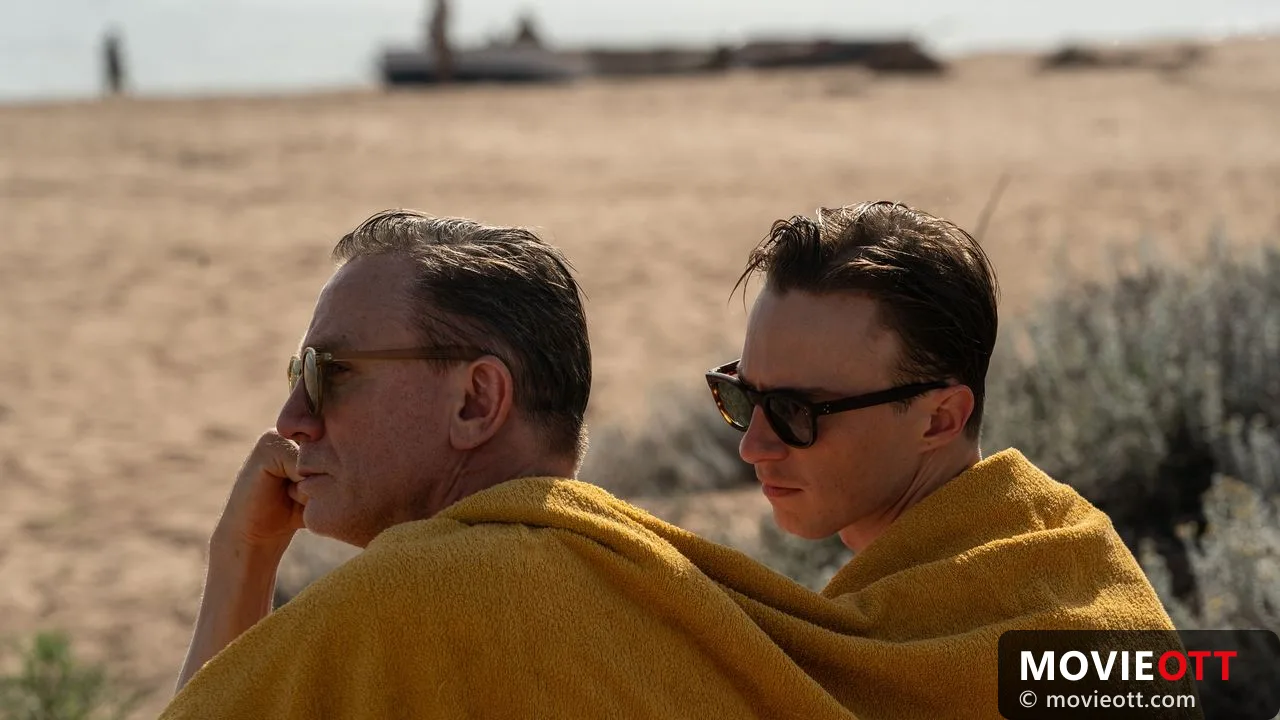
Leviticus wraps conversion therapy directly into a psychological horror premise: two teenage boys are hunted by a violent entity that takes the physical form of whoever they desire most. In this case, each other. It's not subtle. It doesn't need to be. The metaphor is so clear that turning it into a genre exercise actually makes the horror sharper, not softer.
Garcia was direct about the timing. "It takes on the subtext of conversion therapy, which is, of course, a very hot topic in Colorado right now," he told CBS Colorado. "It is already a horrific topic, but puts it into a unique scary tale that I think audiences will really respond to." What he's describing, using horror to make the political visceral instead of abstract, is increasingly common in queer cinema. Bones and All did it. The Haunting of Hill House did it. But grounding it specifically in Colorado's legislative moment gives Leviticus a sharper edge than most genre entries manage.
What most coverage of Leviticus misses: this isn't just another queer horror film riding the post-Babadook wave. It's arriving in a year when Colorado's legislature is actively debating enforcement mechanisms for its existing conversion therapy ban on minors, with a proposed expansion to adults stalling in committee as of April 2026. That legislative fight is the film's actual co-text, not a vague cultural backdrop.
The festival is also hosting author Scott Heim, whose 1995 novel Mysterious Skin was adapted into an acclaimed film by director Gregg Araki. Having Heim present to discuss literary adaptation alongside contemporary queer cinema creates a direct line from established canon to emerging work. That's the kind of programming that signals depth instead of just breadth.
The Full Lineup: What Else Is Screening May 29–31
Opening night, May 29:
- Leviticus (psychological horror)
- Lady Champagne (After Dark slot, North American premiere)
Full festival run includes:
- Nine additional feature films across three days
- A curated LGBTQ+ shorts series
- Multiple Q&A sessions with filmmakers
- SaturGAY Morning Cartoons + Cereal (Saturday, May 30 — yes, it's exactly what it sounds like)
- A community conversation on conversion therapy
- Local vendor marketplace
Closing night, May 31:
- Maddie's Secret (social media drama)
The venue is the Sie FilmCenter in Denver, which seats roughly 265 in its main auditorium and has smaller rooms for shorts and overflow. Tickets are available through Denver Film's website now.
What's notably absent from public information: runtime details, cast specifics, and streaming platform announcements for individual titles. As distribution deals close over the next 6–18 months, Movie OTT's platform tracker will pick up where-to-watch data across Netflix, Prime Video, and regional services the moment those deals are announced.
Lady Champagne and Why North American Premieres Matter
Lady Champagne gets its first North American screening at Cinema Q, which is the kind of detail that changes how a festival sits in the acquisition ecosystem.
Writer-director-star D'Arcy Drollinger will be in Denver for the screening. That matters because independent films, especially queer-focused ones, often live or die on filmmaker presence. It creates press hooks. It gives local outlets angles. It makes the film feel like an event instead of a program item.
The plot: a notorious San Francisco performer is framed for her husband's death. It's noir-adjacent territory, which means it probably has the texture of Bound or Mulholland Drive, something with genre bones but queer specificity running underneath. That's a profile with proven streaming appetite. If Drollinger can generate momentum during Cinema Q's run, the odds of an international distribution deal improve significantly. For Indian viewers tracking indie queer cinema, this is exactly the kind of North American premiere that typically lands on platforms like Amazon Prime Video or SonyLIV within 12–18 months, usually in English with regional subtitle options.
What Happens to These Films After Denver — And Where They Might Land
Here's the practical question: if you're not in Denver May 29–31, when do you get to see these?
The festival circuit runs through summer and fall. Distributor announcements typically follow within weeks of a festival premiere, or, more honestly, months. Lady Champagne is the obvious candidate for acquisition interest because North American premieres with attending filmmakers generate buzz. Leviticus has the conversion therapy angle, which means advocacy organizations will likely amplify it, which can accelerate streaming deals for smaller horror titles. Maddie's Secret, a social media drama, sits in a genre with proven global platform appetite.
That said, none of this is guaranteed. Independent films still struggle to find distribution. LGBTQ+ films face additional certification hurdles in some territories. India's Central Board of Film Certification, for example, typically requires an 'A' certificate for films dealing with same-sex desire, and depending on content intensity, can mandate cuts. Leviticus, with its combination of same-sex desire and horror violence, would almost certainly require an 'A' and could face cuts depending on the distributor's approach.
The Indian streaming landscape has shifted noticeably over the past three years. Netflix India has carried titles like Fire and expanded its international LGBTQ+ acquisitions. Amazon Prime Video India and SonyLIV have both deepened their arthouse pipelines. JioCinema and Zee5 have made selective moves into queer programming. What that means: if these Cinema Q titles find U.S. distributors, international streaming is plausible but not automatic.
Tracking platform availability as it happens is genuinely useful. Movie OTT monitors Netflix, Prime Video, Hotstar, JioCinema, SonyLIV, and Zee5 specifically for titles like these, updating in real time as deals close. For anyone interested in any Cinema Q 2026 film, checking the site once acquisition news breaks is the fastest way to know where to watch.
SaturGAY Morning Cartoons + Cereal, and Why Film Festivals Need Weird Programming
I keep coming back to the SaturGAY Morning Cartoons slot on Saturday morning because it's the kind of thing that separates festivals that feel alive from ones that feel obligatory.
The format: cartoons, cereal, community. Saturday morning the way it used to feel, but explicitly queer. That's not a major draw on its own (and honestly, it won't sell out the way Leviticus will), but it's the type of programming that signals a festival understands its audience isn't just showing up for the films. They're showing up for the experience of being in a room with other queer people watching queer cinema. That's a different need than "I want to see a movie." It's about belonging, or at least being around people for whom belonging is the point.
Denver Film, the nonprofit running Cinema Q, also operates the Sie FilmCenter year-round and hosts the larger Denver International Film Festival each fall. That institutional stability matters. Cinema Q isn't a one-off event. It's a permanent program with permanent staff and permanent relationships with filmmakers, distributors, and community organizations. That's how you survive 18 years.
What to Watch for After May 31
The first signal to track is distributor announcements, particularly around Lady Champagne and its North American premiere status. If D'Arcy Drollinger generates press momentum in Denver, acquisition interest typically surfaces within 4–6 weeks.
The second is the community conversation on conversion therapy. Given Colorado's current legislative climate, the state has protections on the books, but the conversation nationally remains active, that panel will likely draw audiences well beyond the usual festival circuit. If you're in Denver and interested in LGBTQ+ policy alongside cinema, that's the ticket to prioritize.
The third is platform tracking. Once any Cinema Q title lands on a major streaming service, Movie OTT will reflect those additions across all regions, including India. For anyone tracking these films internationally, that's the place to check as distribution news breaks.
The 2026 LGBTQ+ film festival circuit is more competitive than it's been in a decade. Streaming has fragmented the audience. Regional festivals face constant pressure to program safer content that travels well to platforms. Cinema Q, now 18 years in, is still programming like it has something to prove. That's the move.