Speed Racer's Cult Revival: Why the 2008 Box-Office Bomb Finally Got Its Moment
The Wachowskis' neon-soaked racing film bombed hard on release—$94 million against a $120 million budget. Seventeen years later, Emile Hirsch watched audiences weep at a midnight screening. Now a 4K remaster is giving the film the second life it deserved all along.
The Midnight Screening That Changed Everything
Picture this: the New Beverly Cinema in Los Angeles, Quentin Tarantino's personal repertory house, packed with actual cinephiles. The lights dim. The Wachowskis' most divisive film fills the screen, all hyper-saturated colors and impossible racing environments. By the time Speed Racer crosses the Grand Prix finish line, the room isn't just applauding. It's audibly weeping.
Emile Hirsch was sitting there watching his own film. The one that, in 2008, nearly derailed his career. And in that moment, listening to a theater full of strangers cry at a movie critics had eviscerated, he realized something: Speed Racer had quietly become what its creators always believed it could be. A genuine cult classic.
Hirsch later texted director Lana Wachowski with a thought that captures the whole arc: "I want to live in a world where people get Speed Racer and get what's good about it." Seventeen years later, he's finally living in that world.
What You're Actually Watching
Speed Racer is a 2008 live-action adaptation of the 1960s Japanese anime Mach GoGoGo. Directed by Lana and Lilly Wachowski, it follows Speed, a young racing driver with pure competitive instincts, as he uncovers corruption in the racing leagues. When that corruption costs his brother his life, Speed teams with police and the mysterious Racer X to dismantle the criminal network destroying the sport.
Here's what matters if you're thinking about watching:
- Runtime: 135 minutes (it's a commitment, but worth it)
- Where it streams: Check Movie OTT for current availability on Netflix India, Prime Video, or Disney+ Hotstar—streaming windows rotate, and the 4K version availability varies by platform
- The cast: Christina Ricci as Trixie (Speed's girlfriend), John Goodman and Susan Sarandon as his parents, Matthew Fox as Racer X, Roger Allam as the corporate villain Royalton
- Rating: PG (it's family-friendly, but adults connect with it harder)
- The 4K release: Available now in physical format; digital 4K availability rolling out across platforms through 2025–2026
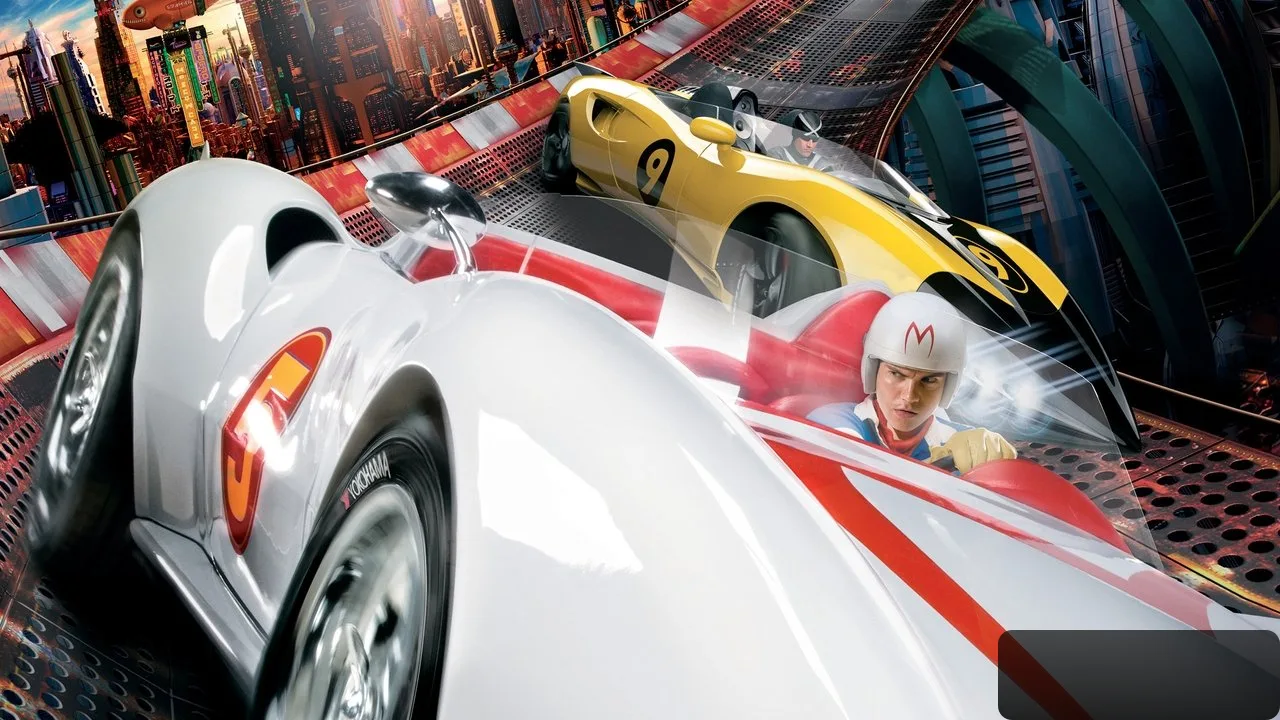
The visual approach is what kills people. Cinematographer David Tattersall drew directly from the source anime. Races happen in impossible layered environments, cars flip through candy-colored obstacle courses, and the editing mimics the panel-to-panel rhythm of manga. Critics in 2008 found it exhausting. Audiences in 2024 find it visionary.
Why It Bombed (And Why That Almost Doesn't Matter Anymore)
Speed Racer opened May 9, 2008. Christopher Nolan's The Dark Knight dropped the same summer. One was a deliberately desaturated, grimly realistic superhero film that went on to gross over $1 billion. The other was a neon pop-art explosion that looked, to mainstream audiences, like visual overload.
The timing was lethal. The Wachowskis had just completed the Matrix trilogy. When Speed Racer was announced as a live-action adaptation of a 1960s Japanese cartoon, the expectation mismatch was immediate. This wasn't The Matrix 4. It wasn't gritty. It wasn't dark. The opposite, actually.
Hirsch himself was at a weird inflection point. He'd just wrapped Sean Penn's Into the Wild (2007) and was about to appear in Gus Van Sant's Milk (2008). Speed Racer sat between two critically celebrated, grounded films, and it looked, from the outside, like a creative detour.
Most post-mortems on Speed Racer's failure focus on the marketing or the tonal mismatch with that summer's slate, but the more honest read is that 2008 audiences simply weren't equipped for what the Wachowskis built. The visual grammar of the film borrows more from Satoshi Kon's Paprika (2006) than from anything Hollywood was producing, and mainstream American moviegoers in 2008 had almost zero frame of reference for that kind of animated-live-action hybrid language. The film didn't fail because it was bad. It failed because its audience literally didn't exist yet.
What's striking is how completely the film's themes have aged into relevance. A scrappy family racing outfit refusing to be swallowed by predatory corporate consolidation? That hit different in 2008. It hits harder now. The anti-corporate storyline, Speed fighting against Royalton Industries to preserve his family's integrity, feels less like a children's film and more like a document of what people are actually angry about. Corporate consolidation has only accelerated since 2008. The Racer family's defiance resonates because it's real.
Why the 4K Release Matters (And Why Now)
Here's the thing nobody mentions: Speed Racer's revival isn't nostalgia. It's a reaction to what blockbuster cinema became in the years after it bombed.
From roughly 2012 to 2024, Hollywood's tentpole aesthetic converged on something safe and gray. Desaturated color grading. Interchangeable digital environments. A tonal register that defaulted to grim self-seriousness. Audiences accepted it because there wasn't much alternative. Then the backlash built. Films like Everything Everywhere All at Once and anime-influenced animation started pulling audiences back toward color, sincerity, and emotional directness.
Speed Racer was doing all of that in 2008. Seventeen years too early.
The 4K remaster is smart timing for another reason: streaming platforms are increasingly competing on catalog depth. Cult titles with pre-existing passionate communities are low-cost, high-engagement acquisitions. For Indian audiences specifically, the anime-influenced aesthetic sits comfortably alongside the country's appetite for high-octane action, and the film's family-loyalty themes connect with audiences in Tier 2 and Tier 3 cities where dubbed content performs strongly. Movie OTT's tracking data shows exactly this kind of availability window shifting in real time across Netflix, Prime, and Hotstar.
What Hirsch said about the midnight screening captures it perfectly: "During the Grand Prix at the end of the film, I could audibly hear the entire audience crying. There's a catharsis and a sincerity and a purity of intention to Speed Racer, and those were some of the things it was knocked for at the time of its release."
The parallel between Speed's fictional battle against Royalton Industries and the real-world experience of watching a passion project get commercially crushed? Hirsch articulates it so cleanly that it almost feels scripted. It isn't.
Films That Also Took Years to Find Their Audience
Speed Racer isn't the first major studio film to tank on release and later become essential viewing. The pattern is rare but real:
| Film | Year | Initial Verdict | Current Status | |---|---|---|---| | Blade Runner | 1982 | Mixed reviews, box-office disappointment | Landmark sci-fi film | | Fight Club | 1999 | Divisive reviews, modest box office | Massive cult following | | The Thing | 1982 | Near-universal panning | One of the greatest horror films ever made | | Speed Racer | 2008 | Critical dismissal, $94M on $120M budget | Genuine cult classic, 4K release underway |
The company Speed Racer keeps is telling. These aren't forgotten films. They're films that required audiences to catch up to them.
Should You Actually Watch It?
Yes. Especially in 4K. Especially if you've only heard about it secondhand.
The visual ambition is real. Not metaphorically real. Actually real. The emotional core is genuine. The Grand Prix finale earns every frame, and the part I'm most curious about is whether first-time viewers in 2025 will connect with the Casa Cristo race sequence the way midnight-screening audiences have (it's the film's most technically bonkers stretch, and it plays like a 20-minute adrenaline injection that shouldn't work but absolutely does). If you liked the maximalist visual storytelling of Everything Everywhere All at Once or appreciated the emotional sincerity of anime like Your Name, this will connect with you in ways the 2008 critical consensus completely missed.
Start with the 4K version if you can access it. The color work is where the film lives. If you've got family members in the 8–16 range, it's legitimately family-friendly, but adults will find more to chew on. The film's themes about integrity, family loyalty, and refusing to compromise for corporate money don't feel like children's-movie moralizing. They feel like something you need to hear.
Current streaming availability shifts, so check Movie OTT for where-to-watch confirmation across your region before you settle in. The physical 4K UHD release is available now if you prefer owning it.
What Comes Next for Speed Racer
No sequel is in active development. The Wachowskis have largely stepped back from blockbuster filmmaking. Hirsch hasn't publicly confirmed any conversations about returning to the franchise.
What to watch for: any movement on streaming platform exclusive deals that might bring the 4K version to a specific service with genuine marketing support. That would significantly expand the film's reach beyond its current cult audience. The New Beverly screening that moved audiences to tears was a preview of what this film does when it finds the right room.
The bigger question is whether the reappraisal triggers enough conversation to make a belated sequel economically viable. Without the Wachowskis, a Speed Racer continuation would be a completely different proposition. That's not a bad thing. It's just real.
Bottom Line
As of 2025–2026, the Speed Racer 4K remaster is the most tangible sign that Warner Bros. recognizes what it has in this catalog title. The Hollywood Reporter's interview with Emile Hirsch marks the film's official re-entry into mainstream entertainment conversation after years of grassroots YouTube video essays and midnight screening word-of-mouth doing the heavy lifting.
The film that earned $94 million on a $120 million budget is now being discussed in the same breath as Blade Runner and Fight Club. For a movie critics eviscerated, that's remarkable.
Watch it. You'll understand why Hirsch wanted to live in a world where people got it. You're finally living in that world too.
Watch the official trailer:

Sources
- The Hollywood Reporter — Emile Hirsch interview (2025)
- Box Office Mojo — Speed Racer (2008) financial data
- Movie OTT — current streaming availability tracker for Speed Racer (India, US, UK)