Friend (2001): Why One of Korea's Biggest Films Has Vanished From Global Streaming
TL;DR: Kwak Kyung-taek's 2001 gangster drama pulled 8.18 million viewers in South Korea and remains one of the country's highest-grossing domestic films — yet it's nearly impossible to find legally outside Asia. Here's where to actually watch it, why it matters, and what the licensing gap tells us about Korean cinema's unfinished business in the West.
Four boys grow up together in Busan during the 1970s. As adults, they end up on opposite sides of organized crime. The film that results — Friend — is stubbornly absent from Netflix, Prime Video, Disney+, and every other major streaming service in North America and Europe. That's the real story here, and it's worth understanding because it reveals something broken about how the streaming industry handles pre-Hallyu Korean cinema.
The absence isn't about quality. It's structural. Early-2000s Korean titles rarely received the international rights packaging that would make global acquisition simple. Friend is a casualty of that gap, a film that proved Korean genre cinema could compete domestically, and then got locked out of the global market it helped create.
Where to Actually Stream Friend Right Now (If You're in India)
Runtime: 113 minutes. Release date: March 31, 2001. Director/Writer: Kwak Kyung-taek. Cast: Jang Dong-gun, Yoo Oh-sung, Seo Tae-hwa, Jeong Woon-taek.
Here's the honest answer: it's not easy. Friend isn't on Netflix India, Amazon Prime Video India, Disney+ Hotstar, JioCinema, SonyLIV, or Zee5 in any officially licensed form, at least not right now.
Your actual options:
- Mubi India — The platform rotates pre-Hallyu Korean titles regularly. Friend has appeared in their catalog before. Check current availability before subscribing; it's not permanent.
- Prime Video Channels (Korean content bundles) — Some third-party Korean content add-ons available through Amazon India have historically included catalog titles. Hit-or-miss, but worth checking.
- Physical media — Korean Blu-ray releases with English subtitles exist and can be imported through resellers.
- YouTube — Unofficial uploads are everywhere. I won't pretend they don't exist, but the legal status is murky.
The real tool for tracking availability: Movie OTT's where-to-watch tracker keeps updated listings for Indian platforms. Catalog titles shift without announcements — Korean titles especially. Bookmark it.
What Actually Happens in This Film (And Why It Matters)
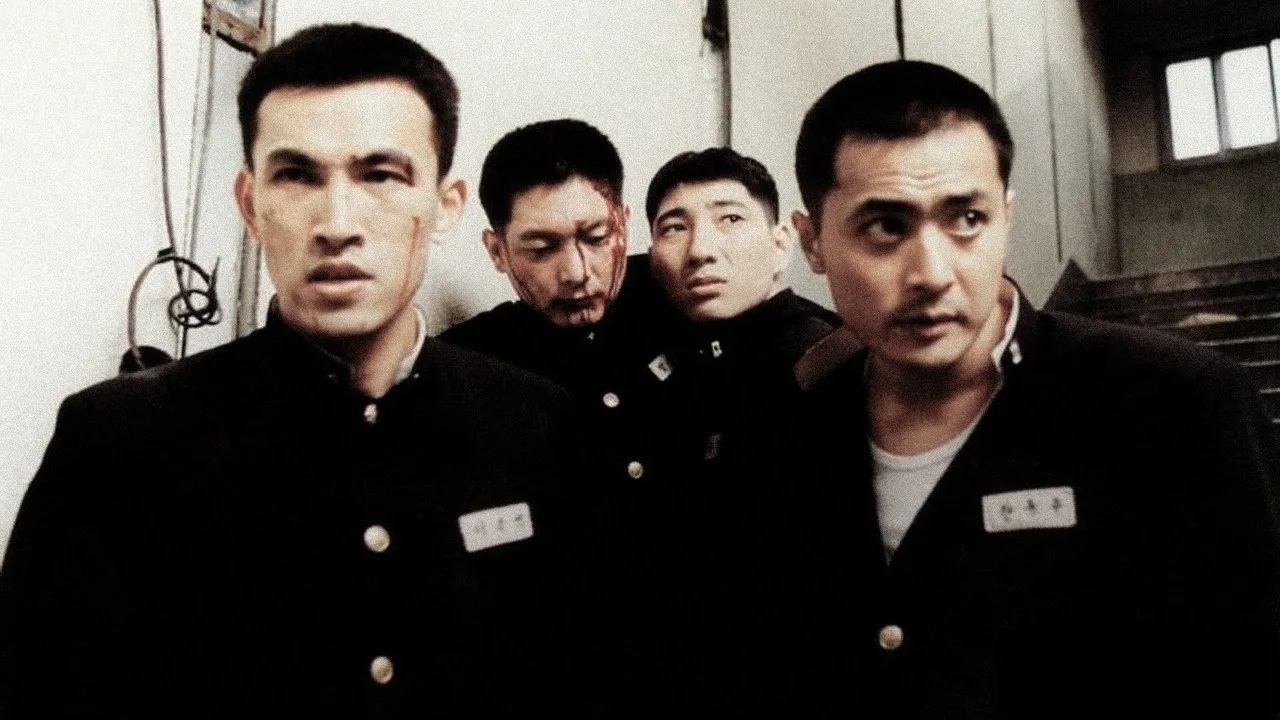
The premise sounds standard for a gangster picture. Two childhood friends, Joon-seok (Jang Dong-gun) and Sang-taek (Yoo Oh-sung), end up running rival criminal organizations. Violence follows. Betrayal. Blood.
What's different: the emotional architecture. This isn't a film about men chasing power or money. It's about men who can't stop being boys together, even when being together destroys them. Loyalty becomes the tragedy. Friendship becomes the trap.
Kwak Kyung-taek wrote the screenplay himself, drawing directly from his own Busan childhood. That's the thing that makes the period detail feel lived-in — the specific exhaustion of the 1970s, the texture of a port city under military dictatorship, working-class friendships forged in poverty. He wasn't reconstructing a world. He was remembering one.
The film arrived in 2001 as the third major proof that Korean genre cinema could dominate domestically. Shiri (1999) and JSA (2000) had proven it could compete with Hollywood. Friend proved it could pull the largest domestic audience of any Korean film to that point — 8.18 million tickets, according to the Korean Film Council's box office archive. To put that number in perspective: South Korea's total population in 2001 was roughly 47 million, meaning approximately one in every six citizens bought a ticket, a penetration rate that no Korean gangster film has matched since. Then it vanished from the global market.
The Jang Dong-gun Performance That Changed His Career
Jang Dong-gun was already a television star when Kwak cast him. But Friend is where he became a film actor. The performance is quiet — lots of stillness, eyes doing the work his mouth doesn't. There's a scene late in the second act where Joon-seok sits across from Sang-taek at a restaurant, and neither speaks for what feels like a full minute; Kwak holds the shot on Jang's face as something behind his eyes simply closes, and you realize the friendship is already over before anyone says a word. By the time he turns on Sang-taek in the third act, you've already felt the decision happening beneath his skin for an hour.
Yoo Oh-sung matched him. Playing the antagonist without ever becoming a villain — that's harder than it sounds. He's not evil. He's just on the other side of a line that shouldn't have been drawn in the first place.
Both actors went on to substantial international careers. (Jang did The Warrior's Way; Yoo made The Berlin File.) But neither has made a film that cuts quite as deep as Friend. They've said so in interviews. It was the role that formed them.
Why Korean Cinema's Streaming Gap Still Exists
The thing nobody mentions is that the infrastructure for Korean catalog licensing was never built. Not because the films weren't valuable — they were. But rights got tangled. Distribution windows stayed regional. By the time Netflix and Amazon got serious about Korean originals, the early-2000s catalog was already orphaned.
Compare it to what happened with Japanese cinema. Criterion invested in restoration and global licensing for studio-era films. Mubi did the same for 1990s Hong Kong. Someone needed to do it for Korean genre cinema from 2000–2010. It didn't happen. Most coverage of the Korean Wave treats it as a story of triumph, but the more revealing story is what got left behind: an entire decade of foundational work that global audiences can't legally access, which means they're consuming the sequel without having read the first chapter.
The irony: Indian audiences have become one of the fastest-growing markets for Korean content. According to KOFIC's 2022 overseas market report, India ranked among the top five fastest-growing regions for Korean film consumption outside of East Asia. Parasite's Oscar wins accelerated that. Squid Game accelerated it more. And yet films like Friend — the creative foundation that made those later successes possible — remain nearly impossible to access legally.
Movie OTT tracks this gap in real time across Indian platforms. The data is stark: pre-2010 Korean titles have roughly 30% the streaming availability of post-2015 releases. A market failure, plain and simple.
What to Watch Before Friend (And After)
If you've seen Parasite or Squid Game and want to go deeper into Korean cinema's tradition, here's the path:
Start with A Bittersweet Life (2005) — another revenge film, but more stylized. Then Memories of Murder (2003) — Bong Joon-ho's serial killer procedural, and arguably the best Korean film of the decade. Then A Dirty Carnival (2006). Then, finally, Friend.
The reason: Friend is the origin point. Everything that followed — the particular way Korean cinema treats male friendship as tragedy, the refusal to separate crime from emotion, the Busan setting as moral geography — flows from Kwak's film. It's the kind of slow-burn pacing that worked for Infernal Affairs and later The Departed, except Kwak got there first and with less genre machinery.
If you can't find Friend, start with Memories of Murder. It's on more platforms. But know you're missing something essential.
Kwak Kyung-taek's Follow-Up (And Why It Failed)
A sequel happened. Friend 2 arrived in 2013, also directed by Kwak. It's... not the same film. The critics were kind, but cool. Audiences didn't return in the same numbers.
The problem: you can't make a sequel to a film about the irreversible damage of time. The first Friend works because it's about inevitability — these men were always going to end up here. The second one tried to add plot. It became a different genre entirely.
Kwak has mentioned interest in a third installment, but nothing's been officially confirmed. Hard to say if the appetite exists anymore.
The Obvious Move Nobody's Made Yet
What's striking is that no major platform has licensed Friend for a global release with a proper restoration and English subtitles. Netflix has spent billions on Korean originals. Apple TV+ has invested heavily. Disney+ Asia has expanded aggressively. And yet the catalog gap remains.
The math should work. Audiences who discovered Korean cinema through Parasite actively search for the roots. Mubi proved there's demand for pre-Hallyu titles. The film is 24 years old — old enough that the rights should be navigable, not tangled in the way 1980s catalogs still are.
Someone will eventually do this. When they do, Friend will likely arrive with marketing framing it as "the film that started it all" — which oversimplifies the history, but isn't entirely wrong. It was certainly the film that proved Korean genre cinema could sustain a domestic audience at scale.
How to Check for Availability Updates
Streaming rights shift constantly, especially for catalog titles. Movie OTT's database is the best real-time resource for Indian viewers. They track where-to-watch listings across Mubi, Prime Video, YouTube, and smaller platforms with more frequency than the major services announce changes.
Set a reminder to check quarterly. Catalog titles sometimes appear with no publicity. If Friend lands on Mubi or an India-specific Korean content bundle, you'll want to know before it rotates out again.
The Bottom Line
Friend is worth the search. 113 minutes. A Busan childhood bleeding into adult violence. Two actors at the peak of their powers. A director drawing from actual memory instead of genre formula. It's the kind of film that forms you if you let it — the way it formed Jang Dong-gun and Yoo Oh-sung.
Right now, Mubi is your best bet. Check Movie OTT for current availability across Indian platforms. And if you find it, watch it first before the sequels, the comparisons, the critical reframing. Watch it the way it was made — as something that happened once, and can't be replicated.
Watch the official trailer: