Fjord Review: Sebastian Stan and Renate Reinsve Face a State That Wants to Help
TL;DR: Cristian Mungiu's Cannes 2026 competition entry Fjord stars Sebastian Stan and Renate Reinsve as a Romanian family in Norway whose strict Catholic parenting collides with Scandinavian child-welfare intervention. It premiered May 18, 2026, and NEON will release it theatrically in the US later this year — a 146-minute film that refuses to pick sides and makes you deeply uncomfortable as a result.
On May 18, 2026, Cristian Mungiu walked onto the Cannes Film Festival stage with Fjord, and the press screening that followed left the room genuinely shaken. Not because the film wallops you with violence or shock — it doesn't — but because it traps you inside a moral dilemma with no obvious exit. IndieWire's David Ehrlich gave it a B+ and described the scene where Norwegian child-welfare workers remove all five children from their home, including a nursing infant, as "as stomach-churning as anything in the director's body of work."
That's worth pausing on. Mungiu made 4 Months, 3 Weeks, and 2 Days, a film so harrowing it won the Palme d'Or in 2007. He knows how to devastate an audience. Fjord does it differently — quietly, without melodrama, which somehow makes it worse.
The Setup: A Family Moves to Paradise and It Falls Apart
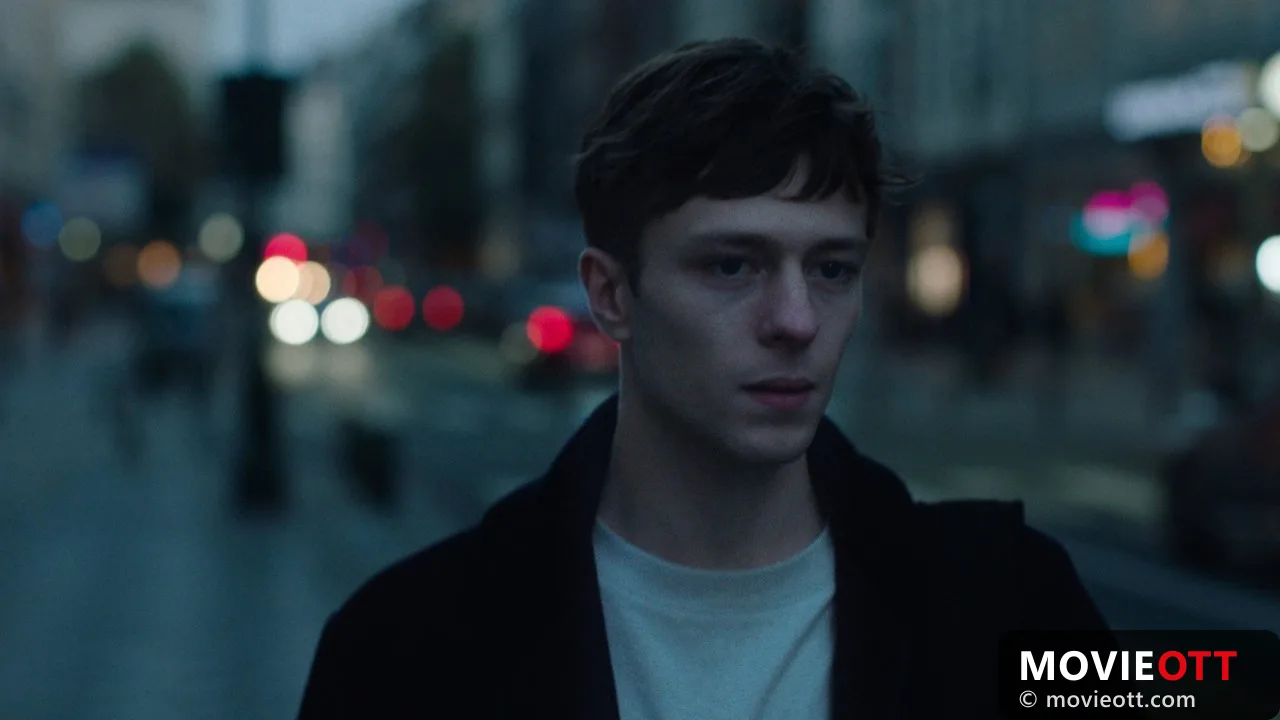
Romanian software engineer Mihai Gheorghiu (Sebastian Stan, bald and stiff, a galaxy away from Marvel) relocates his family from Bucharest to Stranda, Norway — a fjord village where his wife Lisbet (Renate Reinsve, Norwegian-born and working in her native linguistic territory) grew up. Schools are excellent. Healthcare ranks among the world's best. Norway consistently tops the World Happiness Report. On paper, this is an upgrade. On paper.
The Gheorghius are devoutly Catholic and socially conservative. Their household runs on a point system for the children. Secular music has limits. Their views on marriage and authority would strike most Norwegian neighbors as medieval. Meanwhile, the teenager next door steals boats for midnight joyrides and self-harms for social media clout. By comparison, the Gheorghiu kids are what adults call "compliant little angels."
Then a teacher notices small bruises on the eldest daughter, Elia. The Norwegian Child Welfare Service arrives. They don't accuse. They don't yell. They speak in the warmest possible bureaucratic language about "helping" and "the best interests of the children." And they take all five kids anyway — including the one still breastfeeding.
The uninterrupted take showing this removal is the film's center of gravity. Ehrlich nailed something crucial: "It feels like a state-funded abduction."
Why This Matters Right Now (Especially in India)
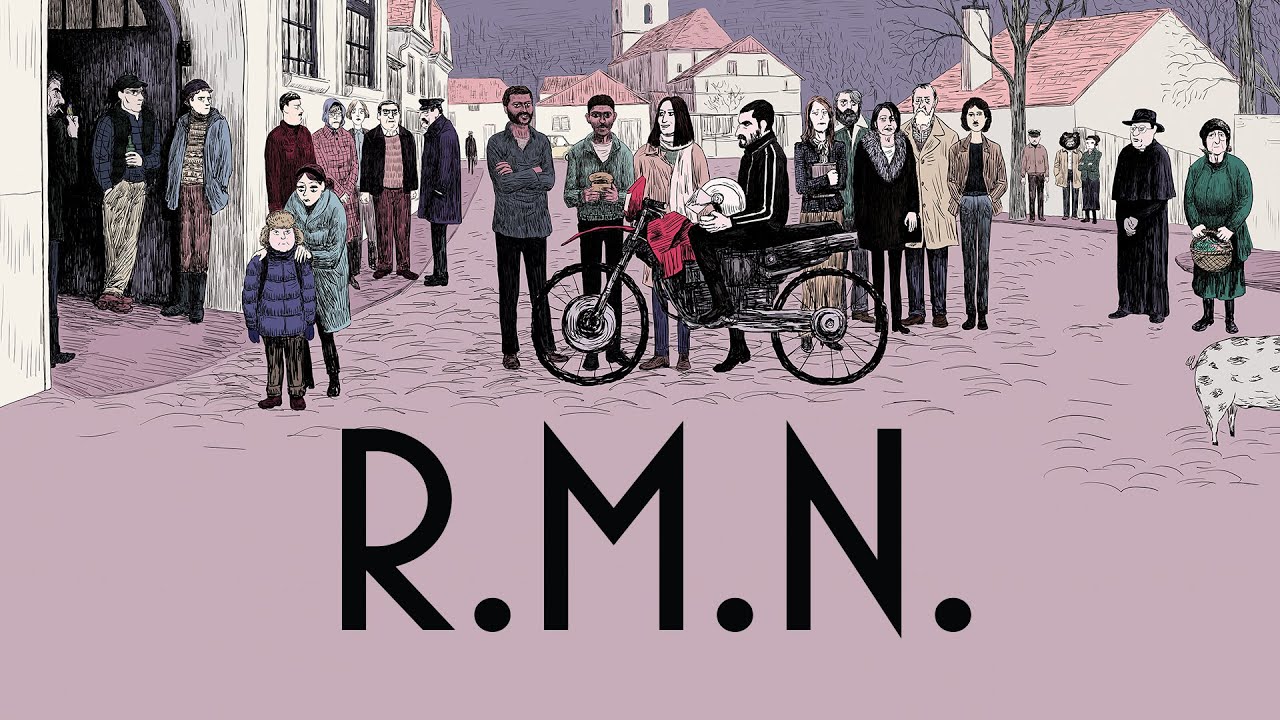
Mungiu has spent his career examining the moment when communities turn on their own — when the social contract snaps in a way everyone can justify to themselves. In R.M.N. (2022), his previous film, a Transylvanian village erupts in xenophobia when foreign workers arrive at a factory. Same director, same obsession, new geography.
Fjord takes that inquiry further: What happens when good intentions become violence? When liberal institutions function as instruments of family destruction? The film doesn't answer these questions. It just holds them up and watches us squirm.
For Indian audiences, the resonances are immediate and sharp. The part I am most curious about is how this lands in a country where the Juvenile Justice (Care and Protection of Children) Act, 2015 already sparks fierce debate about where parental rights end and state intervention begins. A film about religious conservatives colliding with secular institutional power plays differently when your country is actively litigating those exact tensions. Not abstract. Live.
What You're Actually Watching: Three Languages, One Man's Rigor
Stan delivers a performance across Romanian, Norwegian, and English — which sounds like a gimmick but isn't. The film's most quietly devastating detail is the possibility that the children's damning testimony might stem from language-related miscommunication. A word mistranslated. A phrase misunderstood. A child trying to explain something in a language that isn't quite theirs. That ambiguity isn't a flaw. It's the whole point.
Reinsve, who won Best Actress at Cannes in 2021 for The Worst Person in the World, works here as both insider and outsider — Norwegian but married to this man, embedded in this community but not quite of it. The casting creates productive tension. She knows what her neighbors think. She knows what her husband believes. She's trapped between both.
Runtime: 146 minutes. Premiere: May 18, 2026, Cannes Film Festival competition. Distributor: NEON (US). The length matters. Mungiu doesn't rush. He lets scenes breathe, lets silences accumulate, builds toward a breaking point that arrives almost casually — which somehow makes it more horrifying.
The Critical Read Everyone's Getting Wrong
Most reviews frame Fjord as a story about religious persecution or conservative victimhood. That framing is lazy, and it misses what Mungiu is actually doing: this isn't a persecution narrative, it's a systems film, closer in DNA to Anatomy of a Fall's interrogation of institutional truth-making than to any faith-based drama about martyrdom. Persecution narratives give you a villain to hate. Mungiu won't do that.
The Norwegian welfare state isn't villainous. Mihai isn't a monster. The schoolmaster neighbor who looks slightly askance at the Gheorghius isn't a bigot in any conventional sense. Everyone here is trying to do the right thing. That's precisely why it's so devastating — because you can't dismiss anyone, and you can't figure out who to blame.
What's striking is how Fjord differs from a culture-war provocation that gets passed around Twitter for two days before evaporating. Mungiu is genuinely interested in what it means to be a good neighbor. He doesn't think the answer is obvious. He's been asking that question since R.M.N., and each film sharpens the interrogation rather than resolving it.
If you responded to R.M.N., The Zone of Interest, or Anatomy of a Fall, this is essential. For newcomers to Mungiu's work, Fjord might be the most accessible entry point in his recent catalog — more conventionally narrative, though no less bruising.
Where You'll Actually Watch It (And When)
NEON holds US theatrical rights and has committed to a release later in 2026, though they haven't announced a specific date as of the Cannes premiere. Expect a fall festival circuit run — Toronto and New York Film Festival are plausible — followed by a November or December theatrical window, which places it squarely in awards-season conversation.
For Indian audiences, the streaming picture is murkier. No deal has been confirmed yet, but Movie OTT's tracking suggests the most likely destinations are:
- Netflix India (NEON has output deals with Netflix in select territories)
- MUBI India (the natural home for Cannes competition titles; MUBI carries Anatomy of a Fall and similar festival fare in India)
- Amazon Prime Video India (a secondary possibility depending on rights negotiation)
Don't expect a dubbed version. This is an arthouse film with a trilingual original track. Indian theatrical play is possible if PVR Cinemas or another exhibitor picks up limited-release rights — it's happened with previous NEON titles — but that's not guaranteed.
Movie OTT will update Indian streaming availability as soon as a deal is confirmed. Major-city cinephile audiences may get a festival or limited theatrical window before the streaming play lands.
Mungiu's Track Record: Why This Director Matters
Honestly, if you don't know Cristian Mungiu's work, you should. 4 Months, 3 Weeks, and 2 Days (2007) won the Palme d'Or and remains among the greatest films of the 21st century — a film about abortion in communist Romania told with such moral clarity and formal precision that it changed how people think about cinema. Beyond the Hills (2012) won Best Screenplay at Cannes. Graduation (2016) returned him to competition. R.M.N. (2022) brought him back to Romania and xenophobia, earning him another Cannes screenplay prize. That's four consecutive Cannes competition selections across fourteen years, a streak only a handful of living directors can match (Kore-eda, the Dardennes, maybe Kaurismäki).
The progression is worth tracking. He moves from the intimate (abortion, a relationship in crisis) to the communal (a village turning on outsiders). Fjord extends that logic to state power — to the moment when institutions, however well-intentioned, become agents of dissolution.
Stan, born in Romania himself, brings biographical texture to Mihai that no American actor could replicate. There's a specificity of pain in watching a Romanian-born actor play a Romanian man betrayed by his adopted country. It's not heavy-handed. It just is there.
What Happens Between Cannes and Your Screen
As of May 18, 2026, Fjord remains in competition for the Palme d'Or. Jury deliberations conclude at the festival's closing ceremony. NEON holds US distribution. UK, India, and Spanish rights haven't been publicly announced.
The awards-season math is straightforward. Stan is already Oscar-nominated (A Different Man, 2025 ceremony). A Best Actor campaign for a trilingual Cannes competition performance is exactly the kind of narrative that awards consultants build seasons around. Watch for a US release date announcement from NEON in late summer 2026, a wider international trailer drop in September, and potential European co-distribution announcements that clarify UK and Spanish streaming.
The film will likely play Toronto, New York, and London Film Festivals before a theatrical window. By late fall 2026, you'll know where to find it — and Movie OTT will have the regional breakdown updated in real time.
The Bottom Line
Fjord is a 146-minute film about a family destroyed by a system designed to protect families. It doesn't tell you whether the system was right to intervene. It doesn't tell you whether the parents deserve what happens to them. It just shows you the moment when everyone's certainties collide, and walks away.
That refusal to take sides is what makes it necessary cinema. Watch it. It'll stay with you.
Watch the official trailer: