Fjord Review: Sebastian Stan and Renate Reinsve Anchor Mungiu's Sharpest Film in Years
Cristian Mungiu takes his anti-authoritarian lens out of Romania for the first time. The result — a child abuse case in a tight-knit Norwegian village, starring Sebastian Stan and Renate Reinsve — landed in competition at Cannes 2026 and left critics arguing in the lobby for hours. Here's what you need to know.
The setup: Why Mungiu's first non-Romanian film matters right now
What does it look like when a filmmaker who spent nineteen years exposing institutional rot in one country turns his camera on a country everyone assumes has no rot at all?
The answer, according to Fjord, is: not so different.
Cristian Mungiu — whose 2007 4 Months, 3 Weeks and 2 Days won the Palme d'Or — premiered his sixth feature in competition at Cannes on May 18, 2026. It's a two-and-a-half-hour procedural drama about a Romanian-Norwegian family caught in a child services investigation. The early verdict from the Croisette is that he hasn't lost a step.
Here's the thing nobody mentions in the standard festival-coverage cycle: Fjord arrives at a moment when Norway's child welfare system, Barnevernet, is under genuine scrutiny across Europe. The European Court of Human Rights ruled against Norway in multiple Barnevernet cases between 2019 and 2021, finding violations of Article 8 (right to family life) in at least seven separate judgments. Romanian families specifically have been at the center of several high-profile disputes, cases that generated significant diplomatic friction, including a 2016 incident that prompted direct intervention from Romania's foreign ministry. Mungiu didn't invent this tension. He dramatized something that's already happened, repeatedly, in real life. That context is what separates Fjord from a standard prestige drama. It's not just a character study. It's a film about systems — who gets to define abuse, who gets to define family, and whether a country's progressive self-image survives contact with people who don't share its secular assumptions.
Variety's Guy Lodge called it "riveting, acted with careworn nuance down the line by an excellent ensemble." That's not hyperbole coming from Cannes.
Cast, runtime, and where to find it (when it arrives)
The essentials:
- Director: Cristian Mungiu (Graduation; R.M.N.)
- Stars: Sebastian Stan, Renate Reinsve, Vanessa Ceban, Jonathan Ciprian Breazu
- Runtime: 150 minutes (two and a half hours)
- World premiere: Cannes Film Festival, May 18, 2026
- US distributor: Neon
- Languages: English, Romanian, Norwegian
- Cinematography: Tudor Vladimir Panduru (who shot R.M.N. and Graduation)
Neon holds US rights. No wide theatrical release date has been confirmed yet, though a fall 2026 awards-season push is the obvious play. The Cannes jury (presided over by Juliette Binoche this year) announces prizes on May 24. A Palme d'Or win would be Mungiu's second, genuinely rare. Even a Grand Prix citation would accelerate the film's path to wider release.
For streaming availability across India, the US, and the UK, Movie OTT's platform tracker will post confirmed dates as distribution deals are announced. Netflix India is the most likely home, given Neon's existing output deals and Netflix's track record with Cannes competition titles.
Why Sebastian Stan and Renate Reinsve are perfect for this
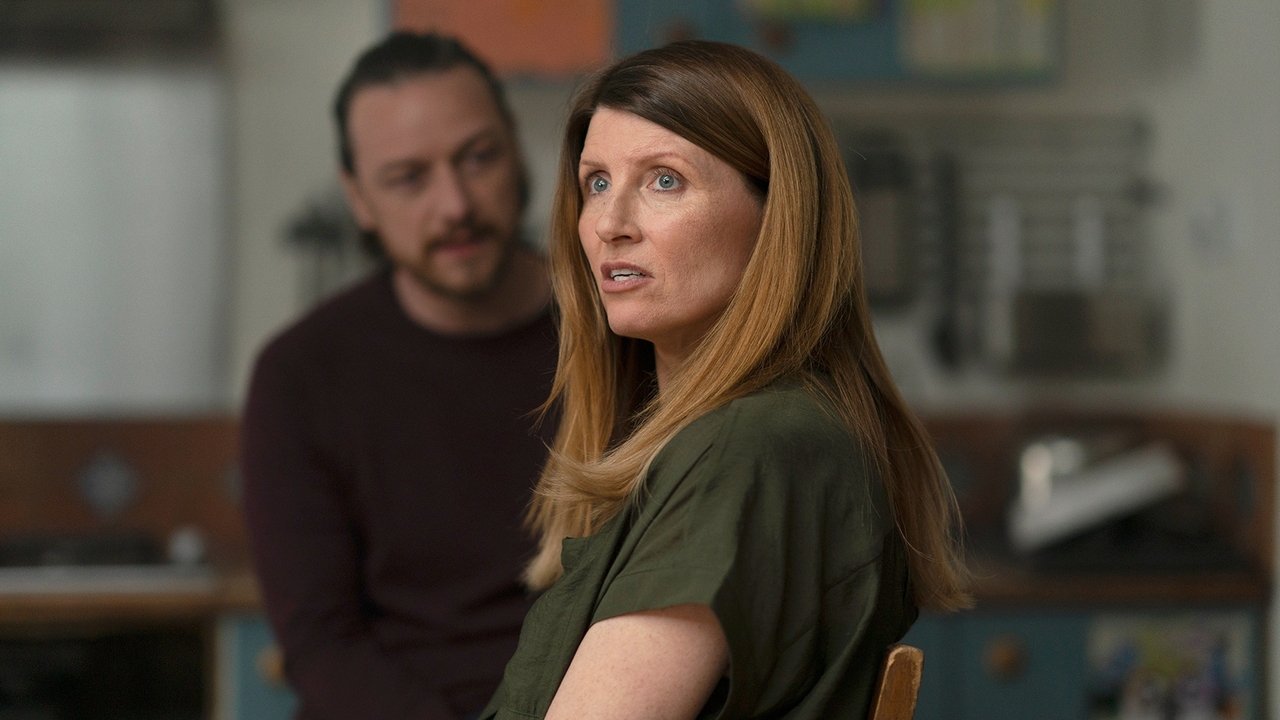
Sebastian Stan is best known as Bucky Barnes in the MCU, but his dramatic range broke through in A Different Man (2024) and The Apprentice (2024). In Fjord, he plays Mihai Gheorghiu, the family patriarch — a role that draws on his own Romanian heritage. Stan told the Cannes press: "There's no villain in this film. That's the most uncomfortable thing about it." Hard to argue with that read.
Renate Reinsve won Best Actress at Cannes for The Worst Person in the World (2021, Joachim Trier). She plays Lisbet, Mihai's Norwegian wife, a character who is neither fully victim nor fully complicit. Both performances, by all accounts, rank among the best work either actor has done. What's striking is that neither performance invites easy sympathy. That's deliberate.
The two of them carry a film that doesn't offer moral resolution. Two and a half hours with no easy answers. No way out of the room once you're watching it.
How Fjord connects to Mungiu's earlier work (and what to watch first)
Nineteen years after his Palme d'Or win, Mungiu has now placed five features in competition at Cannes. That consistency is almost unmatched in world cinema at this level.
His prior two films are the relevant comparison:
R.M.N. (2022): A Transylvanian village fractures over the arrival of foreign workers. Community as pressure cooker.
Graduation (2016): A father compromises his ethics to secure his daughter's future. Moral ambiguity as structural principle.
Fjord is the third panel in what's starting to feel like a loose trilogy about what happens when private conscience meets public systems. Most coverage frames this as Mungiu's "international breakout," but that framing misses the point; the more interesting fact is that he's made essentially the same film three times now, each in a different country, and the machinery of institutional coercion looks identical every time — Romania, Transylvania, Norway, it doesn't matter. If you haven't seen R.M.N. or Graduation, start there. Each builds on the last. They're available on Movie OTT's director pages, which track where to find Mungiu's full catalogue across streaming platforms.
The throughline is always the same: Mungiu is interested in how institutions grind against individual will. In Fjord, the institution is Scandinavian welfare bureaucracy. The family caught inside it is Romanian. The collision is what the film is actually about.
What actually happens in Fjord (without spoilers)
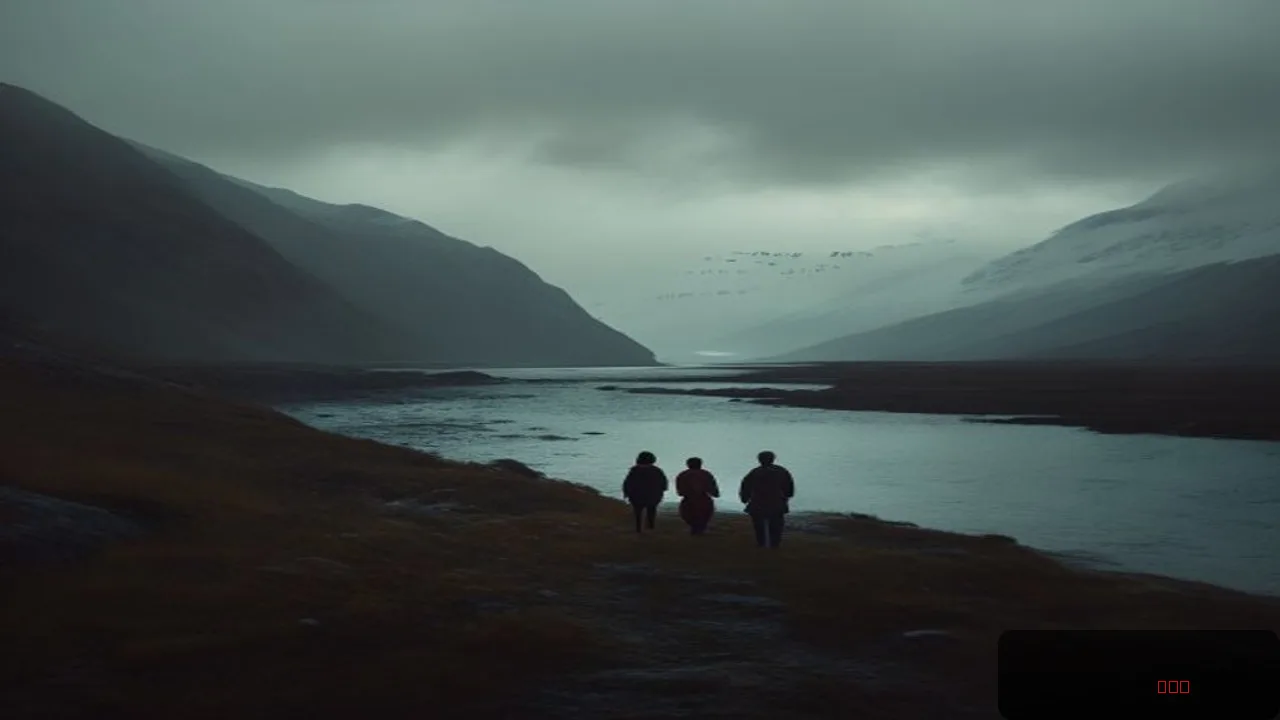
The film opens in a small Norwegian village. An avalanche happens in the background of an early school scene. Snow gathers and masses and tumbles down a hill behind the building, eventually stalling before it becomes any kind of disaster. Later, another avalanche happens in the same spot, this time breaking closer to the village itself. Mungiu doesn't use these as decoration. They're structural. They're waiting.
The central crisis involves a child, a family, and a state agency that's convinced something is wrong. Nobody's lying, exactly. But everybody's operating from different assumptions about what a family is supposed to look like, what discipline means, what religious conviction means. The film watches that gap widen, slowly, methodically, over two and a half hours. It's not a thriller. It's a procedure that becomes unbearable.
This isn't a casual watch. But neither was Parasite. And Neon's track record suggests they know how to build an audience for world cinema that doesn't fit easy categories.
The Indian angle: Why this film speaks to diaspora audiences
India's appetite for European art cinema has grown measurably over the past three years, driven in part by Netflix India's investment in foreign-language content and the success of titles like All Quiet on the Western Front (2022) and The Zone of Interest (2023) on the subcontinent.
Fjord doesn't yet have a confirmed Indian theatrical or OTT release date. But here's why it will likely land there:
The film's thematic core — a family caught between two cultural systems, neither of which fully sees them — won't feel abstract to Indian diaspora communities. The Romanian-Norwegian dynamic maps onto experiences familiar to Indian families in the UK, the US, and Scandinavia. That's not a forced reading. It's what the film is fundamentally about. A family trying to exist in a space that has rules they didn't write and assumptions they didn't agree to.
If a theatrical run happens in India, it'll likely be limited to Mumbai and Delhi art-house circuits (PVR INOX, Cinepolis) ahead of an OTT window. English-with-subtitles is the base release format; Hindi and Tamil dubbing tracks aren't confirmed. Watch Movie OTT for confirmed Indian availability as deals are finalized.
The bigger picture: Where Fjord fits in world cinema right now
Compare Fjord to Force Majeure (Ruben Östlund, 2014), which used a similar Scandinavian setting to expose the gap between how a family presents itself and how it actually functions under pressure. Both films use landscape and institutional architecture as character. But where Östlund was interested in masculine ego and social performance, Mungiu is interested in the machinery of the state, how it observes, judges, and intervenes.
The films operate in the same terrain but ask different questions.
I keep coming back to the fact that Fjord doesn't pretend the Norwegian system is evil. It's careful, well-intentioned, and designed to protect children. The problem is that protection sometimes looks like intrusion. And intrusion sometimes looks like justice from the inside, and persecution from the outside. The film holds both of those truths at once. For two and a half hours.
What happens next: The timeline for release and awards
The Cannes jury announces prizes on May 24, 2026. Watch for:
- A trailer drop in June or July, likely tied to a theatrical date announcement
- Potential TIFF or Venice screening for markets that missed Cannes
- A likely Q4 2026 awards-qualifying theatrical run in the US and UK
- Streaming window estimated at six to nine months post-theatrical, meaning early-to-mid 2027 for most OTT audiences
The bigger question is whether Fjord can cross over to general audiences or stays in the festival circuit. At two and a half hours, with no easy moral resolution and three languages, it's not a casual watch. But neither was Parasite. And Neon's distribution of Parasite earned $53.4 million at the US box office alone, per Box Office Mojo.
As of May 18, 2026, the film has its world premiere at Cannes and strong early critical response. Neon holds US rights. No streaming platform has been confirmed for any region yet. That changes after May 24.
For the latest confirmed availability across India, the US, the UK, and other regions, Movie OTT tracks distribution deals as they're announced.