Lewis Tan's Mortal Kombat Return Shows Why Studios Actually Listen to Fans (Sometimes)
TL;DR: Cole Young is dead. Lewis Tan isn't. Writer Jeremy Slater just admitted the original character was a mistake — and now Tan will return in Mortal Kombat III as an actual game-canon fighter. What this means for the franchise, where to watch the films, and why the studio's willingness to course-correct is rarer than you'd think.
$101.2 million. That's what Mortal Kombat II pulled globally in just two weekends against an $80 million budget. Not a blockbuster. Not a bomb either. A franchise that works — barely — which is exactly the kind of runway that lets a studio do something almost nobody does: publicly admit a character didn't land and try again.
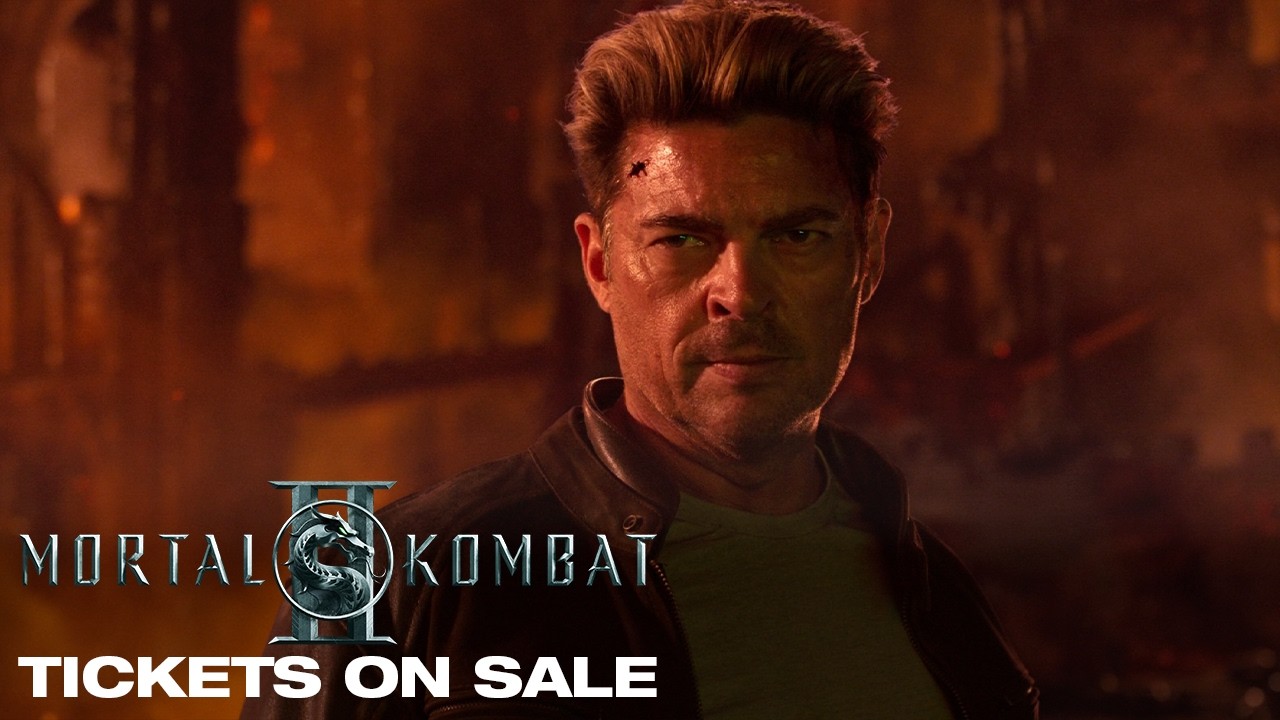
Cole Young, the original protagonist played by Lewis Tan, is dead. Killed by Shao Kahn in the sequel. And that death is permanent. No resurrection loophole, even though the film ends with survivors planning to use Quan Chi to bring fallen fighters back.
Here's what's interesting: Lewis Tan isn't staying dead with him.
According to writer Jeremy Slater, Tan will return for Mortal Kombat III as a completely different character — one pulled straight from the games. This isn't a typical casting reshuffle. It's a studio saying out loud what it should have known in 2021: the invented hero didn't belong in a universe with 30 years of game-canon characters waiting for their moment.
Why Cole Young Was Always the Wrong Protagonist
Slater was unusually candid about this in interviews. Most franchise writers bury creative mistakes in press junket non-answers. Slater went the other direction.
"I love the actor Lewis Tan," he told MovieWeb. "I did not love the character of Cole Young."
He kept going: "Everyone felt like Cole was the guy who didn't belong here. It's like watching an Avengers movie. 'Oh, there's Captain America and Iron Man, and there's Bob the Milkman.'"
The structural problem wasn't the performance. It was architecture. Every scene Cole Young occupied was screen time taken from Scorpion, Sub-Zero, Liu Kang, or Kitana — characters audiences already cared about. The 2021 film's visual language worked (the tournament fights were brutal and stylized, honoring the source material), but the emotional throughline kept routing back to someone nobody had nostalgia for.
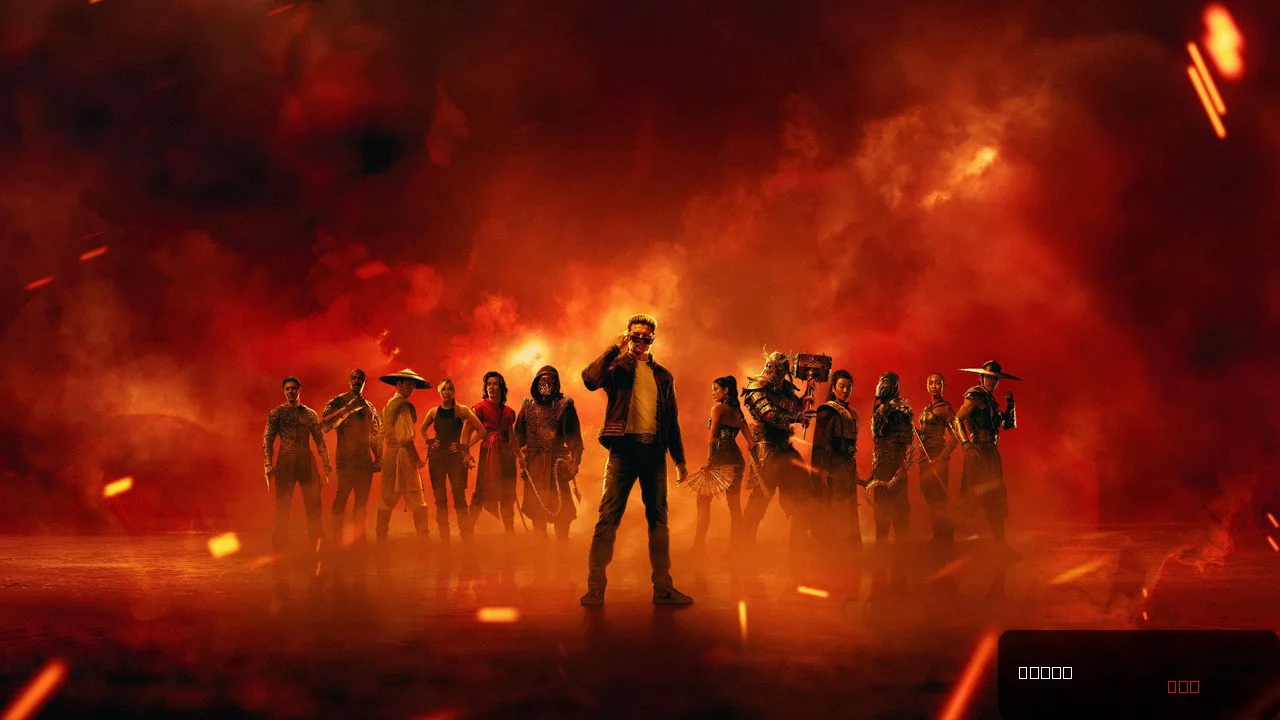
The sequel fixed this by centering Karl Urban's Johnny Cage — a character who actually exists in the games and carries franchise DNA. Urban brought something Cole never had: legitimacy. What most trade coverage glosses over is the P&L implication: the 2021 film earned $83.7 million on $55 million, a 1.52x gross-to-budget ratio, while MK II is tracking at 1.27x on a higher base cost. The sequel is a bigger movie that's actually less efficient. Swapping in a recognizable game character didn't automatically fix the economics. It suggests the franchise ceiling has less to do with casting choices and more to do with whether the fighting-game adaptation genre can scale past $150 million global without a crossover hook or an A-list lead north of Urban's current quote.
The Mortal Kombat Film Timeline (and Why It Matters)
Context: The 1995 original, directed by Paul W.S. Anderson, is still a cult landmark — Robin Shou's Liu Kang, Cary-Hiroyuki Tagawa's Shang Tsung, and Christopher Lambert's Lord Rayden made it campy but committed. The 1997 sequel, Mortal Kombat: Annihilation, is widely regarded as one of the worst video game adaptations ever made (4% on Rotten Tomatoes, if you want to feel that numerically).
The 2021 reboot reset everything. Simon McQuoid directed, casting Joe Taslim as Sub-Zero/Bi-Han, Hiroyuki Sanada as Scorpion/Hanzo Hasashi, and Jessica McNamee as Sonya Blade alongside Tan's Cole Young. It earned $83.7 million globally against a $55 million budget — enough to greenlight a sequel.
Now we're here. Mortal Kombat II (2026) is in theaters globally. A third film was greenlit before the sequel even opened (either confidence or aggressive franchise-building, possibly both). And the creative team is already signaling what went wrong and how they'll fix it.
Here's what's streaming where right now:
- Mortal Kombat (2021): Netflix (Hindi, Tamil, Telugu dubs available)
- Mortal Kombat II (2026): Currently in theatrical release globally; OTT window TBD
- Earlier films: Check Movie OTT for current availability
What Lewis Tan Could Actually Play in MK3
Slater's exact closing thought is worth sitting with: "If I had my way, this will not be the last that we see of Lewis Tan in the Mortal Kombat universe."
Translation: They're keeping the actor. They're dropping the character.
Tan has the physicality and martial arts background for several game-canon fighters. Kung Jin (the original target when Tan was attached to a Mortal Kombat series years ago) makes sense. So do Smoke or Kenshi. Each would give Tan a character with 25+ years of fan investment behind them — a real shot at the franchise, not a placeholder.
For Indian audiences specifically, Movie OTT's tracking system monitors these casting announcements and OTT release dates across Netflix, Prime Video, Hotstar, JioCinema, and Zee5. Tan has a following from Into the Badlands, which landed well in South and Southeast Asia. His return as an established game character could generate genuine anticipation in that market.
The character announcement will be the first real signal of where Mortal Kombat III is actually headed creatively.
The Box Office Math That Makes This Possible
Here's what I keep coming back to: $101.2 million on $80 million isn't a runaway hit. It's a franchise proving it can sustain itself — not one generating Avengers-level momentum. That distinction shapes everything about how this third film gets built.
The smart play is using MK3 to finally deliver on the full game-canon promise. More established characters. Fewer invented ones. Lewis Tan as someone the hardcore fanbase actually wants to see. If the third film hits $150 million globally on a similar budget, the franchise becomes reliable mid-tier IP for Warner Bros. — comparable to what Aquaman or Shazam! represented before DC's restructuring.
The risk? Overcorrection. Stuffing the film with so many game characters that it becomes fan-service without narrative coherence. The Mortal Kombat universe has dozens of fighters. Not all of them need to be in one movie.
Where Mortal Kombat II Lands on the Franchise Spectrum
Should you watch it? That depends.
If you're already in the franchise, yes. The sequel rewards familiarity. It builds on character arcs and lore established in 2021. If you're new to this series, start with the 2021 film first — it's currently available on Netflix in most major markets — then come to the sequel with context. The 2021 film works as a standalone entry point. The sequel does not.
The key difference: the first film introduces the universe, the fighters, and the stakes. The second film assumes you're already invested and pushes harder into combat sequences and existing character dynamics. Karl Urban's Johnny Cage is a delight (physically comedic, confident, everything the character demands), but he's not an entry point for newcomers.
What's striking is how the second film's construction reveals what worked: when you stop inventing characters and start using ones fans recognize, the entire production gets sharper. The tournament sequences are less exposition-heavy. The fighting choreography can breathe. The stakes feel earned instead of explained.
What's Coming Next for Mortal Kombat III
The third film has been greenlit but hasn't entered active production. Here's what to watch for:
- Lewis Tan's character announcement — this will be the first real signal of creative direction
- Director attachment — McQuoid hasn't been confirmed for MK3 yet
- Mortal Kombat II's final box office run — if it crosses $150 million globally, the third film's budget will likely increase; for context, MK II opened with $31.7 million domestic in its first weekend, roughly 40% ahead of the 2021 film's $23.1 million pandemic-era opening but still behind Sonic the Hedgehog 3's $62 million debut, which is the comp Warner Bros. is likely measuring against in the video-game-adaptation category
- Casting announcements — Warner Bros. has been proactive about franchise marketing
Movie OTT will track streaming availability as Mortal Kombat II moves out of theaters and into the OTT window. Based on the 2021 film's pattern, expect Netflix India availability within 45-90 days of theatrical release.
The Real Story Here
Cole Young is gone. Clean break.
Lewis Tan isn't gone. A skilled actor gets a second shot at a franchise, this time as a character with decades of fan investment. That's better than a quiet exit. It's also rarer than it should be. Most studios would've cut their losses and moved on.
The fact that this one didn't? That's worth paying attention to. It means someone at Warner Bros. actually listened to what the fanbase said, and more importantly, acted on it. Whether Mortal Kombat III justifies that faith — that's next.
Watch the official trailer: