Project Hail Mary Just Crossed $656 Million—Here's What That Actually Means
TL;DR: Ryan Gosling's sci-fi survival film opened March 20, 2026, and has now grossed $656 million worldwide on a $200 million budget. It's 157 minutes, PG-13, and directed by the Lego Movie guys. Streaming platforms in India aren't confirmed yet, but Movie OTT is tracking announcements as they happen.
A science fiction film about a science teacher who wakes up in space with amnesia just made $656 million worldwide. No franchise. No IP recognition. Just an adaptation of a 2021 novel and Ryan Gosling's ability to carry a 157-minute slow burn.
That's the story worth paying attention to.
Project Hail Mary, based on Andy Weir's bestseller, hit US theaters on March 20, 2026. It crossed $300 million worldwide in its first two weeks. By mid-May, it had landed at $656,972,856 globally—a result that will get cited in studio greenlight meetings for the next five years.
Here's what you need to know before deciding whether to watch it.
The Premise: Waking Up Lost, Light Years From Home
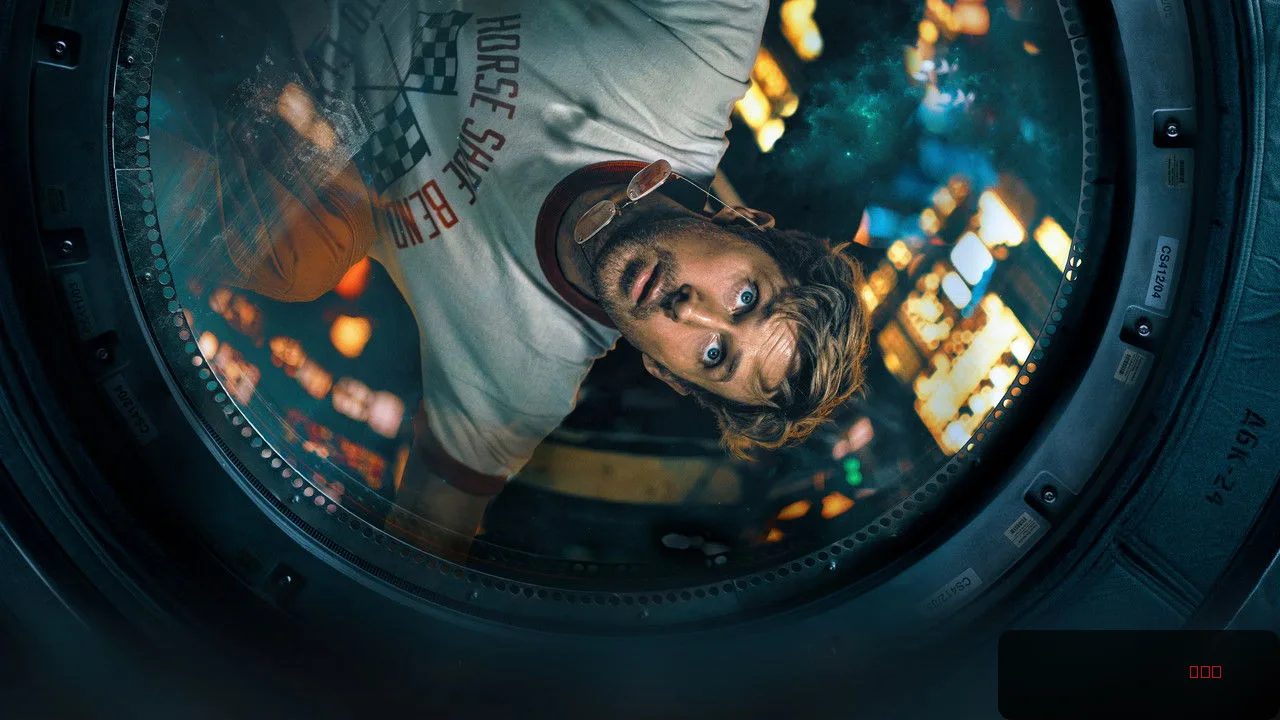
Ryland Grace is a high school science teacher. He wakes up on a spacecraft with no memory of how he got there. As his mind clears, he realizes he's been sent on a desperate mission: figure out why the sun is dying and find a way to stop it before Earth becomes uninhabitable.
That's it. That's the whole setup. No massive action beats in act one. No exposition dump. Just a confused man in a metal box, slowly piecing together a problem that requires him to be brilliant, creative, and willing to gamble with impossible odds.
The film's first hour moves deliberately. One reviewer on TMDB put it plainly: "The first hour had me a little uninterested and after that it quickly gained my attention." That's honest feedback. The pacing isn't a flaw—it's structural. You're meant to feel Grace's disorientation before the story accelerates.
Who's in This Thing (and Why It Matters)
Ryan Gosling plays Grace. He's doing something different here: less the confident action lead, more the isolated problem-solver. Gosling reportedly carried long stretches of the film essentially alone, which makes the performance more interesting than you'd expect from a $200 million movie.
Sandra Hüller plays Eva Stratt, the mission coordinator back on Earth. Hüller's fresh off the awards circuit for Anatomy of a Fall (she picked up a Best Actress Oscar nomination in 2024), and she brings a sharp, no-nonsense energy to the role. There's a dynamic between Gosling's warmer curiosity and Hüller's cold pragmatism that works.
Then there's Rocky, the alien. Voiced by James Ortiz. Look, the success of this entire film hinges on whether an alien friendship lands emotionally. It apparently does. That interspecies bond is what carries the back half.
The supporting cast includes Lionel Boyce, Milana Vayntrub, Ken Leung, and Priya Kansara. None of them overshadow the core story, which is the point.
Why Lord and Miller (of All People) Were the Right Choice
Phil Lord and Christopher Miller direct comedies. The Lego Movie. 21 Jump Street. So the skepticism was justified when they signed on for Andy Weir's hard-science survival story.
Except Weir's comedy isn't incidental. It's how Grace survives psychologically. He cracks jokes because he's terrified and brilliant and completely alone. Directors trained in finding emotional cores inside absurdist setups understood that better than a straight genre director would have. Most coverage treats this casting as a quirky surprise; the more accurate read is that Lord and Miller, after being fired from Solo: A Star Wars Story in 2017 over "creative differences" with Lucasfilm, have spent nearly a decade proving they can operate inside big-budget machinery without losing their instincts. Project Hail Mary is the proof of concept they needed.
Drew Goddard adapted the screenplay (he also adapted The Martian for Ridley Scott in 2015). His track record shows comfort with isolation sequences and genre-bending. The combination of Lord and Miller's irreverence, Goddard's hard-science scaffolding, and Gosling's grounded performance apparently clicked.
Key Details You'll Want Before Watching
| | | |---|---| | Release Date | March 20, 2026 | | Rating | PG-13 | | Runtime | 2 hours 37 minutes (157 minutes) | | Directors | Phil Lord, Christopher Miller | | Screenplay | Drew Goddard | | Based on | Andy Weir's 2021 novel | | Production Budget | $200 million | | Worldwide Gross | $656,972,856 |
The PG-13 rating is genuine. There's no gore, no language, no sexual content. It's clean, which honestly makes the $200 million budget feel more ambitious. You're betting that much money on hard science and character, not spectacle.
157 minutes is long. Not Oppenheimer-long, but long enough that you feel it in the second act. Come prepared for that.
The Slow Burn Actually Works
The theatrical run is still active as of mid-May 2026, and based on box office trajectories, this film will hit home video and streaming sometime in late June or July. Movie OTT has the where-to-watch tracker running. Check there for platform announcements by region.
For India specifically, streaming availability is still being finalized. Sony Pictures releases typically land on Prime Video or Netflix India after the theatrical window, though SonyLIV is also possible depending on distribution agreements. Worth noting: the film opened on approximately 500 screens across India, a wider rollout than The Martian received in 2015, and early reports from multiplex chains suggest it held screens into week six against competition from Pushpa 3 and Singham Again 2. The film's themes (scientific problem-solving, cross-species collaboration that plays almost like a buddy comedy) travel well, and Indian audiences familiar with Weir's novel will find the adaptation stays faithful to the source material's core.
What strikes me is that this film doesn't feel like it's chasing a sequel. Weir's novel has a definitive ending. The story resolves. That's rare for a $650 million box office earner, and it might be why the film works. No mandate to leave threads hanging for franchise mythology. Just a complete story.
Should You Actually Watch This?
Yes. Straightforward yes.
The first hour requires patience. The back half delivers what the premise promises: a survival story with genuine stakes and a friendship that works despite every reason it shouldn't. If you liked The Martian, this is the spiritual successor, with harder science, stranger circumstances, and a lead performance that justifies the bet.
Gosling's filmography includes Drive, Blade Runner 2049, and The Gray Man. This fits that trajectory. It's a role that asks for restraint and intelligence rather than charisma, and he delivers both.
Movie OTT will have streaming platform confirmations for India, the US, UK, and Spain as soon as distribution is locked. Set a reminder to check back in late June.
Watch the official trailer: