The Samurai and the Prisoner: Inside Kurosawa's Four-Chapter Castle Mystery
Kiyoshi Kurosawa's Kokurojo premiered at Cannes in May 2026 as a 147-minute period drama starring Masahiro Motoki and Masaki Suda. Janus Films holds North American distribution rights. No wide release date or Indian streaming platform has been confirmed yet.
Why This Matters: A New Kind of Samurai Film
Here's what Kiyoshi Kurosawa didn't do: he didn't make a swashbuckler. No cavalry charges. No sword tournaments. Instead, he locked two men in a castle — one free, one imprisoned — and spent two-and-a-half hours asking what freedom actually means.
That's the entire film. And it works.
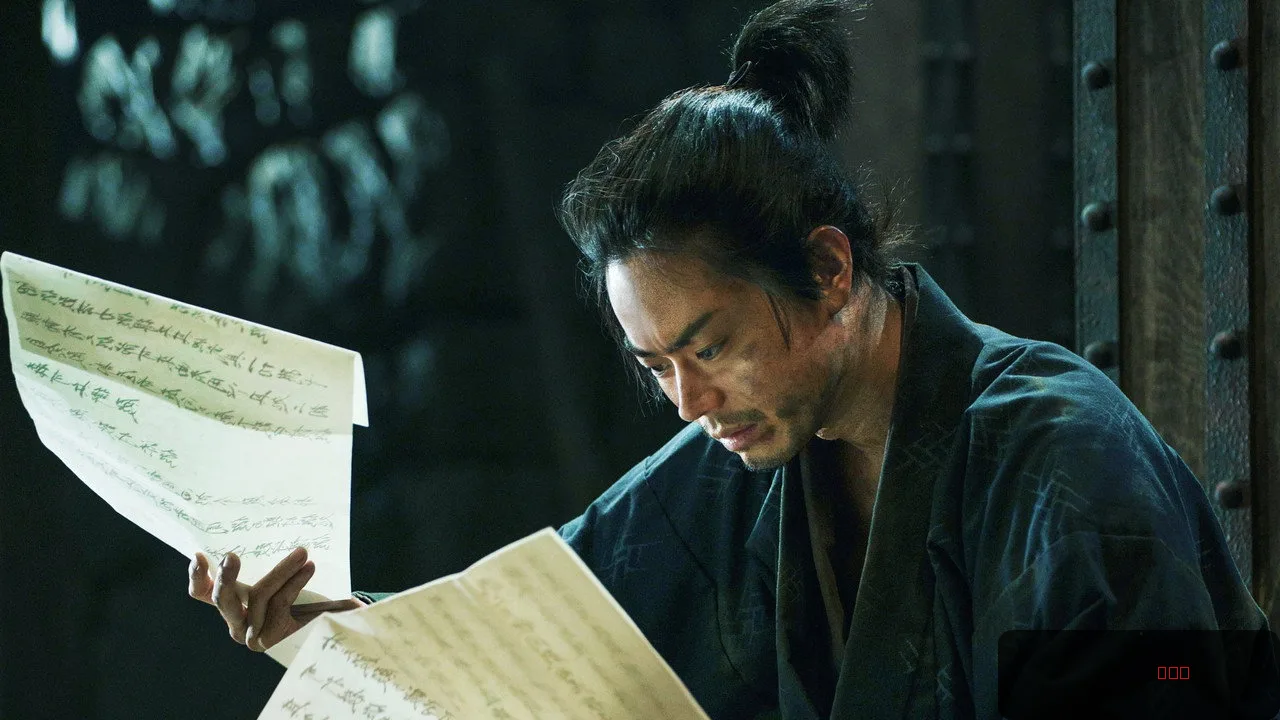
Variety's Jessica Kiang called it a story about "the psychological weight of command, dressed in feudal-era silk and shadow." Kurosawa adapted Honobu Yonezawa's award-winning novel set in 16th-century Japan, where Lord Araki Murashige has broken with the warlord Oda Nobunaga and now sits under siege in Arioka Castle. Nobunaga sends his most brilliant strategist, Kuroda Kanbei, to negotiate a return to the fold. Kanbei fails. Instead of executing him (samurai protocol would demand it), Murashige imprisons him. What unfolds across four seasons is a battle of minds, not swords, between a lord trapped by his own power and a prisoner freed by his chains.
It's genuinely rare for a jidaigeki to work this way. Most go big. Kurosawa goes inward.
The Core Setup: What Happens, and How Long It Takes
The basics first:
- Original title: Kokurojo
- Director: Kiyoshi Kurosawa (Pulse, Cloud, Tokyo Sonata)
- Runtime: 147 minutes
- Premiere: Cannes Film Festival 2026, Cannes Premiere section (May 8, 2026)
- Stars: Masahiro Motoki (Departures), Masaki Suda (reuniting with Kurosawa after Cloud)
- Language: Japanese dialogue, subtitled for international release
- Production: Shochiku Studio, Tokyo Broadcasting System
- Distribution: Janus Films (North America), Charades (world sales)
The film divides into four chapters, one for each season. Winter, spring, summer, autumn. A deliberate rhythm that mirrors how time moves differently when you're confined. Murashige rules above. Kanbei sits in a dungeon. Between them: walls, guards, and the slow realization that neither man is quite where he thinks he is.
Supporting cast includes Yuriko Yoshitaka as Chiyoho, Murashige's wife, whose hatred of Nobunaga apparently exceeds even her husband's. Movie OTT's full cast tracker has the ensemble details if you want to know who plays what role.
Kurosawa's Argument, Buried in Structure
What strikes me about this film is that Kurosawa isn't making a moral case through dialogue. He's making it through contrast.
Murashige, played by Motoki, tells one of his retainers early on: "Do not die for me." In a genre where a lord's demand for absolute sacrifice is treated as law, that line is almost subversive. But the real argument comes from what Kurosawa does with the space between the two men. Kanbei, literally chained below ground, gets to think. Murashige, with all his titles and armies, can't move without breaking his own code.
Variety flagged this directly: "Just because you are chained does not make you a prisoner, any more than having wealth and power can reliably make you free." That's the film's thesis, stated not in a monologue but in 147 minutes of structural evidence.
Here's the thing nobody usually says about period dramas: the best ones work because they're about now. This film, dressed in 16th-century armor, is really about men locked inside systems of their own making. It doesn't need to announce that. The architecture does the work.
If You Liked Shogun (or Rashomon), This Is Your Next Watch
Let me be direct about the comparison points:
FX's Shogun (2024) — If you binged this series on Disney+ Hotstar and wanted more, Kokurojo occupies similar terrain: 16th-century Japan, political intrigue, men figuring out where loyalty ends and survival begins. But where Shogun is an ensemble drama stretched across 10 episodes, Kurosawa's film is intimate and concentrated. No subplot bloat. Just two men and a question.
Akira Kurosawa's Rashomon (1950) — The moral ambiguity and competing truths in feudal Japan. Kiyoshi Kurosawa (no relation) isn't formally experimental the way Akira was, but the DNA is there — the idea that what you think is true depends entirely on where you're standing.
Park Chan-wook's The Handmaiden (2016) — Not a samurai film, but the puzzle-box structure and the psychological cat-and-mouse between two characters of unequal power. If you loved how that film layered mystery on top of character, Kokurojo operates the same way.
The useful thing: all three are available to stream somewhere. Movie OTT tracks streaming availability across Indian and global platforms, so if you want to watch any of these before Kokurojo arrives, you can find them in real time.
Who's Behind This (and Why It Matters)
Kiyoshi Kurosawa built his reputation on horror. Pulse (2001) and Cure (1997) still define the J-horror conversation. He's spent the last 15 years proving he can do anything: domestic drama (Tokyo Sonata), psychological thriller (Creepy), contemporary crime (Cloud in 2024). A period film is genuinely new territory for him, and Variety noted there's "little of Kurosawa's familiar, eerie experimentation" here. He's playing it classical. That's a choice, not a limitation.
What most coverage misses: Kokurojo is Kurosawa's first film produced by Shochiku since Tokyo Sonata in 2008, an 18-year gap during which he worked primarily with smaller independents and international co-productions. Returning to one of Japan's oldest major studios (founded in 1895, the same year the Lumière brothers screened their first films) signals a different kind of ambition. Shochiku bankrolled Ozu. They don't do genre experiments. They do prestige. Kurosawa walking back through that door, with a literary adaptation and a Cannes slot, reads as a filmmaker consciously repositioning himself for a legacy-phase career.
Masahiro Motoki won the Japan Academy Prize for Best Actor for Departures (2008), the same film that won the Oscar for Best Foreign Language Film that year. He brings conflicted charisma to a role that requires him to be simultaneously ruthless and humane.
Masaki Suda, playing Kanbei, worked with Kurosawa on Cloud just two years ago, so this is a reunion. He's one of Japan's most in-demand younger actors, comfortable in indie drama and mainstream genre work. The chemistry between Motoki and Suda, according to Variety's review, is "the film's beating heart."
The Release Timeline: Where This Stands Right Now
Cannes Premiere slot means prestige positioning without Palme d'Or pressure. The film screened May 8, 2026, roughly three weeks before Variety's review hit on May 20. Translation: it's fresh, barely in the world.
What's confirmed:
- Janus Films holds North American theatrical rights (same distributor who handled other prestige Japanese imports)
- Charades, the Paris-based world sales company, is handling international deals
- Shochiku Studio, a century-old Tokyo production and distribution house, is producing
- No wide release date has been announced. Limited North American theatrical in late 2026 is probable, but that's educated guessing, not fact.
What's not confirmed:
- Indian streaming rights (Netflix, MUBI, or BookMyShow Stream are reasonable bets, but nothing's been announced)
- UK distribution (no rights holder named yet)
- Japanese domestic release date
- Any dub or dubbed release (subtitled is the expected format, and honestly, dubbing a film this dependent on Motoki's and Suda's performances would be a mistake)
Hard to say if this outperforms Kurosawa's Cloud in Western theatrical markets, but the Cannes slot gives it festival credibility and puts it on the radar of cinephile audiences who actually show up for subtitled period drama.
What Indian Audiences Should Know
No Indian platform has picked up Kokurojo yet. That's not unusual — Cannes premiered three weeks ago, and rights negotiations typically follow festival buzz, not precede it.
But the appetite is real. Shogun performed strongly on Disney+ Hotstar in India, proving that Indian audiences will engage with Japanese period content when it's accessible and well-marketed. A film like Kokurojo — literary adaptation, prestige director, Cannes premiere — is exactly the kind of title that platforms compete for.
Watch for announcements from Janus Films (North America) and Charades (world sales). Indian sub-distribution typically follows those deals. When rights are confirmed, Movie OTT will update availability across all Indian platforms — Netflix, Amazon Prime, MUBI, BookMyShow, whoever lands it.
No Hindi, Tamil, or Telugu dub has been announced. Subtitled release is what you should expect. For a film this dependent on performance and silence, that's the right call.
The Bigger Picture: Why Kurosawa's Classical Approach Matters
Here's what's interesting about Kokurojo in context. Kurosawa has built a reputation on formal experimentation — strange narrative structures, genre hybridity, visual unease. He could have brought all of that to a period film. Instead, he didn't.
He played it straight. Classical composition. Disciplined pacing. The kind of filmmaking that trusts the material and the performances rather than winking at the audience. Most critics are treating this as a surprising departure, but I think the more honest read is that it's a concession: Kurosawa knows that a subtitled Japanese period drama in 2026 won't reach beyond festival circuits if it also asks audiences to decode his usual formal puzzles, and so he's made the most accessible film of his career precisely when accessibility matters most. That's not selling out. That's strategy.
The One Thing to Know Before You Watch
Murashige's line — "Do not die for me" — keeps coming back because it's the hinge the entire film turns on. In samurai cinema, that's almost heretical. A lord's demand for sacrifice is treated as law, as the natural order. Kurosawa's film asks: what if it doesn't have to be?
That's not a spoiler. That's the whole thing. And if that question interests you — if you're the kind of viewer who sat through Rashomon or Shogun and wanted something more interior, more puzzle-driven, more willing to sit in moral ambiguity — then The Samurai and the Prisoner is worth waiting for.
What Happens Next
Expect a limited North American theatrical release in late 2026, likely with awards-season positioning if critical response holds. The four-chapter structure and 147-minute runtime make it a natural fit for repertory cinemas and film festival circuits through the rest of the year.
Watch for: UK distribution announcement, Japanese domestic release date from Shochiku, and regional streaming deals. Charades is active at markets like AFM, so international rights could land fast.
When release dates or streaming platforms confirm for India, Movie OTT will have it. For now, the film exists at Cannes, in reviews, and in the hands of distributors negotiating where it goes next.
Sources
- Variety — 'The Samurai and the Prisoner' Review: Kiyoshi Kurosawa Folds Nesting Mysteries into an Elegantly Classical Shogun-Era Drama (May 20, 2026)
- Janus Films — Official Distributor
- Cannes Film Festival — 2026 Official Selection