The Samurai and the Prisoner: Kiyoshi Kurosawa's 147-Minute Locked-Room Mystery, Explained
TL;DR: Kiyoshi Kurosawa's The Samurai and the Prisoner (Kokurojo) premiered at Cannes 2026 and runs 147 minutes. It stars Masahiro Motoki and Masaki Suda in a four-chapter whodunit set in 16th-century Japan. Janus Films holds North American distribution; no Indian streaming date confirmed yet, but Movie OTT is tracking international deals as they close. If you liked Shogun or Drive My Car, this one's worth the wait.
A Thesis Wrapped in a Castle Siege
"Just because you are chained does not make you a prisoner, any more than having wealth and power can reliably make you free."
That line is the entire film. Kiyoshi Kurosawa's The Samurai and the Prisoner, which premiered in the Cannes Premiere section on May 8, 2026, builds around it — a locked-room procedural disguised as period drama. Variety's Jessica Kiang called it "absorbing, clean-lined," and credited Kurosawa with bringing "a storied period of swirling discontent in Japanese history" to life with a restraint that "becomes distinctly modern." That's precise. Most samurai films don't feel contemporary. This one does.
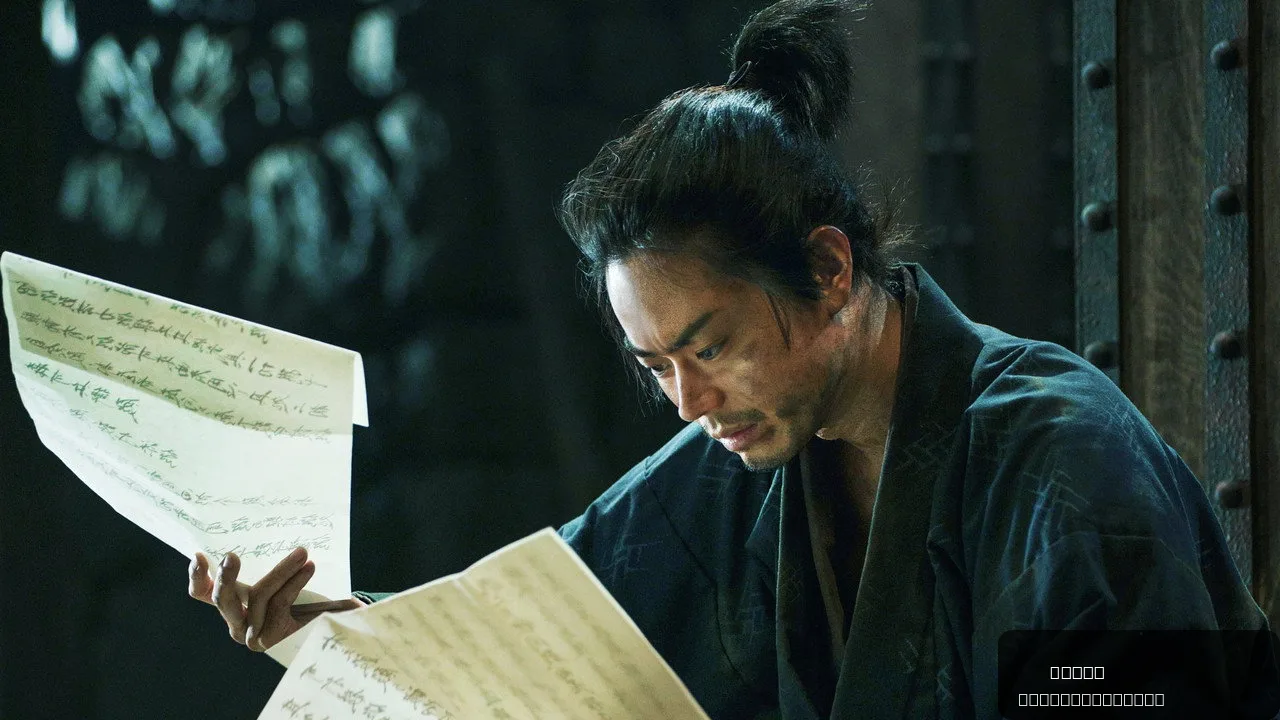
The plot: Lord Murashige Araki, besieged in his castle during the Azuchi period, faces four impossible crimes — one per season, one per mystery. His only solution is to consult the enemy strategist locked in his dungeon: Kanbei Kuroda. Trapped men solving trapped problems. The film doesn't look away from that irony.
The Cast and Crew You Actually Need to Know
Director: Kiyoshi Kurosawa (born 1955). Adaptation: Kurosawa, from Honobu Yonezawa's prize-winning novel. Runtime: 147 minutes. Studio: Shochiku Studio and Tokyo Broadcasting System. North American distribution: Janus Films. World sales: Charades (Paris).
Masahiro Motoki carries the film as Araki — a veteran actor best known for Departures (2008), which won Japan's first Academy Award for Best Foreign Language Film. Motoki's performance, per Variety, excels in "portraying the character's conflicted charisma," and honestly, you can see why. He's playing a man who can't trust anyone, which means every scene is a negotiation with his own fear.
Masaki Suda plays Kanbei, the imprisoned advisor. Suda worked with Kurosawa on the 2024 thriller Cloud, a contemporary film that showed Kurosawa still experimenting at the edge of his career. For Kokurojo, Suda told Japanese press that working in the dungeon required him to "perform entirely through the face and voice, since the body has almost no freedom." That constraint is the whole design. It works.
The supporting cast includes Joe Odagiri, Munetaka Aoki, Ryota Bando, and Tasuku Emoto. Also: Kochi Yamato, the breakout from the 2025 Exit 8 game adaptation, a reminder that this film is built from strong performers across multiple generations.
Why This Is Kurosawa's Biggest Pivot
Here's what matters: Kiyoshi Kurosawa has never made a full period jidaigeki film before Kokurojo. His reputation was built on horror (Pulse, 2001), psychological thriller (Cure, 1997), and contemporary domestic drama (Tokyo Sonata, 2008). Negative space is his language — long silences, static shots, the horror of what you don't see.
He transplanted that sensibility into a 16th-century castle, and it works in ways that shouldn't work. Per Variety, the dungeon is "lit by shafts of light that slice through the cracks in the walls like laser beams." That's not historical cosplay. That's a horror filmmaker doing period drama, which means the castle itself becomes a character: claustrophobic, epistemologically unstable, trapping everyone inside it (not just Kanbei).
What the festival write-ups largely skip over: Kurosawa is 71. He's made roughly 50 features across four decades, and not once has he attempted a studio-backed jidaigeki with this kind of institutional weight behind it. The fact that Shochiku greenlit this for a director whose commercial peak was arguably Tokyo Sonata tells you something about how the Japanese studio system still trusts auteur track records in a way Hollywood simply doesn't anymore.
Yonezawa's novel, the source material, is prizewinning historical fiction. Yonezawa's best known internationally for the Hyouka series, beloved by anime fans for its intellectually rigorous puzzle plotting. Kurosawa preserved that four-mystery, four-season structure faithfully. The film isn't trying to modernize the novel. It's trying to film it without apology.
Should You Commit 147 Minutes? A Three-Film Comparison
If you're deciding whether this lands in your wheelhouse, here's the honest comparison:
Shogun (FX/Hulu, 2024) — The benchmark for prestige Japan-set period drama in English-language markets. Won 18 Emmy Awards. Samurai and the Prisoner operates in thematically similar territory (feudal loyalty, political siege, palace intrigue) but as feature-length chamber drama. Much tighter focus. No sprawling ensemble.
Drive My Car (2021) — Also a Janus Films Japanese literary adaptation. Ryusuke Hamaguchi's film ran 179 minutes and won the Oscar. Proof that Western audiences will sit with long, methodical Japanese prestige cinema when the material justifies it. Kokurojo occupies similar cultural space.
Rashomon (1950) — The ancestral reference (yes, that Kurosawa — Akira, not Kiyoshi, different director, same family name, which trips up everyone). Multiple perspectives, samurai-era moral ambiguity, a locked space that functions as a philosophical trap. Kiyoshi works within that template without apology.
The thing nobody mentions: Kokurojo is, at its core, a whodunit procedural. Four locked-room mysteries. That's a more accessible hook than the festival coverage suggests.
Where This Film Lands for Indian Audiences
No Indian OTT platform has announced rights yet. But the trajectory is predictable.
Films distributed by Janus Films with Charades handling international sales historically land on:
- MUBI (most likely — MUBI has a strong Japanese cinema catalog and existing Janus relationship)
- Netflix India (possible, given Netflix's recent investment in Japanese content following Shogun's global performance)
- Amazon Prime Video India (less likely but not off the table for a prestige acquisition)
- SonyLIV (acquired Drive My Car for Indian streaming in 2022, making this a plausible route)
No Hindi, Tamil, or Telugu dub has been announced. Japanese with subtitles is the expected format.
Indian theatrical release through PVR Inox's World Cinema programming is plausible in metro markets — Mumbai, Delhi, Bengaluru — where Drive My Car found its audience. For Indian viewers, the more relevant comp isn't Shogun or even Rashomon; it's the quiet success of 12th Fail (2023), which proved that Indian theatrical audiences will show up for a slow, word-of-mouth-driven film with no major star power if the critical consensus is strong enough. That film opened on 400 screens and eventually crossed ₹100 crore. Different genre, same audience behavior: patient, trust-driven, allergic to hype.
Movie OTT's where-to-watch tracker monitors announcements across Netflix, Prime, MUBI, SonyLIV, and Zee5 in real time. Check there when international rights start closing. The deals come fast once a major festival premiere lands.
The Festival Path and What Comes Next
Cannes Premiere positioning (not Competition) typically signals a distributor-friendly commercial play rather than a pure awards push. But awards traction from this section isn't unheard of. The film's likely next stops: Toronto and TIFF's City to City Japan focus in September 2026. Then limited North American theatrical through Janus Films, probably late 2026.
A fall awards campaign isn't off the table. The International Feature Film category has room for a strong Japanese entry after Perfect Days (2023) and Monster (2023) both made the shortlist. Whether Kurosawa's deliberate, four-chapter structure plays as cinematic event or gets reassigned to streaming quickly depends on how Janus reads the early box office. Drive My Car grossed $2.4 million in North America (per Box Office Mojo), which is respectable for a 179-minute Japanese literary adaptation. That's the comparable benchmark.
Production budget has not been disclosed publicly. Shochiku Studio is one of Japan's oldest and most commercially stable production houses, so they're backing this with institutional confidence. That matters.
What Kurosawa and the Actors Said About Making It
Kiyoshi Kurosawa, speaking at the Cannes Premiere presentation, described Kokurojo as "a film about the cost of command." A leader who can't trust anyone, forced to consult the one man he should trust least. That's the emotional throughline. It's not about solving crimes. It's about what happens to a person when isolation becomes total.
Motoki, in Japanese interviews, emphasized the physical stillness required. He's wearing formal samurai garb in a castle under siege; every gesture carries political weight. No room for casual movement. That constraint shapes everything.
Suda's observation about performing "entirely through the face and voice" reveals why the dungeon scenes work. The camera stays close. You're reading micro-expressions, tone shifts, the invisible negotiation between two men who should be enemies but need each other. It's almost Beckettian. Two men in a room. One's chained. Neither can leave.
Box Office and Distribution Strategy
Hard commercial data isn't available yet — the film hadn't opened theatrically as of the Cannes premiere. Janus Films' track record with prestige Japanese imports gives us a baseline. Drive My Car found $2.4 million in North America. That's not a blockbuster number, but it's sustainable for a 179-minute film without commercial star power.
Kokurojo runs 147 minutes — 32 minutes shorter — which might expand the potential audience slightly. But it's still a slow-burn procedural in Japanese, which means the ceiling is probably similar. Janus isn't expecting blockbuster numbers. They're expecting the film to find its audience, build through festivals and word-of-mouth, and establish a long tail on streaming.
That's the Janus model: acquire prestige films at major festivals, build critical consensus, place them on streaming platforms where they can live indefinitely. Movie OTT tracks the full ecosystem — theatrical windows, streaming windows, platform exclusivity windows — across India, the US, the UK, and Spain. When Janus makes the streaming announcement, that's where you'll see it first.
The Next Step: How to Actually Watch This
Official trailer release hasn't happened yet. No streaming date confirmed. But here's what to do now:
- If you're in a major Indian metro with World Cinema programming: watch for PVR Inox or similar curated releases in late 2026.
- If you prefer streaming: bookmark Movie OTT and check back monthly. The platform sends alerts when new deals are confirmed across regions.
- If you want to go deeper: read Honobu Yonezawa's novel first. It's available in English translation. The film doesn't require it, but the book's puzzle structure is rigorous enough that reading it first makes the film's faithfulness — and its departures — more visible.
Watch for: official trailer release, streaming rights announcements from MUBI and Netflix (most likely), TIFF 2026 programming confirmation, and any Indian theatrical distributor announcements. The film screened at Cannes in May 2026. By October, you should have much clearer information about where and when you can see it.
Should you watch it? Yes. If you have any patience for slow-burn procedurals, literary period drama, or genuinely intelligent puzzle plotting, this is the standout film from the festival season. Don't wait for the algorithm to surface it. Go find it.