The Samurai and the Prisoner Review: Kurosawa's Cannes Epic Demands Your Attention
TL;DR: Kiyoshi Kurosawa premiered The Samurai and the Prisoner at Cannes 2026 to strong critical notices. The 148-minute historical murder mystery adapts a Japanese novel and stars Motoki Masahiro and Suda Masaki. No confirmed global streaming deal yet — but here's what we know, and why the skepticism is worth holding onto.
Kiyoshi Kurosawa just walked out of Cannes with one of the festival's most-talked-about films. And the hype machine is already spinning faster than the facts can keep up with.
That's not a knock on the film itself. Early critical responses suggest The Samurai and the Prisoner is genuinely ambitious work: a 16th-century murder mystery filtered through the sensibility of one of Japan's most singular filmmakers. But the "masterpiece" declarations are arriving before most global audiences have any idea when—or even whether—they'll actually get to see it. That gap between festival buzz and real-world access is where a lot of Cannes darlings quietly disappear. Whether this one escapes that fate is the question that matters.
The Basic Facts You Need Before the Hype Clouds Everything
Director: Kiyoshi Kurosawa. Runtime: 148 minutes. World premiere: May 19, 2026, Cannes Film Festival. Stars: Motoki Masahiro, Suda Masaki.
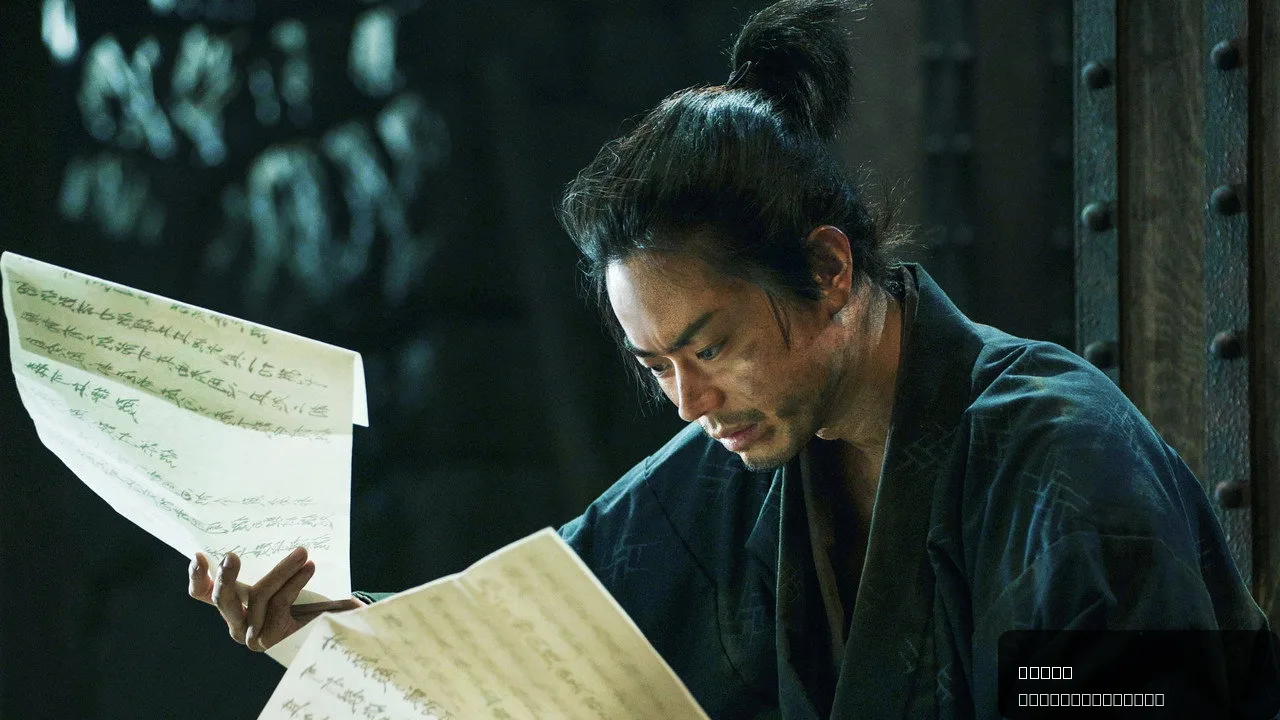
The film adapts Honobu Yonezawa's novel—the same author behind Hyouka, which became a beloved anime series (so the source material has pedigree). Set in turbulent 16th-century Japan, the story follows Lord Murashige Araki (Motoki), a feudal lord who rebelled against Nobunaga Oda and finds himself besieged inside his own castle. When murders begin occurring within those walls—seemingly impossible ones—Murashige investigates by consulting his hostage, the imprisoned strategist Kanbei Kuroda (Suda).
No major international distribution deal had been announced at premiere. A Japanese domestic release window hasn't been confirmed either. If you're checking Movie OTT for streaming availability in your region, there's nothing to list yet.
What the Critics Actually Said (and What It Means)
Chase Hutchinson, writing for The Wrap from Cannes, offered one of the sharpest early comparisons: "It's mysterious yet earnest, playing almost as if the best parts of a 'Knives Out' film were transported back in time, and with characters all grappling with what the right thing to do is."
That Knives Out comparison does real work. Think ensemble murder-mystery with moral weight—except Kurosawa's pacing is considerably more deliberate than Rian Johnson's crowd-pleasing whodunits. Hutchinson also flagged that the film contains "extended shots of characters discussing the painful details of war, murder, family and legacy." He called it "one of the director's more talky films." That's either a selling point or a warning, depending entirely on who's reading it.
I keep coming back to that Knives Out comparison because it's useful shorthand without being dishonest. But here's the thing—Johnson's films reassure you. The detective wins. The guilty are exposed. Order is restored. If Kurosawa is doing what his best work suggests, you'll leave unsettled rather than satisfied. Not wrong to want that. Just worth knowing in advance.
Where Indian Audiences Can Actually Watch This (Right Now: Nowhere)
Here's the blunt version. No Indian theatrical distributor has announced rights. No OTT platform—Netflix India, Prime Video India, Disney+ Hotstar, JioCinema, SonyLIV, Zee5—has publicly confirmed a streaming deal as of writing. Movie OTT's where-to-watch tracker will be the fastest place to check once distribution news breaks, given how quickly Japanese arthouse titles move from festival circuit to platform acquisition.
But context matters. Indian audiences have historically engaged with Japanese art cinema through Netflix India, which has a working relationship with several Japanese studios and carried prestige titles including Kurosawa's own Wife of a Spy. Prime Video India has been aggressive in acquiring Japanese content since Shogun demonstrated that period-set Japanese historical drama has genuine appetite outside Japan.
The Indian market angle here is real: The Samurai and the Prisoner is set in the same feudal-lord era as Shogun, features the kind of political intrigue that Indian audiences—many of whom grew up on period dramas—tend to find accessible. Whether any platform invests in a Hindi or Tamil dub for an arthouse title remains uncertain (Japanese dubs for Indian languages stay rare outside mainstream anime). But a streaming deal feels more likely than theatrical, especially for a nearly two-and-a-half-hour subtitled film.
Watch Movie OTT for region-specific updates. Distribution news moves fast once acquisition talks close.
Kurosawa's Recent Track Record—Why I'm Not Fully Convinced Yet
Kiyoshi Kurosawa (no relation to Akira—a point worth making since the names cause perpetual confusion) has been making films since the late 1980s. He's 70 in 2026 and shows no signs of slowing. His horror work—Cure (1997), Pulse (2001)—established him internationally. Recently:
- Wife of a Spy (2020): Silver Lion for Best Director at Venice. Streamed on MUBI internationally.
- Cloud (2024): Paranoia thriller that premiered at Venice and received strong reviews.
Motoki Masahiro is one of Japan's most decorated actors—multiple Japan Academy Prize winner across decades of prestige cinema. Suda Masaki is a younger star with significant commercial appeal, known for both film and television. Their pairing as adversaries-turned-uneasy-interlocutors is clearly the engine here.
Here's the thing though: Kurosawa's recent output has been exceptional on its own terms. And "on its own terms" is doing a lot of work in that sentence. Cloud was gripping and strange and also significantly divisive among general audiences who came expecting something more conventionally thrilling. Most coverage frames The Samurai and the Prisoner as Kurosawa's long-awaited crossover into mainstream prestige; the more honest read is that this is his third consecutive film pitched at festival juries rather than paying audiences, and Cloud grossed under $500,000 worldwide outside Japan. Strong reviews don't pay for distribution campaigns. A 148-minute film with stretches of extended dialogue and minimal action will test the patience of anyone who isn't already a convert. Festival critics awarding superlatives at Cannes is a data point, not a guarantee of broader resonance.
The Political Core Nobody Mentions
The structural irony baked into the premise isn't getting much coverage. Murashige is a lord who rebelled against tyranny. Yet the film apparently challenges whether men like him—even those nominally fighting for something just—are capable of wielding power without reproducing the harm they claim to oppose. That's not a murder mystery. That's a political film dressed in period costume.
Which makes the Knives Out comparison simultaneously apt and deeply misleading. Johnson's films are reassuring. Kurosawa leaves you unsettled. Remember Takabe's final, blank-faced smile at the end of Cure? That willingness to deny the audience closure is Kurosawa's signature move, and if he's deploying it inside a locked-castle whodunit, expect the resolution to feel less like catharsis and more like a trap door opening beneath you. If audiences expecting a tidy resolution feel robbed, that's not a misreading of the film—that's exactly what Kurosawa seems to be doing.
What Happens Next: Distribution, Awards, Streaming Windows
The Samurai and the Prisoner is in the Cannes competition circuit in May 2026. Awards season follow-through depends entirely on whether it secures a qualifying theatrical release in the United States before December 31, 2026—the Oscar eligibility window. Given Kurosawa's Venice Silver Lion history with Wife of a Spy, an awards push isn't out of the question if the right distributor (MUBI, Janus Films, or a platform like Netflix with arthouse ambitions) steps in.
No international trailer has been released yet. Box office expectations for a subtitled Japanese arthouse epic running nearly two and a half hours are, realistically, modest outside Japan. The streaming deal is where the real audience will come from.
Should you watch it? If you're a Kurosawa follower or if Shogun-era Japanese historical drama is your thing, the answer is almost certainly yes—once you can actually find it somewhere. Keep checking Movie OTT for the moment streaming availability appears in your region. The acquisition could happen within weeks once the festival circuit winds down.
Where Things Stand Right Now
The Samurai and the Prisoner premiered at Cannes on May 19, 2026, and is generating the kind of critical attention that tends to accelerate distribution conversations. No global streaming deal is confirmed. No Indian release window exists yet. Kurosawa's last several films landed on MUBI and Netflix in various international markets, which gives you a reasonable short-list of where to look first.
The primary keyword to track: The Samurai and the Prisoner streaming availability. We shall see. Check back soon.