Swordfish at 25: The Most Gloriously Unhinged Action Movie Is Now Streaming
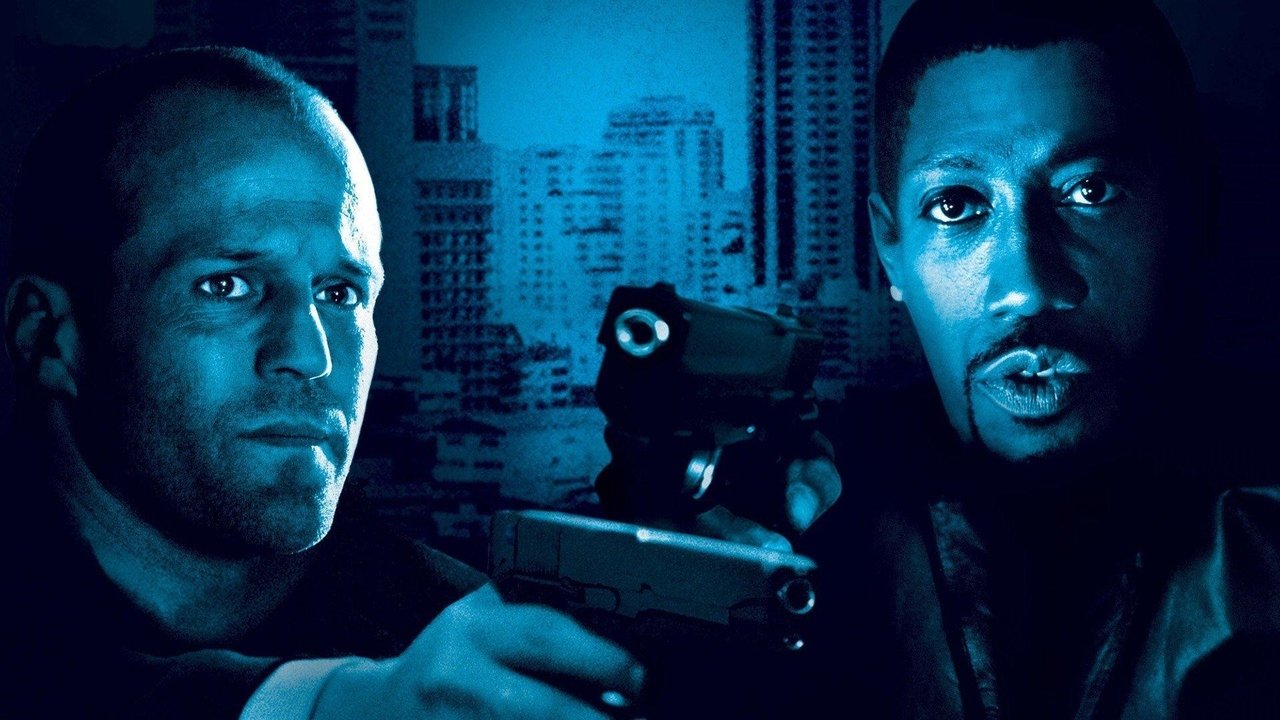
TL;DR: Swordfish (2001) is available on Prime Video in the US, UK, and India. Starring Hugh Jackman and John Travolta at peak chaos, the film flopped theatrically but became a DVD phenomenon. Twenty-five years later, it's worth every minute — and I mean that seriously.
If you're a Prime Video subscriber right now, you've got access to one of the most entertainingly reckless action films ever greenlit by a major Hollywood studio. That's the good news. The less straightforward news is that Swordfish — which arrived in June 2001 — never quite got the theatrical respect it deserved, lost money on its initial run, and only found its audience through the DVD format that no longer exists. The streaming resurrection is real, though, and the film plays even better now than it did when George W. Bush was still in his first year.
Here's what makes it worth your time: a $102 million action thriller that feels like the exact moment early-2000s Hollywood stopped pretending subtlety mattered. It committed to the bit. Completely.
The Cast and Crew: Big Names, Zero Restraint
Directed by Dominic Sena (who'd also just made Gone in 60 Seconds the year before), Swordfish hit theaters on June 8, 2001. Runtime: 99 minutes. Lean. Relentless. No fat.
The core cast:
- Hugh Jackman as Stanley Jobson, a hacker banned from computers by federal court order
- John Travolta as Gabriel Shear, a criminal ideologue who dresses like a Bond villain and talks like a philosophy professor who gave up on academia
- Halle Berry as Ginger Knowles, operative or accomplice — the film keeps you guessing longer than you'd expect
- Don Cheadle as Agent Roberts, the federal agent trying to untangle all of it
Sena came out of music videos. His debut, Kalifornia (1993), was genuinely unsettling. By 2001, he'd figured out how to make expensive action films operate at maximum velocity without stopping to explain themselves. That's a specific skill.
The screenplay came from Skip Woods, who'd later work on Hitman and The A-Team — a filmography that tells its own story about his particular brand of high-octane, low-plausibility storytelling.
Box Office vs. Reality: When Critics and Audiences Split Hard
Here's where it gets interesting. Swordfish was produced on a budget of approximately $102 million, according to Box Office Mojo. Its opening weekend brought in $18.1 million — respectable but not enough to signal a hit. The theatrical run finished with a global gross around $147 million worldwide. On paper, technically profitable. The studio had clearly hoped for more.
What saved it was DVD. This was 2001, right at the height of the format's dominance, and Swordfish reportedly became one of Warner Bros.' stronger-performing rental titles that year. The word on the lot is that the DVD and VHS revenue pushed the film well past profitability, which is why Warner Bros. kept it in active catalog rotation for years after. The film's Rotten Tomatoes score sits at 26% from critics. Audience score? 64%. That gap tells you everything — critics thought they knew what this film was trying to be. Audiences wanted what it actually delivered.
The film also generated headlines before it even opened, largely due to a scene involving Halle Berry that the studio reportedly paid a premium to include. Love that energy. Commitment to chaos.
John Travolta's Monologue Changed Everything
What strikes me about rewatching Swordfish is how unapologetically it opens. No setup. No context. Just John Travolta, a cigar, and a hostage situation being used to make a point about cinematic realism.
Travolta's opening monologue — delivered directly to camera, critiquing Dog Day Afternoon for not being ruthless enough — is genuinely one of the more audacious opening gambits in early-2000s studio filmmaking. In interviews around the 2001 release, Travolta told reporters that Gabriel Shear was "the most fun I've had playing a villain" and that the character's philosophical speeches weren't something he wanted to soften. "He believes what he's saying," Travolta said during the press tour. "That's what makes him dangerous."
That commitment shows. The moment you hear him break character to critique 1975 cinema, you know exactly what kind of movie you're in. No easing in.
Hugh Jackman, reflecting on the film later, noted that Swordfish was one of his first major Hollywood productions after X-Men and that he approached Stanley Jobson as "someone who knows how good he is and hates that other people know it too." That's a small detail, but it explains why Jackman's performance works when it probably shouldn't. He's playing desperation wearing a suit made of arrogance.
Halle Berry was coming off X-Men as well — she and Jackman shared that ensemble cast — and she'd win her Academy Award the following year for Monster's Ball. Her work in Swordfish is underrated specifically because the film doesn't ask her to be subtle and she refuses to be small anyway.
Don Cheadle, who has never given a lazy performance in his life, makes Agent Roberts feel like the only person in the movie who actually read the briefing documents. He's the straight line against which everyone else's absurdity registers.
How Swordfish Stacks Against Its Early-2000s Peers
The film didn't exist in a vacuum. The early 2000s produced a very specific type of big-budget action movie — glossy, star-heavy, unapologetically loud — and several of them have similar trajectories.
| Film | Year | Critical Reception | Where It Ended Up | |---|---|---|---| | Gone in 60 Seconds | 2000 | 24% RT | Strong DVD/streaming staple | | XXX | 2002 | 47% RT | Cult following, franchise | | The Italian Job | 2003 | 73% RT | Genuine hit, holds up well | | Swordfish | 2001 | 26% RT | DVD phenomenon, streaming revival |
The honest comparison is Gone in 60 Seconds — also Sena, also built around a charismatic lead doing something illegal while a more flamboyant antagonist monologues nearby. Swordfish is the weirder, more ambitious version of that formula. Most coverage of the film's legacy frames it as a guilty pleasure or a so-bad-it's-good relic; the more interesting question is why no studio has tried to replicate its specific formula since, given that the audience clearly existed and still does. The answer, from what I gather, is that the post-9/11 shift in how Hollywood depicted terrorism and government surveillance made Gabriel Shear's brand of charismatic domestic extremism essentially unproduceable — though that part is still rumour.
If you liked Gone in 60 Seconds, you'll probably find something to enjoy here. If you want something closer to The Italian Job (which plays like a heist film that actually cares about narrative coherence), this isn't that. But if you want early-2000s Hollywood operating at maximum confidence with zero interest in realism? That's Swordfish.
For ongoing streaming availability as catalog rights shift across regions, Movie OTT keeps current listings across all major platforms — useful since these titles move around more than people realize.
Where to Watch Right Now
For viewers in India, Swordfish is currently available on Prime Video India as part of the platform's catalog. No regional language dub has been widely reported, which puts it in the English-with-subtitles category — standard for catalog titles from this era.
The film doesn't have any particular India-specific marketing push. But I hear it's been pulling steady numbers on Prime Video India since being added to the catalog, and that tracks: this is the same demographic that made The Matrix, Mission: Impossible 2, and Gone in 60 Seconds into home-video hits across the subcontinent. Dhoom (2004) essentially built its entire motorcycle-heist DNA from this exact strain of Hollywood excess, and that franchise went on to gross over ₹500 crore combined — proof the appetite for this brand of stylish, logic-optional action never left Indian audiences.
Current availability breakdown:
- India: Prime Video
- United States: Prime Video
- United Kingdom: Prime Video
- Spain: Check regional Prime Video availability — catalog rights vary by territory
Movie OTT's where-to-watch tracker has updated listings if you're checking from a region not listed above.
What Makes It Hold Up 25 Years Later
I keep coming back to one question: why does Swordfish hold up when so many of its contemporaries feel dated? The honest answer is that the film's complete lack of self-consciousness has curdled into something that reads, in 2026, as genuine confidence.
Films that tried to be serious in 2001 often feel strained now. They're trying so hard. Swordfish never pretended. It opened with a villain breaking the fourth wall to critique cinema, threw in a bus chase sequence that was genuinely ahead of its time technically, and spent its final act doing things that no sane studio executive should have approved. The audacity aged well.
What's striking is how the film's structure — jump from crisis to crisis without letting you catch your breath — doesn't feel like a weakness anymore. It feels like a feature. Like intentionality. The pacing that critics complained about in 2001 now reads as clarity. This is a film that knows exactly what it wants to do in 99 minutes and does it.
Hard to say whether Warner Bros. has a 4K restoration in the pipeline, though that's the natural next step for a title with this much streaming traction. These catalog titles get systematic treatment eventually.
Should You Watch It Tonight?
Yes. Unambiguously. If you want 99 minutes of early-2000s Hollywood at maximum confidence with zero interest in realism, this is it. Travolta's performance alone justifies the runtime. Jackman is doing something genuinely interesting with a role that could have been nothing. And the bus sequence in the third act remains, twenty-five years later, a piece of pure action filmmaking that most current productions can't match.
What most write-ups frame as a guilty pleasure is, more accurately, a film that knew exactly what it was and committed completely. That's rarer than critics gave it credit for in 2001.
It's on Prime Video right now. Watch it.