








The story of Advise & Consent
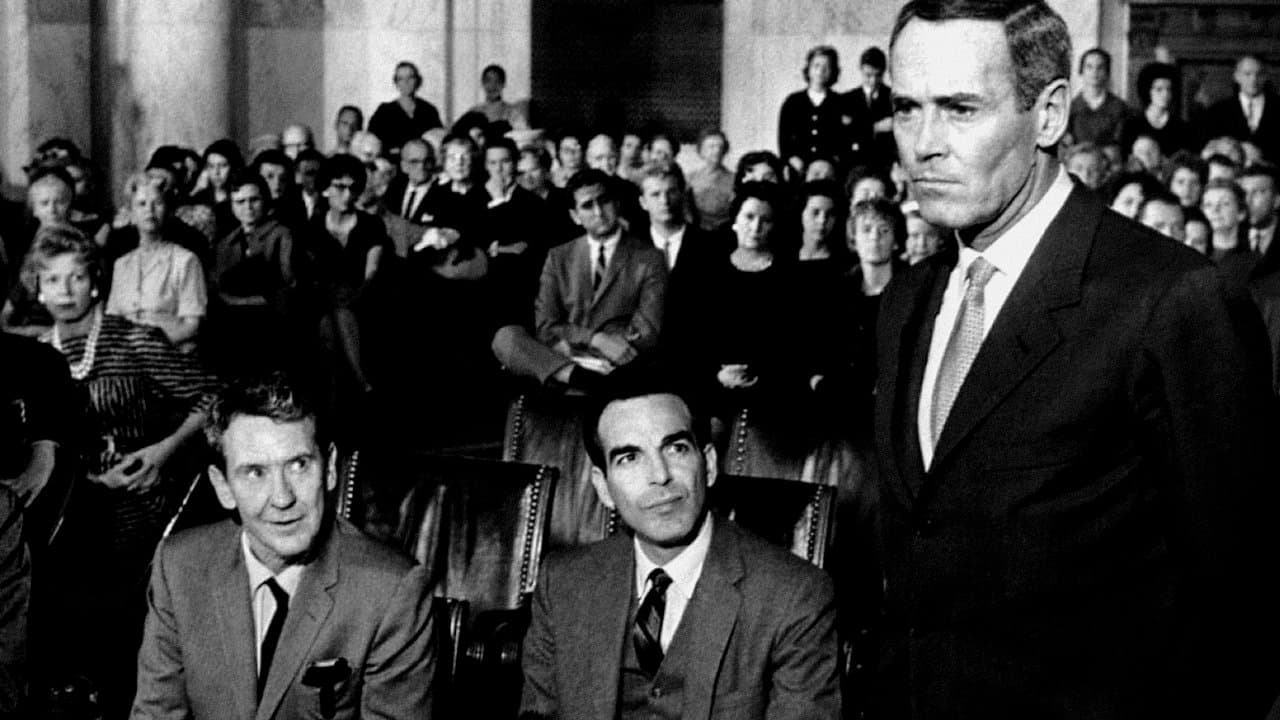
Advise & Consent follows the high-stakes nomination of Robert Leffingwell, a man tapped by the President to become Secretary of State. Before he can assume the role, he must survive a Senate confirmation hearing—and the film's real drama isn't about whether he's qualified, but what gets dredged up along the way. Senator Brig Anderson, the idealistic chair of the committee, finds himself caught between his principles and the pressure to rubber-stamp the nomination. What starts as a procedural examination becomes something far messier: a collision between personal integrity and political necessity, where every senator has leverage and every secret can become a weapon.
Behind the making of Advise & Consent
Otto Preminger directed Advise & Consent from a screenplay adapted by Wendell Mayes, based on Allen Drury's Pulitzer Prize-winning 1959 novel of the same name. The source material was already a cultural touchstone—Drury's book had won the Pulitzer in 1960 and spent months on the bestseller list—so Preminger inherited both high expectations and rich material to work with. The film was a major studio production from Otto Preminger Films, released in 1962 with a runtime of 139 minutes, giving Preminger ample time to develop the intricate political maneuvering that makes the story sing.
The cast assembled for this picture was formidable. Preminger populated Washington with character actors and stars who understood how to play power—people who could convey entire political calculations with a glance or a pause. The film earned strong critical attention and holds a 7.2 rating on IMDb, a respectable score for a political drama that doesn't rely on explosions or romantic subplots. It's the kind of movie that rewards close attention, the kind where what isn't said matters as much as what is. The film's tagline—"Are the men and women of Washington really like this?"—captures the underlying question audiences were asking in 1962, and frankly, still are.
What makes Advise & Consent stand out
What's striking about Advise & Consent is how it refuses to simplify its characters. Nobody here is purely good or purely corrupt. Senator Anderson wants to do the right thing, but the right thing keeps shifting depending on which pressure he's under. Leffingwell himself isn't a villain—he's a man trying to survive, and the film doesn't ask us to hate him for it. That moral ambiguity is the film's real power. It doesn't offer easy answers about how Washington works or whether the system is broken. Instead, it shows you the machinery in motion and lets you draw your own conclusions.
Preminger's direction is precise and patient. He understands that political drama lives in conversation, in the spaces between decisions, in the moment when someone realizes they've backed themselves into a corner. The film moves methodically through the hearing process—not in a way that feels slow, but in a way that builds genuine tension. You're watching people negotiate, threaten, and ultimately compromise their way through a process designed to protect the public interest, and yet somehow serving private ones instead. The screenplay doesn't telegraph its punches; it trusts the audience to follow the logic of power.
I keep coming back to how the film treats its female characters with surprising seriousness for 1962. They're not decoration. They're players in the game, with their own agendas and their own costs to bear. That wasn't standard for political dramas of the era, and it's one reason the film still feels relevant. It's not preachy about it—the film just shows you women making hard choices in a male-dominated system, which was probably closer to reality than Hollywood usually got.
Where to stream Advise & Consent online
Advise & Consent is available on major OTT services, and you can check the Where to Watch widget at the top of this page to see exactly which platforms carry it in your region right now. Streaming availability shifts constantly, so Movie OTT tracks current availability across services to save you the hassle of checking five different apps. If you're a subscriber to one of the major platforms, there's a decent chance you'll find it already in your library—it's a classic that gets cycled through regularly. The film's 139-minute runtime means you'll want to carve out a solid evening to give it your full attention; this isn't a background-watch kind of movie.
Frequently asked questions
Q: Is Advise & Consent based on a true story?
No, it's based on Allen Drury's 1959 Pulitzer Prize-winning novel, which is a work of fiction. That said, Drury drew heavily on the political atmosphere of his time, and the novel was widely read as commentary on real Senate dynamics and Cold War tensions.
Q: Who directed Advise & Consent?
Otto Preminger directed the film. Preminger was known for tackling controversial subjects and complex narratives, and his approach to this material emphasizes the procedural and psychological dimensions of political power rather than melodrama.
Q: How long is Advise & Consent?
The film runs 139 minutes—just under two and a half hours. That length allows Preminger to develop the characters and the political maneuvering without feeling rushed.
Q: What's the tagline for Advise & Consent?
The official tagline is "Are the men and women of Washington really like this?"—a question that invites audiences to judge whether the film's portrait of political behavior is accurate, cynical, or maybe both.
Q: What genre is Advise & Consent?
It's a political drama. There's no action, no romance as the primary plot—just the slow-burn tension of power, ambition, and moral compromise playing out in committee rooms and Senate corridors.
Final thoughts on Advise & Consent
Advise & Consent is the kind of film that doesn't announce itself loudly. It won't grab you with spectacle or sentiment. Instead, it quietly shows you how power actually moves through institutions—not through grand gestures, but through leverage, information, and the willingness to sacrifice someone else's principles for your own gain. If you're interested in political cinema that respects your intelligence, that trusts you to follow complex plotting and competing agendas without spelling everything out, this is essential viewing. It's a film about Washington, yes, but it's really about human nature under pressure—and that never goes out of style.