








The story of Always: Sunset on Third Street 2
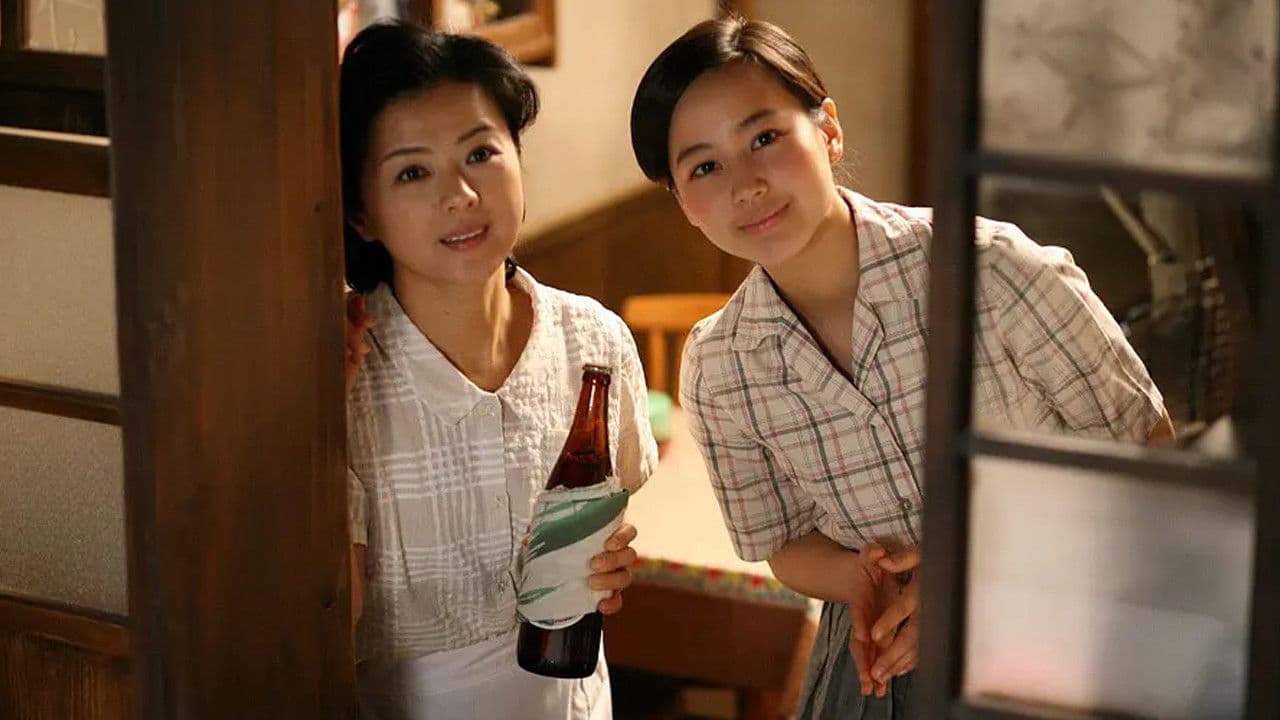
Always: Sunset on Third Street 2 picks up roughly a year into the postwar recovery of Tokyo, when the city's shitamachi—its scrappy, humble downtown neighborhoods—still bore the scars of war but thrummed with an almost stubborn will to rebuild. The film follows Chagawa, a struggling writer who enters the prestigious Akutagawa Prize competition, hoping that recognition and financial security might finally offer a better life for the boy he's taken under his wing. Parallel to his arc, the Suzuki family—the heart of the first film's ensemble—must navigate an unexpected family crisis when a new relative moves in, someone who carries contempt for their modest circumstances and the working-class values that sustain them. It's a story about competing visions of the future: the hunger for escape and elevation versus the quiet dignity of staying put, of making do with what you have.
Behind the making of Always: Sunset on Third Street 2
Director Takashi Yamazaki returned to helm this sequel, building on the foundation he'd established with the 2005 original. The production was a massive undertaking—a consortium of Japanese broadcasters, production companies, and studios including Nippon Television Network Corporation, TOHO, Shogakukan, and others pooled resources to bring the manga by Ryōhei Saigan back to the screen. With a runtime of 146 minutes, Yamazaki had the canvas to let his characters breathe, to linger in the tactile details of 1950s Tokyo without rushing toward plot mechanics. The film earned considerable recognition at the 31st Japan Academy Film Prize, winning two awards and garnering eleven nominations—a testament to its craft across acting, cinematography, and direction. Perhaps most notably, this was the film where Godzilla made his first full CGI cameo outside his own franchise, a moment of playful genre-blending that showed Yamazaki's willingness to surprise. (That same director would later helm Godzilla Minus One in 2023, but that's another story entirely.) The ensemble cast carried the weight of these interconnected narratives with a naturalism that doesn't happen by accident—it's the product of careful casting and the kind of rehearsal time that big-budget Japanese cinema was willing to invest in back then.
What makes Always: Sunset on Third Street 2 stand out
What's striking about this film is how it refuses to sentimentalize poverty or treat the shitamachi as a quaint backdrop. Yamazaki's camera observes these neighborhoods with genuine affection, but he doesn't shy away from the real friction—the cramped living quarters, the financial desperation, the way shame can eat at you when you're surrounded by people doing slightly better. The performances anchor everything. You can feel the weight Chagawa carries, the quiet desperation of a man who knows he's running out of time to change his circumstances. The Suzuki family's struggle with their contemptuous relative isn't melodrama; it's the kind of quiet, domestic tension that lingers long after the credits roll. The film's IMDb rating of 7.154/10 reflects what audiences have long recognized: this isn't a crowd-pleaser in the conventional sense, but it's a film that respects its viewers' intelligence and emotional complexity. The 1950s setting—that pivotal moment when Japan was beginning its economic miracle, when the postwar haze was lifting but the old ways hadn't quite vanished—gives the story a historical weight that grounds even the most intimate character moments. I keep coming back to how the film treats ambition not as something heroic or shameful, but as a human impulse that can coexist with love, loyalty, and the knowledge that some people you care about won't make the same choices you do.
Where to stream Always: Sunset on Third Street 2 online
Always: Sunset on Third Street 2 is currently available on major OTT services—check the "Where to Watch" widget at the top of this page to see which platforms carry it in your region. Streaming availability shifts regularly, so if you don't see it on your usual service, it's worth checking back or exploring Movie OTT for real-time updates across the full catalog of platforms. Given the film's 146-minute runtime and the deliberate pacing that Yamazaki employs, you'll want to carve out an uninterrupted evening to experience it properly. This isn't a film that rewards half-attention or phone-scrolling—it demands and rewards your full presence.
Frequently asked questions
Q: Is Always: Sunset on Third Street 2 a sequel, and do I need to watch the first film?
Yes, it's the second film in the Always: Sunset on Third Street franchise, following the 2005 original. While you can watch this standalone and follow the main story, you'll get richer emotional resonance and character understanding if you've seen the first film. The two work best as a pair.
Q: Who directed Always: Sunset on Third Street 2?
Takashi Yamazaki directed the film. He's the same director who helmed the original and would later go on to direct Godzilla Minus One (2023), one of the most acclaimed Japanese films of recent years.
Q: Is Always: Sunset on Third Street 2 based on a true story?
The film is based on the manga Sunset on Third Street by Ryōhei Saigan, not a true story, though it captures the historical reality of postwar Tokyo's working-class neighborhoods with documentary-like precision. The characters are fictional, but their world is rooted in real 1950s Japanese life during the Shōwa era.
Q: How long is Always: Sunset on Third Street 2?
The film runs 146 minutes (about two hours and twenty-six minutes), which gives Yamazaki room to develop his characters and the texture of 1950s Tokyo without rushing the narrative.
Q: What awards did Always: Sunset on Third Street 2 win?
At the 31st Japan Academy Film Prize, the film won two awards and received eleven other nominations, recognizing its achievements in acting, cinematography, direction, and other craft categories.
Final thoughts on Always: Sunset on Third Street 2
Always: Sunset on Third Street 2 isn't the kind of film that announces itself loudly or demands your immediate attention. It's patient, observant, and deeply humane—the kind of sequel that doesn't just repeat its predecessor but deepens the conversation about what home means, what we're willing to sacrifice, and whether the future is something you chase or something you build where you stand. If you're drawn to character-driven dramas that trust their audience, to stories set in specific times and places that feel alive and lived-in, this film's worth your time. It's a reminder of what Japanese cinema was capable of in the mid-2000s, before the industry shifted. Don't sleep on it.