







The Story of Ballad: Time Travel Meets Feudal Japan
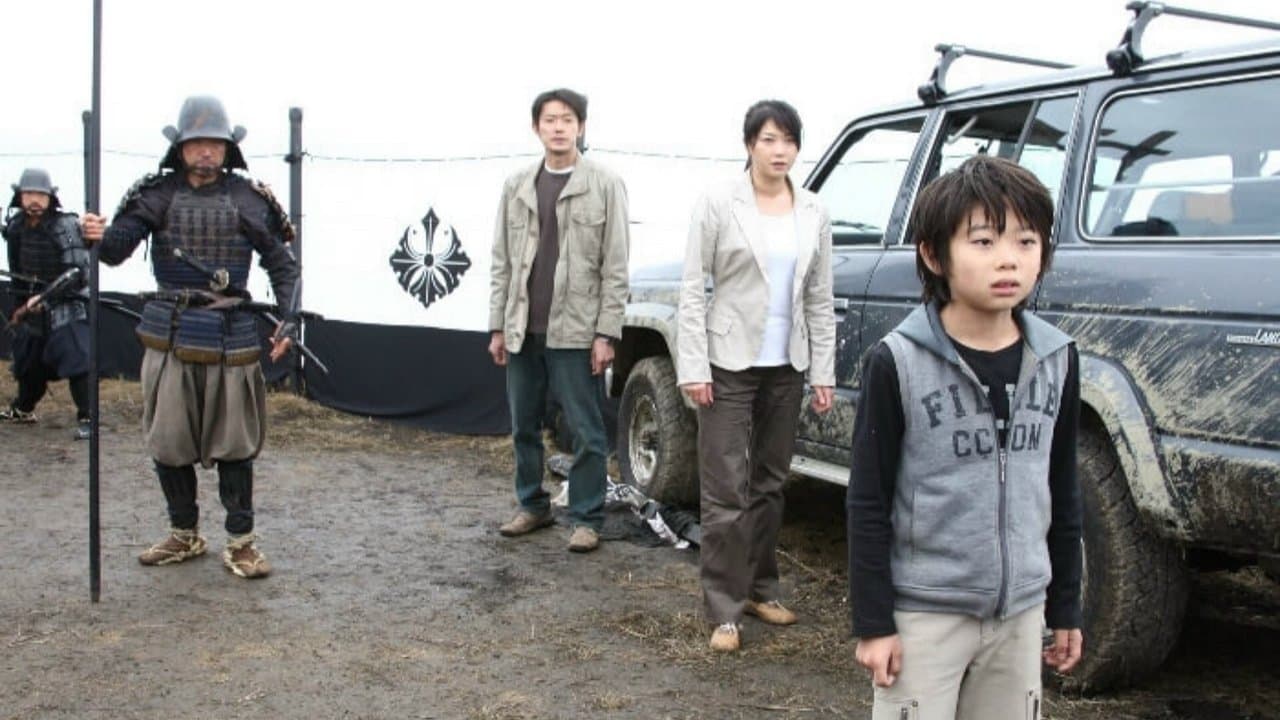
Ballad isn't your typical samurai drama. The film opens when a contemporary boy named Shinichi finds himself transported centuries into Japan's feudal past, landing in the territory of General Ijiri Matabei—a formidable warrior whose reputation precedes him. What Shinichi discovers, though, isn't the ruthless commander everyone fears, but a man caught in an impossible romantic entanglement. Ijiri has fallen for Princess Ren, a woman of noble birth who's been promised in marriage to Okura Itakatora, a far more powerful daimyo controlling the wealthy northern Kanto region. When she refuses the arranged marriage, Okura doesn't accept rejection gracefully. Instead, he marshals a massive military force to crush Ijiri's smaller domain—and it's Shinichi who realizes he might be the only person who can alter the course of these events before bloodshed rewrites everyone's fate.
Behind the Making of Ballad: An Ambitious Anime-to-Live-Action Gamble
Ballad represents a curious experiment in adaptation. The film's source material traces back to a 2002 Crayon Shin-chan animated movie—yes, the irreverent kids' franchise that built its reputation on crude humor and family chaos. Yet this live-action reinvention strips away that comedic DNA entirely, pivoting toward earnest historical drama and action spectacle. The production brought together an impressive roster of Japanese studios and broadcasters: TOHO, TV Asahi, Robot Communications, and a dozen other heavy-hitters across advertising, animation, and regional networks all contributed resources and creative input. That sprawling coalition of producers sometimes signals creative compromise, but it also meant substantial budget and reach.
The cast includes Takei Emi as Shinichi, Kusanagi Tsuyoshi as the conflicted general Ijiri, Yoichi Osawa as the antagonist daimyo Okura, and Aragaki Yui as Princess Ren—a lineup that commands respect in Japanese cinema. Aragaki especially brings star power; she's known for both dramatic range and commercial appeal. The runtime clocks in at 132 minutes, giving the filmmakers room to explore both the romantic tension and the military strategy without rushing either thread. Box office performance in Japan was modest but respectable for a niche historical drama, though the film never achieved blockbuster status domestically or internationally.
What Makes Ballad Stand Out: Ambition Over Execution
What's striking about Ballad is how earnestly it commits to its central premise—that a time-displaced teenager might actually matter in a world of swords and political intrigue. The film doesn't wink at the audience or lean into fish-out-of-water comedy. Instead, it plays the scenario straight, which creates an interesting tension. Shinichi isn't there to fix history or impose modern values; he's just trying to prevent tragedy. That's a modest goal, and the script respects it.
The performances anchor the emotional core in ways that keep the film from collapsing under its own ambition. Kusanagi brings gravitas to Ijiri, portraying him as a man genuinely torn between duty and desire—not a stock tragic hero, but someone wrestling with competing loyalties. Aragaki's Princess Ren could've been a passive prize to be won, yet she's written with agency; she makes her own choice about the marriage, and that choice carries weight. The action sequences, when they arrive, don't overwhelm the character work. They're staged with clarity rather than MTV-style frenzy, which means you can actually follow the tactical decisions and emotional stakes.
Honestly, though, the film struggles with pacing. At two hours and twelve minutes, there are stretches where the plot marking time feels deliberate rather than meditative. Critics on IMDb rated it 5.4 out of 10, suggesting that while the film has admirers, it didn't land universally. What's interesting is that the mixed reception doesn't stem from obvious failures—the cinematography is handsome, the period detail credible—but rather from a tonal ambiguity that won't satisfy everyone. You're watching a film that's caught between romance, action, and philosophical inquiry about destiny and agency. Not everyone will forgive that refusal to commit to a single genre.
Where to Stream Ballad Online
Ballad is available on major OTT services, and Movie OTT tracks current streaming availability across platforms in real time. Since licensing agreements shift frequently—especially for international titles—the easiest way to confirm where it's streaming in your region is to check the "Where to Watch" widget at the top of this page. That widget pulls live data so you won't end up hunting for a title that's migrated to a different service. Movie OTT handles the heavy lifting of aggregating which platforms carry which films, saving you the frustration of clicking through three different apps only to find it's not there.
Frequently Asked Questions
Q: Is Ballad based on a true story?
No. While the film is set during feudal Japan and features historical elements like daimyo and samurai, the plot itself is fictional. It's an adaptation of a 2002 anime film, not a chronicle of real events.
Q: Who stars in Ballad?
The film features Takei Emi as the time-traveling protagonist Shinichi, Kusanagi Tsuyoshi as General Ijiri Matabei, Aragaki Yui as Princess Ren, and Yoichi Osawa as the antagonist daimyo Okura Itakatora. All are established names in Japanese cinema and television.
Q: What's the runtime, and is it too long?
Ballad runs 132 minutes. Whether that feels too long depends on your patience for character-driven historical drama; some viewers find it meditative, while others feel it drags in places.
Q: How does this compare to the original anime film it's based on?
The 2002 Crayon Shin-chan animated movie this is adapted from was comedic in tone. This live-action version strips away the humor and plays everything as serious historical drama, making it a fairly significant tonal departure.
Q: Is this a good samurai film?
It's unconventional. If you're looking for pure sword-fighting spectacle in the vein of Seppuku or Harakiri, you'll be disappointed. But if you're open to a slower-burn drama that weaves action into a story about romantic agency and destiny, it's worth considering.
Final Thoughts on Ballad
Ballad won't appeal to everyone—that much is clear from its mixed critical reception and modest box office. But it's the kind of film worth defending, even if you don't think it entirely succeeds. It takes a wild premise (a time-traveling kid saves a samurai romance) and treats it with genuine dramatic weight rather than irony. That's rarer than it should be. If you're in the mood for something that refuses easy categorization and doesn't mind ambition that occasionally stumbles, Ballad deserves a look.