









The story of 64: Part 2 and its haunting premise
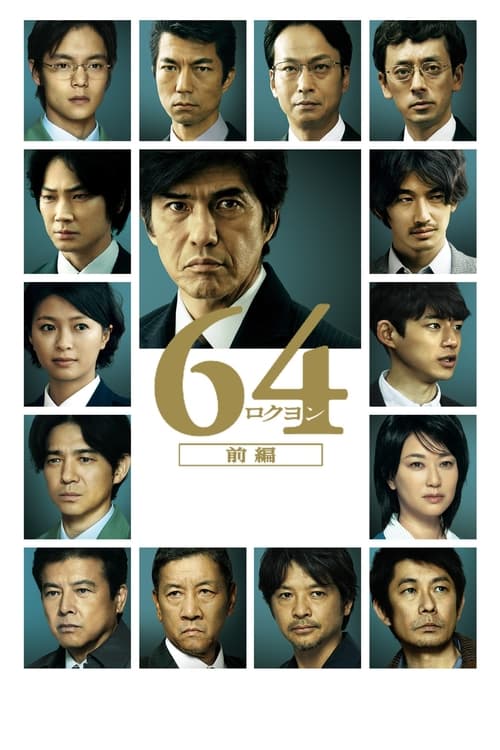
64: Part 2 opens in 1989—the 64th and final year of Japan's Showa era—when a young girl is kidnapped and murdered. The case goes unsolved, earning the grim designation "Case 64" or "rokuyon." By 2002, when the film's primary narrative unfolds, Yoshinobu Mikami—the detective who once led the investigation—has been reassigned to the Police Affairs Department as a public relations officer. He's no longer hunting criminals; he's managing the image of the police itself. That's the central irony that drives everything forward. Mikami's personal life mirrors his professional limbo: his own daughter has gone missing. Then, just as the statute of limitations for Case 64 approaches expiration—a deadline that would erase any chance of prosecution—a new kidnapping case surfaces. It bears an unsettling resemblance to the original crime. Suddenly, Mikami finds himself caught between two worlds: the administrative machinery that values public relations over truth-seeking, and the criminal investigation division desperate to solve both the cold case and the fresh horror unfolding before them.
Behind the making of 64: Part 2 and its production heritage
64: Part 2 is the second installment in the 64 Collection, a series rooted in Japanese crime fiction and directed with meticulous attention to procedural detail. The film emerges from a remarkable production ecosystem—TOHO, TBS, dentsu, CBC, and WOWOW among the major players, alongside The Asahi Shimbun and Mainichi Shimbun, two of Japan's most influential newspapers. This newspaper involvement isn't incidental; it signals the project's commitment to grounding itself in real investigative journalism and the tension between media scrutiny and police operations. The runtime of 119 minutes allows the narrative to breathe, resisting the urge to compress complex institutional conflict into a tighter package. While box office specifics aren't widely circulated in English-language sources, the film's presence across multiple major OTT platforms suggests it found an audience—both domestically and internationally—willing to sit with a slow-burn mystery that refuses easy answers. The film earned two awards during its festival run, a modest but meaningful recognition for what's essentially a character study wrapped in the trappings of a crime thriller. What's striking is that 64: Part 2 doesn't rely on star power or sensationalism to justify its length; it trusts the audience to care about institutional rot and personal guilt as much as plot mechanics.
What makes 64: Part 2 stand out in the mystery thriller landscape
Most crime thrillers pit the detective against the criminal. 64: Part 2 does something far more interesting—it pits the detective against the system he's sworn to serve. Mikami's demotion from investigator to PR officer is both literal and symbolic. He's trapped between his moral obligation to solve a murder and the bureaucratic imperative to protect the police department's reputation. That's not a simple conflict. It's the kind of internal struggle that lingers because it mirrors real-world compromises we all make. The film doesn't shy away from showing how institutional interests corrupt the pursuit of justice, how the hierarchy of power within law enforcement can be as deadly as the crimes themselves. I keep coming back to the way the screenplay balances Mikami's professional paralysis with his personal desperation—a man unable to find his own daughter while being asked to manage public perception of another unsolved disappearance. The performances anchor this tension without melodrama. What nobody mentions often enough is how rare it is for a thriller to trust its audience to understand that sometimes the villain isn't the killer—it's the institution. Hard to say if that's why the IMDb rating sits at 6.3 out of 10 (based on 326 votes); some viewers may have wanted a more conventional resolution, a moment where the good guy wins decisively. Instead, 64: Part 2 offers something closer to real life: compromise, ambiguity, and the weight of carrying unsolved cases into your personal life.
Where to stream 64: Part 2 online
64: Part 2 is available across major OTT services, making it accessible for viewers seeking Japanese crime cinema without the theatrical hunt. The Where to Watch widget at the top of this page lists every platform currently carrying the film in your region. Movie OTT tracks these availability shifts in real time, so if you're planning a watch, it's worth checking there to confirm which service has it in your area—streaming rights rotate frequently, and what's available today might not be next month. The film's 119-minute runtime makes it a solid evening commitment on any platform, and the mystery-thriller genre translates well to home viewing, where you can pause and process the institutional politics without feeling rushed.
Frequently asked questions
Q: Is 64: Part 2 based on a true story?
Not directly, but it's based on a novel—the 64 Collection by Keigo Higashino—which draws inspiration from real unsolved crimes in Japan and the procedural challenges of cold cases. The film captures the authentic texture of Japanese police bureaucracy and media relations, even if the specific crimes are fictional.
Q: Do I need to watch 64: Part 1 before watching Part 2?
While 64: Part 2 is a sequel, it functions largely as a standalone film with its own narrative arc. That said, familiarity with the original Case 64 context from Part 1 will deepen your understanding of Mikami's emotional investment and the institutional history at play.
Q: What's the age rating for 64: Part 2?
The film contains themes of child kidnapping and murder, making it unsuitable for young viewers. It's appropriate for mature audiences comfortable with dark procedural content, though it doesn't rely on graphic violence.
Q: Who directed 64: Part 2?
The film was directed as part of the 64 Collection project, a collaborative production involving multiple studios and networks (TOHO, TBS, WOWOW, and others), reflecting the scale of Japanese television and film production.
Q: How does 64: Part 2 compare to other Japanese crime thrillers?
64: Part 2 distinguishes itself by focusing on institutional conflict rather than cat-and-mouse detective work. Where many crime thrillers emphasize the hunt for a killer, this one emphasizes the hunt for truth within a system designed to obscure it—a more political, less action-driven approach.
Final thoughts on 64: Part 2
64: Part 2 isn't a film that wraps everything up neatly. It's a film about living with unresolved cases—professionally and personally. If you're drawn to mystery thrillers that interrogate institutional power, that aren't afraid of ambiguity, and that trust you to sit with discomfort, this one's worth your time. It won't give you the catharsis of a solved crime or a villain defeated. What it will give you is something harder to shake: the recognition that some wounds don't heal, some cases stay open, and some people spend their whole lives carrying the weight of what they couldn't fix. That's the opposite of comfortable. It's also the opposite of forgettable.