









The Story of Chup Chup Ke: Reinvention Through Silence
Chup Chup Ke is about what happens when someone decides their life is over—and then gets a second chance to prove it isn't. The film opens on a man so buried in debt, so utterly defeated by circumstance and family shame, that he attempts to end it all. But he survives. His village believes he drowned; he knows better. So he does what desperate people sometimes do: he runs. He moves to another village, assumes a new identity, and most crucially, he pretends he can't speak. It's a simple disguise, almost elegant in its audacity. Working for a wealthy employer, he builds a quiet life—until he meets the man's daughter, who is genuinely mute. The irony isn't subtle, but it works. Two people who can't communicate (one by choice, one by circumstance) find themselves drawn to each other across that very silence.
Director Priyadarshan, the Malayalam filmmaker known for his sharp comedic timing, adapted this story from the earlier film Punjabi House, transplanting its logic into the Hindi film landscape of 2006. What emerges is a romantic comedy that hinges entirely on a premise—a man pretending to be mute—that could've been a one-note gimmick in less capable hands. Instead, the film uses that premise to explore something deeper: how we reinvent ourselves, how shame follows us even when we flee, and whether love can bridge the gap between the person you were and the person you're trying to become.
Behind the Making of Chup Chup Ke: Cast, Production, and Box Office
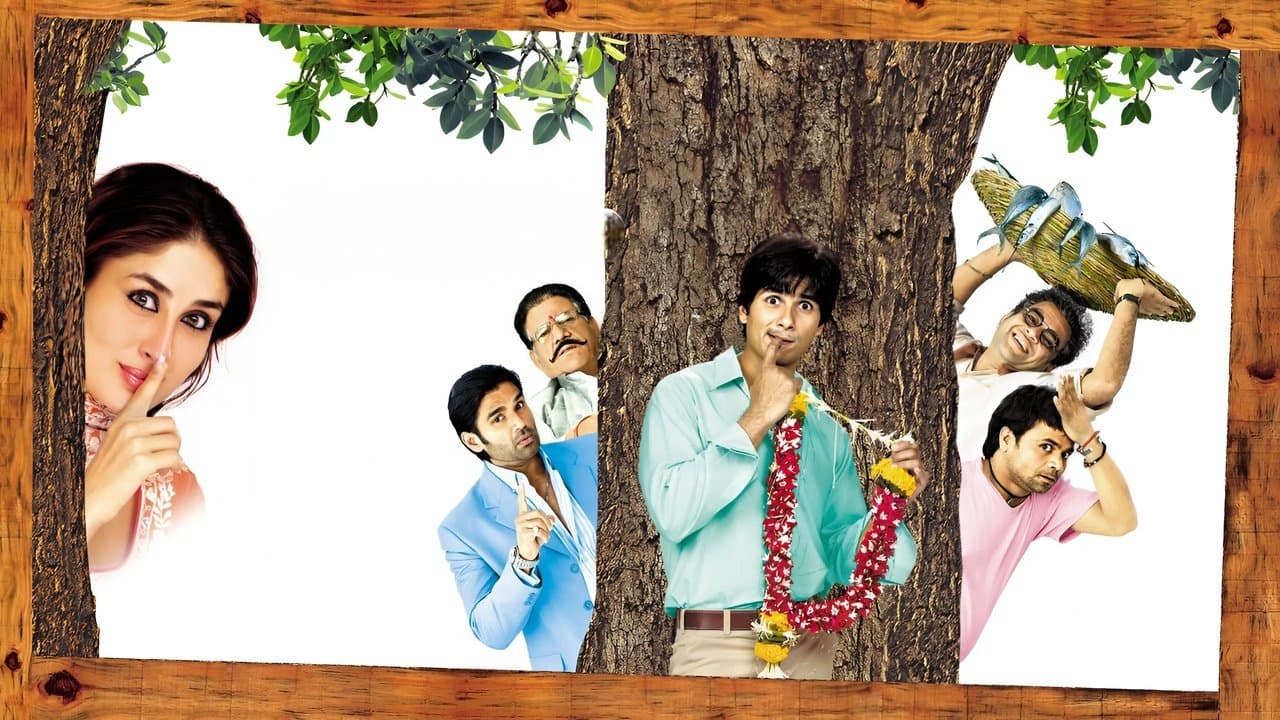
Chup Chup Ke brought together one of Hindi cinema's most bankable young couples at the time: Shahid Kapoor, then riding high on the success of Ishq Vishk, and Kareena Kapoor, already an established lead. UTV Motion Pictures produced the film, and Priyadarshan's direction promised something with more comedic sophistication than the typical Bollywood romance. The supporting cast was stacked—Suniel Shetty, Paresh Rawal, Rajpal Yadav, Anupam Kher, and Om Puri all contributed to a film that felt like an ensemble piece dressed up as a two-hander.
The 165-minute runtime is worth noting (that's nearly three hours), and it reflects a different era of Hindi filmmaking, when comedies weren't expected to sprint through their premise but rather to linger in scenes, milk reactions, and let actors riff. The film didn't become a massive box office juggernaut, but it found an audience and has endured on television and streaming platforms. On Movie OTT, where streaming availability is tracked across multiple platforms, Chup Chup Ke remains accessible to audiences looking for early-2000s Bollywood comedy.
What's striking is how the film manages to feel both of its moment and slightly timeless—the production design, the fashion, the music all scream 2006, yet the emotional core about reinvention and second chances doesn't date the way, say, a topical comedy might. The IMDb rating of 6.2 suggests a film that's more appreciated than critically acclaimed, the kind of movie people remember fondly rather than cite as a masterpiece.
What Makes Chup Chup Ke Stand Out: Performance and Comic Timing
The thing nobody mentions about Chup Chup Ke is how much of the comedy depends on Shahid Kapoor's ability to communicate without speaking. He's not just silent; he's expressive. Watch his face in scenes where he's trying to explain something through gesture and exaggerated facial expressions—it's physical comedy in the vein of silent film, but filtered through Bollywood's more theatrical sensibilities. Kareena Kapoor, playing a character who is genuinely mute, brings a different kind of restraint; she's communicative through her eyes and her movements in a way that mirrors his pretense without duplicating it.
The supporting players—Rajpal Yadav's comic relief, Paresh Rawal's gruff employer, Anupam Kher's concerned elder—all work in concert to create a world where the central deception feels plausible enough that the emotional stakes land. Priyadarshan's direction keeps the pacing brisk despite the runtime, and the comedy doesn't rely on mean-spiritedness or cruelty; it's comedy built on misunderstanding and the gap between what people know and what they assume. That's a harder thing to pull off than it sounds. The performances that anchor Chup Chup Ke succeed because they're rooted in character rather than just hitting comedic beats—which, when you think about it, is what separates a film that lasts from one that feels dated the moment its theatrical run ends.
I keep coming back to the film's refusal to make the mute daughter a saint or a martyr. She's not defined by her disability; she's a character who happens to be mute, and the film treats her romantic agency as normal and expected. It's a small thing, but in 2006 Hindi cinema, it mattered. The chemistry between Kapoor and Kapoor carries the film through stretches where the plot might otherwise feel thin, and that chemistry—the way they navigate scenes where one character is pretending to be unable to speak—becomes the real subject, not just the vehicle.
Where to Stream Chup Chup Ke Online
Chup Chup Ke is available on major OTT services, and the exact platforms shift depending on licensing agreements and your region. Check the "Where to Watch" widget at the top of this page to see which services currently carry the film. Most streaming aggregators—including Movie OTT's tracking tools—update these listings regularly, so if it's not on your preferred platform today, it might be next month. The 165-minute runtime means you'll want to set aside a solid chunk of time; this isn't a film you'll half-watch while scrolling your phone.
For those nostalgic for early-2000s Bollywood, or curious about Priyadarshan's work in Hindi cinema, the film is worth tracking down. Streaming has made it far easier to explore these films than it was even ten years ago, when you'd have needed a DVD or cable access.
Frequently asked questions
Q: Who directed Chup Chup Ke?
Priyadarshan, the acclaimed Malayalam filmmaker, directed and co-wrote Chup Chup Ke. He's known for his sharp comic sensibility and adapted this film from the earlier Malayalam film Punjabi House.
Q: Is Chup Chup Ke based on a true story?
No, it's not based on a true story. The film is an adaptation of Punjabi House, a Malayalam-language comedy, transplanted into Hindi cinema with an original screenplay by Priyadarshan.
Q: What's the runtime of Chup Chup Ke?
The film runs 165 minutes (two hours and forty-five minutes), which was typical for Bollywood comedies of that era. It's a film that takes its time with scenes rather than rushing through the premise.
Q: Who stars in Chup Chup Ke?
Shahid Kapoor and Kareena Kapoor lead the film, with strong supporting performances from Suniel Shetty, Paresh Rawal, Rajpal Yadav, Anupam Kher, and Om Puri.
Q: Where can I watch Chup Chup Ke?
Chup Chup Ke is available on major streaming platforms. Use the Where to Watch widget on this page to see which services currently carry it in your region.
Final Thoughts on Chup Chup Ke
Chup Chup Ke isn't trying to be anything it isn't. It's a romantic comedy built on a clever premise, carried by two charming leads, and executed with enough craft to justify its runtime. The film won't blow your mind, but it'll entertain you—and in a landscape increasingly dominated by high-concept franchises and prestige dramas, there's something to be said for a movie that knows exactly what it is. If you're in the mood for Bollywood comedy from the early 2000s, or if you want to see Shahid and Kareena at the start of their careers, it's worth your time.