The Story of Citizen Cohn
Citizen Cohn opens in a private hospital room where Roy Cohn—once the most feared lawyer in America—lies dying of AIDS. It's a stark, intimate setting for a man who'd spent decades operating in the shadows of power, pulling strings that moved senators and presidents. The film doesn't follow a traditional chronological path. Instead, as Cohn's body fails him, ghosts from his past materialize: moments of triumph, acts of cruelty, relationships that defined and destroyed him. We're watching a man confront the wreckage of his own making, and there's something almost unbearable about that vulnerability in someone built entirely on invulnerability. The 107-minute runtime may seem modest, but it carries the weight of decades—from McCarthy's witch hunts through the Kennedy era and beyond, all compressed into one man's final reckoning.
Behind the Making of Citizen Cohn
Director Frank Pierson brought serious pedigree to this HBO Films production. Pierson had written Cool Hand Luke and Dog Day Afternoon, so he understood how to build tension in confined spaces and expose the fractures in powerful men. The script came from David Franzoni, adapted from Nicholas von Hoffman's 1988 biography—a well-researched foundation that gave the film credibility from the start. James Woods carries the entire picture as Cohn, a role that demanded not just mimicry but a kind of psychological excavation. Woods doesn't play Cohn as a cartoon villain; he finds the wounded ego beneath the armor, the desperate hunger for approval that drove so much of Cohn's ruthlessness. The supporting cast—Joe Don Baker, Ed Flanders, Frederic Forrest, and Pat Hingle—provides the voices of conscience, memory, and consequence that haunt Cohn's final hours. HBO was still establishing itself as a serious drama producer in 1992, and Citizen Cohn was part of that early push toward prestige filmmaking. The film wouldn't achieve the cultural impact or star power of later HBO projects like Angels in America (which tackled similar themes over a decade later), but it arrived first, staking out territory that the network would return to repeatedly.
What Makes Citizen Cohn Stand Out
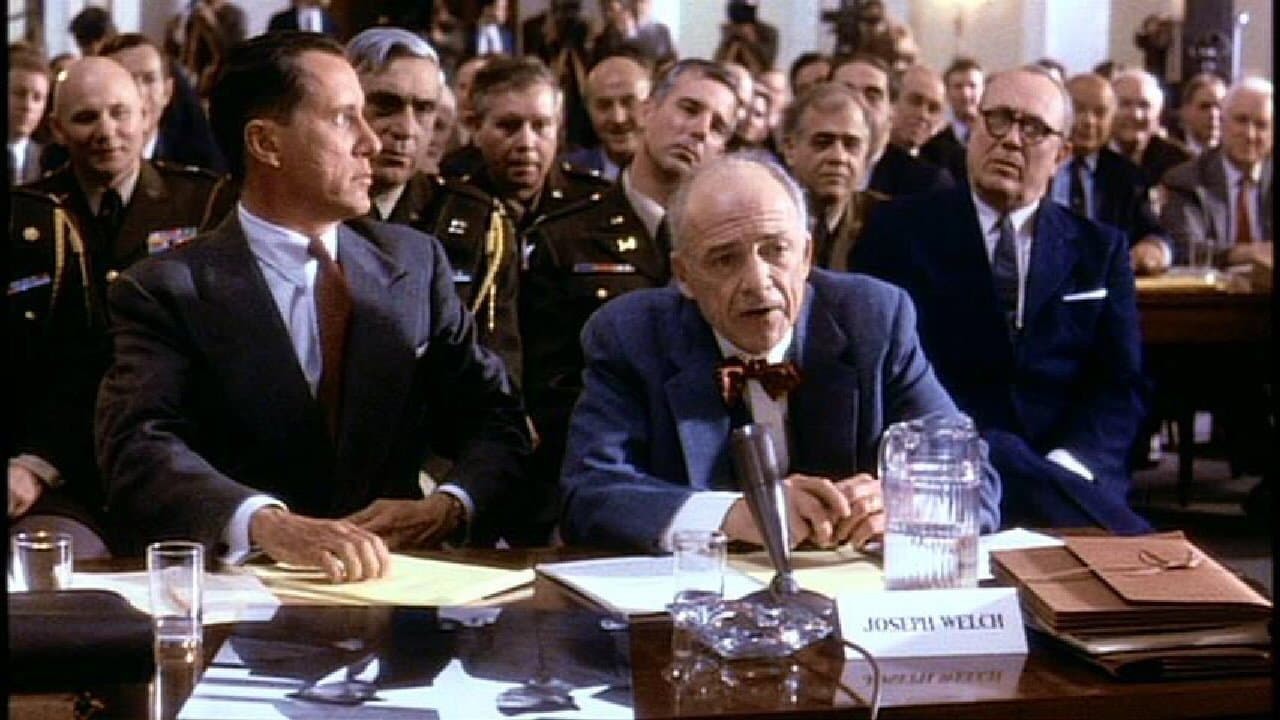
What's striking about Citizen Cohn is how it refuses to let you settle into comfortable judgment. You might come in knowing Cohn was a monster—and he was—but the film won't let you keep him at arm's length as a historical abstraction. Woods's performance is almost too good; he makes you see the insecurity, the craving for love he couldn't allow himself to feel, the way power became a substitute for everything he'd denied. The structure itself is brilliant. Rather than a paint-by-numbers biopic that marches through dates and events, the film uses Cohn's dying moments as a prism that fractures his life into fragments. You see him as a young man, hungry and ambitious. You see him orchestrating the McCarthy hearings with chilling precision. You see him destroying lives without blinking. And you see him, at the end, still lying about who he is—still can't admit to being gay, still can't own his own cruelty. That final refusal to break, even at death's door, is genuinely tragic in a way that catches you off guard. The performances anchor everything. Flanders, in particular, brings a moral weight to his scenes with Woods, asking the questions the audience is screaming. It's not a comfortable film to watch, and that's exactly why it works.
Where to Stream Citizen Cohn Online
Citizen Cohn is available across major OTT services, and Movie OTT tracks current availability so you don't have to hunt through multiple platforms. Since this is an HBO Films production from 1992, you'll most likely find it on services that carry HBO's back catalog—the Where to Watch widget at the top of this page will show you exactly which platforms have it right now. Streaming availability shifts regularly, so checking Movie OTT's real-time listings is your best bet for confirming where you can access it today. The film's relatively obscure status compared to more recent prestige dramas means it's not always front-and-center on every service, but it's still in circulation.
Frequently asked questions
Q: Is Citizen Cohn based on a true story?
Yes. The film is based on Nicholas von Hoffman's 1988 biography of Roy Cohn and dramatizes real events from Cohn's life, including his role as chief counsel to Senator Joseph McCarthy during the 1950s Red Scare hearings and his later legal career.
Q: Who directed Citizen Cohn?
Frank Pierson directed the film. He was known for writing screenplays like Cool Hand Luke and Dog Day Afternoon, bringing his expertise in character-driven drama to this HBO production.
Q: What happened to Roy Cohn in real life?
Roy Cohn died of AIDS-related complications in 1986. The film uses his final hospitalization as the narrative frame through which his life is examined, showing how the disease forced a confrontation with his past.
Q: How does Citizen Cohn compare to Angels in America?
Both explore similar themes of power, sexuality, and mortality in the context of the AIDS crisis, but Angels in America arrived over a decade later with a larger budget, A-list cast, and a more expansive scope. Citizen Cohn is more intimate and focused entirely on Cohn's perspective.
Q: Where can I watch Citizen Cohn?
Citizen Cohn is available on major OTT services. Use the Where to Watch widget above to see which platforms currently have it in your region.
Final Thoughts on Citizen Cohn
Citizen Cohn isn't easy to recommend because it's deliberately uncomfortable. It doesn't flatter its audience or offer cathartic revenge fantasies. What it does offer is a masterclass in biographical filmmaking—a film that trusts its audience to sit with complexity and moral ambiguity. James Woods's performance alone justifies watching, but the real achievement is how the film captures the tragedy of a man who built his entire existence on lies and then couldn't find a way out, even when death was calling. It's dated in some ways, but the core portrait remains devastating and relevant.